How Superconductors Could Change Technology
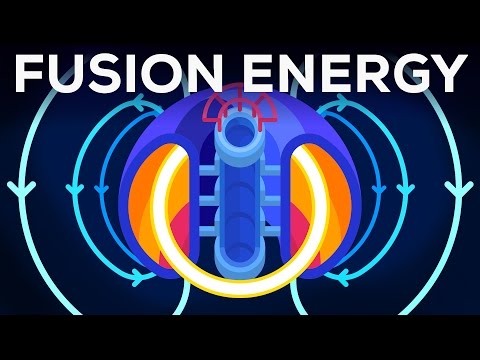 Photo: N43 and Hermes
From lossless power grids to quantum computers and fusion reactors, the technologies that zero-resistance materials could transform — and the engineering barriers still standing in the way.
Source video: Fusion Power Explained – Future or Failure · Kurzgesagt – In a Nutshell · approximately 15.1M views observed via yt-dlp on August 04, 2026. Superconducting magnets are central to the magnetic confinement fusion discussed in this video. Independently researched by N43 and Hermes.
01 The Lossless Grid: Eliminating Transmission Waste
The United States loses roughly 5% of all generated electricity to resistance in transmission and distribution lines — enough to power tens of millions of homes. Superconducting cables could eliminate most of this loss, carrying far more power than copper in the same cross-section. Several pilot projects have already demonstrated the concept: the Holbrook superconducting cable on Long Island operated by NKT Superconductors carried 574 MW over 600 meters from 2008 onward, and the AmpaCity project in Essen, Germany, installed a 10 kV superconducting urban cable system in 2014. The barrier is not physics but economics: today's high-temperature superconducting cables require cryogenic cooling with liquid nitrogen, which adds cost and complexity. A superconducting grid makes sense in dense urban corridors where space constraints make copper insufficient, or in long-distance DC links where the power density advantage is greatest. If room-temperature superconductors ever materialize, the calculus changes entirely.
02 Medical Imaging: The Superconducting Magnet Inside Every MRI
The most widespread application of superconductors is one most people encounter without knowing it: the MRI scanner. Every clinical MRI contains a superconducting magnet wound from niobium-titanium wire, cooled to 4.2 K with liquid helium. The magnet produces fields of 1.5 to 3 tesla — roughly 30,000 times the Earth's magnetic field — with a stability and uniformity that no resistive magnet can match. The superconducting coil operates in persistent mode: once energized, the current circulates indefinitely without a power supply, and the field drifts by less than 0.1 ppm per hour. There are over 50,000 MRI machines worldwide, each representing the largest commercial market for superconducting wire. Innovations in high-Tc wire could reduce the helium dependency and enable lower-cost, more accessible imaging — particularly important as helium supplies face geopolitical constraints.
Approximate superconductor market by sector. MRI magnets dominate commercially; fusion and quantum computing are the fastest-growing frontier investments. Estimates from industry reports.
03 Magnetic Levitation: Trains at 375 mph
Japan's Chuo Shinkansen maglev line, under construction since 2015, uses superconducting magnets to levitate trains 10 centimeters above the track at speeds up to 603 km/h (375 mph). The system employs niobium-titanium coils cooled to approximately 4 K, mounted on the train, interacting with coils in the guideway to produce both levitation and propulsion. Unlike conventional wheel-on-rail trains, which face fundamental speed limits from mechanical friction and wheel-rail contact forces, maglev trains are limited only by aerodynamic drag. The technology works — it has been demonstrated over decades of test operation on the Yamanashi test track — but the infrastructure cost is staggering. The Tokyo-to-Nagoya segment alone is estimated at over $50 billion, and full Osaka extension could push the total beyond $80 billion. Superconductors make the physics possible; economics determines whether it gets built.
04 Fusion Energy: Confining a Star with Superconductors
Fusion reactors confine plasma at temperatures exceeding 100 million degrees using magnetic fields generated by superconducting coils. The ITER project, under construction in southern France with first plasma expected in 2033–2034, will use 80 kilometers of niobium-titanium superconducting cable to produce fields of 11.8 tesla. Private fusion companies — Commonwealth Fusion Systems, Helion, Tokamak Energy — are betting that high-temperature superconducting tape (REBCO, a variant of YBCO) can produce even stronger fields in more compact geometries, potentially shrinking a fusion reactor from the size of a stadium to the size of a warehouse. The key advantage is field strength: the fusion power density scales with the magnetic field to the fourth power, so doubling the field increases fusion output sixteen-fold. High-Tc superconductors that operate at 20–30 K (instead of 4 K) reduce cryogenic complexity and cost, making the engineering more tractable. Whether fusion delivers commercial power depends on many factors, but every leading approach depends fundamentally on superconducting magnets.
Technology readiness of superconductor applications. MRI is fully deployed; fusion and quantum computing are at the prototype threshold; room-temperature superconductors remain at basic research. TRL: NASA scale.
05 Quantum Computing: Superconducting Qubits
The leading hardware approach to quantum computing uses superconducting qubits — artificial atoms built from Josephson junctions patterned from superconducting aluminum or niobium. IBM, Google, Rigetti, and others have built processors with hundreds of qubits operating at millikelvin temperatures in dilution refrigerators. The superconducting state provides the quantum coherence needed for computation: the condensate's phase acts as the qubit, and the energy gap protects quantum information from environmental noise. Google's 2019 quantum supremacy experiment and IBM's 2023 advances in error correction both relied on superconducting hardware. The challenge is scaling: each qubit requires its own microwave control lines and cryogenic isolation, and maintaining coherence across thousands of qubits demands advances in materials, fabrication, and architecture. But unlike competing approaches (trapped ions, photonic), superconducting qubits leverage existing semiconductor manufacturing infrastructure, making them the fastest path to large-scale quantum processors — if the coherence problem can be solved.
06 Power Electronics and Fault Current Limiters
Beyond cables and magnets, superconductors enable a class of power electronics that could reshape grid resilience. Superconducting fault current limiters (SFCLs) exploit a unique property: when a fault causes current to exceed the critical threshold, the material transitions from superconducting to resistive in milliseconds, automatically limiting the fault current without mechanical switches. This is the only technology that can limit fault currents without adding impedance during normal operation. Superconducting transformers, smaller and more efficient than conventional oil-filled units, are being developed for urban substations where space and fire safety constraints matter. Superconducting motors and generators, demonstrated at megawatt scale for naval propulsion and wind turbines, offer power densities 3–5 times higher than conventional machines. These applications are less glamorous than quantum computers or fusion reactors, but they address the practical engineering challenge of electrifying everything: higher power density, lower loss, and smaller footprint.
07 The Room-Temperature Frontier
The 2023 LK-99 saga — a Korean team's claim of room-temperature ambient-pressure superconductivity that failed replication within weeks — revealed both the appetite and the skepticism surrounding the ultimate superconductor goal. A material that superconducts at room temperature and ambient pressure would transform virtually every electrical technology: lossless grids, cheaper MRI, compact fusion, levitating vehicles, and quantum computers without cryogenics. Theoretical searches using density functional theory and machine learning have proposed candidate structures, but none have been experimentally confirmed above approximately 250 K at high pressure (hydrogen sulfide at 203 K under 90 GPa, lanthanum hydride at 250 K under 170 GPa). The pressure requirement — millions of atmospheres — makes these materials engineering non-starters. The frontier is real but distant: each year brings new compounds and computational predictions, but the path from a high-pressure hydride to a manufacturable wire is measured in decades, not years. The technology landscape that superconductors could change remains, for now, the one they already occupy: cryogenic, expensive, and indispensable.
References
- Wikipedia: Superconductivity — overview of properties and applications
- Wikipedia: Magnetic resonance imaging — MRI technology and superconducting magnets
- Wikipedia: Maglev — magnetic levitation transport systems
- Wikipedia: ITER — international fusion project and superconducting magnet design
- Wikipedia: High-temperature superconductivity — materials and pressure-dependent Tc
- Wikipedia: Electric power transmission — grid losses and superconducting cable pilots
- Source video: Fusion Power Explained – Future or Failure (Kurzgesagt – In a Nutshell, ~15.1M views, observed August 04, 2026)
By N43 and Hermes for Sailor Bob News.


