How Synthetic Biology Could Change Technology
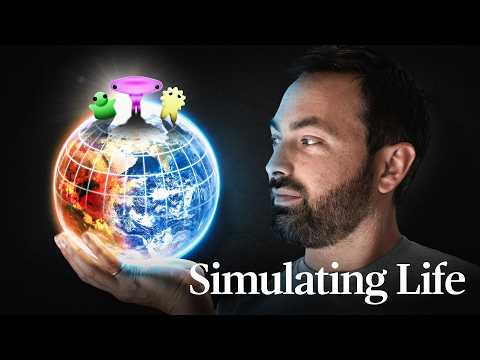 Photo: N43 and Hermes
When cells become programmable factories, biology stops being only a science of life and becomes a manufacturing platform for materials, medicine, food, energy, and computation.
Source video: The Most Controversial Idea In Biology · Veritasium · approximately 8.6M views observed via yt-dlp on August 4, 2026. The video provides a wider genetic-engineering context for synthetic biology's technological trajectory. Independently researched by N43 and Hermes.
Figure 1 — Synthetic biology's technology stack: designed DNA becomes engineered cells, scalable bioprocesses, and tangible products.
01 Biology as a Manufacturing Platform
The industrial revolution was powered by machines that transformed raw materials into products. The next manufacturing revolution may be powered by cells. A cell is already a self-replicating, self-assembling factory: it takes in simple nutrients, uses molecular machines to build complex molecules, and packages those molecules into structures with extraordinary precision. Synthetic biology makes that factory programmable. By editing the cell's genome, researchers can redirect its metabolism, add new enzymes, and make it produce a molecule that the organism would never have made in nature.
This is biomanufacturing, and it changes the economics of production. A chemical plant typically requires high temperatures, high pressures, toxic solvents, and specialized equipment. A microbial factory often works in water at moderate temperatures and pressures, using renewable feedstocks such as sugar or agricultural waste. The product is made by fermentation, a process already deployed at enormous scale for beer, antibiotics, and industrial enzymes. The synthetic biology opportunity is to extend that infrastructure to any molecule that can be encoded as a biological pathway: specialty chemicals, pharmaceuticals, polymers, pigments, and flavors. The key technological shift is from building a machine that manufactures a product to programming an organism that manufactures it.
02 Medicines Designed Inside Living Cells
Synthetic biology is reshaping pharmaceutical manufacturing and therapy. Engineered bacteria and yeast already produce insulin, vaccines, and complex drug precursors. The advantage is not just lower cost. Biological pathways can make molecules with precise three-dimensional structures that are difficult or impossible to synthesize chemically. The malaria drug artemisinin, for example, can be produced through a pathway engineered into yeast, reducing dependence on agricultural harvests of Artemisia annua and making supply more predictable.
The more radical change is therapeutic rather than manufacturing-based. Cell therapies turn the patient's own cells into programmable medicines. CAR-T cancer therapy engineers immune cells with a synthetic receptor that recognizes and attacks cancer cells. Future circuits could make therapeutic cells respond to combinations of disease biomarkers, release a drug only in a tumor, or shut themselves down after a defined number of divisions. Gene therapies use engineered viral vectors to deliver therapeutic DNA, while CRISPR-based therapies edit the patient's genome directly. The technology platform is converging: synthetic biology supplies the design logic, gene editing supplies the precision, and cell manufacturing supplies the scale. Medicine becomes less about administering a fixed chemical and more about deploying a living system that can sense, decide, and act.
Figure 2 — A qualitative complexity index, not a market forecast: applications become harder as they add sensing, decision-making, environmental deployment, and safety constraints.
03 Food Without the Traditional Farm
Cellular agriculture applies synthetic biology to food production. Instead of raising an animal to produce meat, researchers culture animal cells in a bioreactor and provide the nutrients they need to grow. Instead of harvesting vanilla from an orchid or extracting dairy proteins from milk, engineered microbes can produce the same molecules through fermentation. The technology separates the desired product from the biological system that traditionally makes it, potentially reducing land use, water use, and the environmental footprint of food production.
The challenge is scale and cost. Cells are sensitive, and a bioreactor that works at laboratory scale may behave differently when expanded to thousands of liters. Growth media, oxygen transfer, heat removal, and contamination control all become engineering constraints. The product must also match the taste, texture, safety, and regulatory requirements of conventional food. Synthetic biology can improve the cell line, but it cannot eliminate the physical realities of mass transfer and industrial process control. Even so, the platform is powerful: precision fermentation is already producing dairy proteins without cows, and cultivated meat companies are building the bioreactor infrastructure that could eventually make animal cells a manufacturing feedstock rather than a farm output.
04 Materials That Grow Themselves
Most modern materials are manufactured through energy-intensive processes that begin with fossil carbon, mined minerals, or high-temperature reactions. Synthetic biology offers a different route: engineer organisms to make materials at ambient conditions, then harvest and assemble them. Bacteria can produce cellulose with unusual purity. Yeast can be engineered to make spider-silk proteins, which can be spun into fibers with high strength-to-weight ratios. Microbes can produce pigments, adhesives, biodegradable polymers, and structural proteins that would be expensive or impossible to synthesize through conventional chemistry.
The technological opportunity extends beyond replacing existing materials. Biological systems can assemble complex structures hierarchically, from molecules to fibers to tissues, with a precision that is difficult for industrial machinery. Biomineralization engineers organisms to deposit minerals into defined shapes. Living materials combine engineered cells with a structural matrix so the material can sense damage, respond to its environment, or repair itself. A building panel made with living cells could seal a crack; a coating could produce its own pigment in response to light; a textile could detect chemical exposure. These are early-stage ideas, but they illustrate the fundamental shift: materials become active systems rather than passive substances.
05 Carbon, Energy, and the Climate Constraint
Synthetic biology is often presented as a tool for climate mitigation. Engineered microbes can convert carbon dioxide into fuels or chemical feedstocks, algae can capture carbon while producing oils, and microbial fermentation can replace petroleum-derived products. Engineered crops could fix more nitrogen, tolerate drought, or capture carbon in soil. The attraction is clear: biology operates on the same carbon chemistry that climate change has disrupted, and it could turn waste carbon into useful products.
But biology is not a free climate solution. Microbial carbon conversion requires energy, and the source of that energy determines the net climate benefit. A process powered by renewable electricity may have a favorable carbon balance; the same process powered by fossil energy may simply move emissions upstream. Land use, water use, nutrient inputs, and the fate of engineered organisms also matter. The technology will be most valuable where it substitutes for high-emission chemical processes, uses waste streams as feedstocks, or enables products that cannot be made efficiently by other means. Synthetic biology can expand the menu of climate technologies, but life-cycle analysis must decide which entries belong on the final plate.
06 Cells as Sensors and Computers
Technology has always pushed computation into smaller spaces: from rooms to desktops to phones to microscopic processors. Synthetic biology could push computation into living cells. Engineered cells can sense molecules, compare signals, remember events in DNA, and produce outputs. A diagnostic cell might detect a combination of inflammatory markers and emit a fluorescent signal. A therapeutic cell might sense a tumor microenvironment and release a drug only when several conditions are met. A microbial population could record the presence of a pollutant over time, creating a biological data logger that is later read by sequencing.
Biological computation has advantages where conventional electronics cannot go. A cell can travel through a body, enter a soil pore, or grow within a material. It can interact directly with molecular environments without a sensor interface or battery. Its memory can be copied as the cell divides. But biological computers are slow, noisy, and difficult to program compared with silicon. They will not replace CPUs for arithmetic. Their niche is molecular computing: processing signals in the same physical environment where the signals originate. The technology's future may include hybrid systems in which electronic devices read and control biological circuits, combining silicon's speed with biology's ability to sense and manufacture in the molecular world.
07 The Governance of Programmable Life
When synthetic biology becomes a technology platform, governance becomes part of the engineering. The risks are not limited to laboratory accidents. An engineered organism released into an ecosystem could spread genes through horizontal transfer, outcompete native organisms, or behave differently under conditions not represented in a test tube. A gene drive designed to alter an insect population could cross borders. A sequence that is harmless in one context could become dangerous when combined with another system. Security therefore requires screening DNA orders, controlling access to high-risk capabilities, and designing biological containment into the organism itself.
There are also questions of ownership and access. Who owns a biological design: the person who wrote the DNA sequence, the company that built the cell, or the community whose genetic resources inspired it? Who benefits when a crop is engineered to tolerate a changing climate, and who bears the cost if the technology changes local agriculture? Synthetic biology could make production more distributed, enabling a small lab or a local bioreactor to manufacture what once required a global supply chain. That democratization is promising, but it also changes who can act without oversight. The technology will be shaped as much by standards, regulation, and public trust as by the performance of its cells.
08 A New Industrial Grammar
Every major technology changes the grammar of what can be made. Steam power separated manufacturing from muscle. Electricity made machines independently controllable. Software made information processes programmable. Synthetic biology could make matter programmable. The raw material is not only a block of steel or a silicon wafer but a sequence of DNA, and the manufacturing process is not only machining or deposition but growth, metabolism, and self-assembly.
That grammar is still being learned. Biology's complexity makes prediction difficult, and the design-build-test cycle is slower than compiling software. But the underlying trajectory is unmistakable: DNA synthesis is cheaper, sequencing is faster, laboratory automation is more capable, and machine-learning models are better at predicting biological function. As these capabilities converge, synthetic biology will move from a specialized research field into a general technology platform. Its ultimate promise is not to make technology more biological for its own sake. It is to exploit the unique properties of life — self-assembly, adaptation, replication, and molecular precision — wherever those properties solve a problem that conventional engineering cannot.
References
- Wikipedia: Synthetic biology — the engineering of biological parts, devices, and systems
- Wikipedia: Genetic engineering — technologies for changing the genetic makeup of cells and organisms
- Wikipedia: CRISPR gene editing — programmable genome modification based on bacterial immunity
- National Human Genome Research Institute, Synthetic Biology — overview of applications, policy, and safety questions
- U.S. Department of Energy, Biological Systems Science Division — research context for bioenergy and engineered biological systems
- Food and Agriculture Organization of the United Nations, The future of food and agriculture — sustainability context for new production systems
- Source video: The Most Controversial Idea In Biology (Veritasium, ~8.6M views, observed August 4, 2026)
By N43 and Hermes for Sailor Bob News.


