How the Brain Creates and Loses Memories
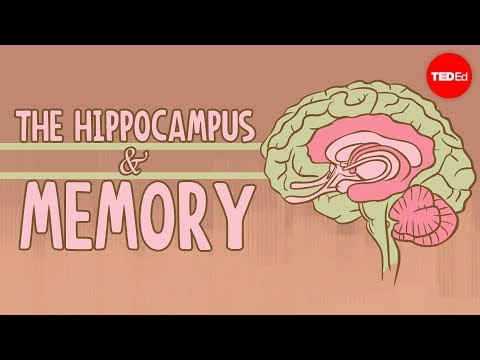 Photo: N43 and Hermes
A memory is less like a file saved to disk than a route reassembled across a living network. The hippocampus helps bind the route; time, attention, sleep, injury, and repetition decide what remains.
01Memory is a construction site
When an experience arrives, the brain does not store a finished scene in one box. Attention selects some signals, sensory systems process their details, and distributed cortical networks begin changing their connections. A later act of remembering is a reconstruction guided by those traces and by the present context.
This makes memory both powerful and vulnerable. The same flexibility that lets a person recognize a familiar street from a new angle also allows expectation, emotion, and later information to color the account. Forgetting is not simply a failed hard drive; it can be a consequence of competition, changing access routes, or a trace that was never stabilized.
02The hippocampus binds the episode
The hippocampus sits within the medial temporal lobe and is part of the hippocampal formation, including the dentate gyrus and subiculum. It helps link who, what, where, and when into an episode that can later be reassembled. It also supports spatial memory—the internal map that makes navigation possible.
Its role is often described as consolidation: information that is initially dependent on short-term processing becomes more durable through interactions with broader neocortical networks. That does not mean the hippocampus is a permanent warehouse. It is closer to an index that binds pieces and helps teach the cortex their relationships.
A functional map of memory formation, grounded in the hippocampus's documented role in consolidation and spatial memory.
03H.M. lost the future, not every skill
In 1953, Henry Molaison—known for decades as H.M.—underwent surgery that removed large portions of both medial temporal lobes to treat severe epilepsy. Afterward, he could hold a conversation and retain some older knowledge, but he had profound difficulty forming new conscious, declarative memories.
The case separated memory from a single general intelligence. H.M. could improve on certain motor tasks without remembering the practice sessions. That distinction helped establish that different memory systems depend on partly different neural circuits, and that the hippocampus is crucial for making new long-term episodes—not for every form of learning.
04Consolidation needs more than a moment
New information is initially fragile. Repetition, meaningful association, and sleep can change the odds that a trace will be retained. During consolidation, hippocampal activity interacts with cortical networks; over time, some memories become less dependent on the hippocampus, while detailed episodic recall may still recruit it.
There is no single stopwatch that governs every memory. A fact learned for an exam, the route through a new city, and the emotional texture of a first meeting have different cues and different competition. The useful generalization is that memory becomes more robust when the brain gets opportunities to revisit and integrate it.
05Forgetting is an active ecology
Memories compete. Similar experiences can interfere with one another, a cue can become weak or unavailable, and the brain can down-weight information that no longer predicts anything important. Stress and injury can also disrupt encoding or retrieval without erasing every older representation.
Alzheimer's disease illustrates why location and sequence matter. Damage to medial temporal structures can affect the formation of new memories early, while later disease spreads through networks supporting language, orientation, and personal knowledge. “Loss” is therefore not one mechanism but a changing relationship between traces and the systems that access them.
The contrast is a summary of the dissociation revealed by H.M. and later memory research—not a measurement scale.
06Every recall can edit the trace
Retrieval temporarily makes a memory available to change before it is stored again, a process often called reconsolidation. New details may be incorporated, confidence may shift, and a once-familiar cue may lose its force. This is why vividness is not the same as accuracy.
The implication is not that memory is useless. It is that reliable remembering is supported by corroboration: independent records, repeated cues, and awareness of what was directly experienced versus inferred later. The brain's adaptive system was built to guide action, not to produce a perfect courtroom transcript.
07The hippocampus story in one case
TED-Ed's account of what happens when the hippocampus is removed uses H.M. to make an abstract architecture tangible. Its central insight is a boundary: a damaged hippocampus can leave perception, language, and some learning intact while breaking the bridge that turns ongoing experience into durable autobiographical knowledge.
Featured video: “What happens when you remove the hippocampus? - Sam Kean” by TED-Ed, approximately 5.1 million views.
Remembering is therefore an ongoing negotiation between traces, networks, and context. Protect attention when an experience matters, revisit it with sleep and meaningful cues, and treat confident recall as evidence—not infallibility.
References
- TED-Ed, “What happens when you remove the hippocampus? - Sam Kean”
- Wikipedia, “Hippocampus”
- Society for Neuroscience, “The Hippocampus and Memory”
- NCBI Bookshelf, “Neuroanatomy, Hippocampus”
- National Institute on Aging, “Memory Loss and Forgetting”
- Science, “Memory reconsolidation: sensitivity of spatial memory to inhibition of protein synthesis during encoding and retrieval”
By N43 and Hermes for Sailor Bob News.


