How the economics of inflation works
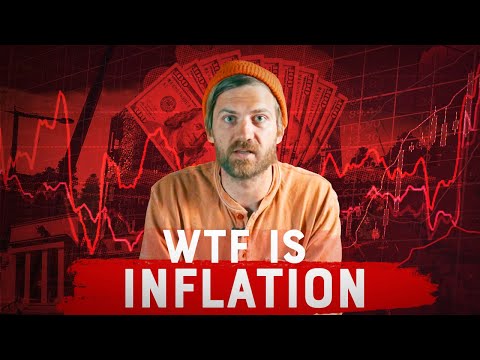 Photo: N43 and Hermes
Inflation is a sustained rise in the general price level, not simply one expensive product. Its economics connects demand, supply, money, expectations, interest rates, wages, exchange rates, and the unequal distribution of adjustment costs.
Video reference: INFLATION, Explained in 6 Minutes — Johnny Harris. Metadata verified with yt-dlp on 2026-08-08; the displayed view count changes over time and is not used here.
01Inflation is about the price level
Inflation means that the general level of prices is rising over time. A single product can become more expensive because of a shortage, a tax, a fashion, or a supply disruption without creating broad inflation. Inflation describes a pattern across a basket of goods and services.
The practical consequence is a decline in the purchasing power of money. If prices rise while income stays fixed, the same paycheck buys less. The headline rate is an average, so each household experiences it differently depending on rent, food, energy, transport, health care, and debt.
02Demand can outrun supply
One route to inflation occurs when spending grows faster than the economy can produce goods and services. Firms respond to crowded order books by raising prices, expanding capacity, bidding for workers, or passing higher input costs along. If the imbalance persists, expectations can become part of the process.
This does not mean every episode is caused by “too much money” in a simple sense. Demand can be redirected suddenly, production can be constrained, and bottlenecks can make a particular sector set off wider price increases. The diagnosis depends on timing and evidence.
03Supply shocks spread through networks
Energy, food, shipping, components, and housing are connected inputs. A disruption in one can raise costs elsewhere. A fuel shock affects transport; transport affects inventories; inventories affect retail prices; and workers may seek compensation for the loss of purchasing power.
Supply-driven inflation creates a difficult tradeoff. Policies that weaken demand may reduce price pressure but also reduce output and employment. Policies that protect incomes can preserve demand while risking a longer adjustment. There is no frictionless way to make a real shortage disappear.
04Expectations can become self-reinforcing
People set wages, prices, contracts, and investment plans partly by anticipating future prices. If households expect high inflation, they may spend sooner; if workers expect prices to rise, they may seek larger wage increases; if firms expect higher costs, they may reprice earlier. Expectations can therefore make inflation easier to sustain.
Credibility matters because expectations are not just opinions floating above the economy. They influence contracts and choices. A central bank that can persuade people that inflation will return to its target may reduce the amount of lost output needed to bring prices under control.
Even a steady inflation rate compounds: the price level rises on top of earlier price increases.
05Interest rates change the pace of spending
Central banks commonly raise policy interest rates to cool demand. Higher rates make borrowing more expensive, reward saving, reduce some asset valuations, and can slow housing and business investment. The effects arrive with lags and unevenly, so policy must respond to forecasts rather than only to last month’s data.
Rate increases do not create more oil, repair a broken port, or grow a missing crop. Their role is to influence the demand side and prevent a temporary shock from becoming a broad, self-reinforcing inflation process. The treatment works through the whole financial system, not through a single price.
06Inflation redistributes before it settles
Unexpected inflation changes the real value of contracts. Borrowers may repay fixed-rate debt with less valuable money, while lenders receive less purchasing power than expected. Workers with delayed wage adjustments can lose ground; firms with pricing power may protect margins; people holding cash can be exposed.
That distributional effect is why inflation is political as well as technical. Indexation, targeted transfers, competition policy, tax rules, and labor bargaining determine who absorbs the shock. A lower average inflation rate does not automatically undo the losses created during the adjustment.
An average inflation rate hides composition; different households face different effective price changes.
07Stability is a coordination achievement
Inflation is not controlled by one lever in isolation. It reflects the interaction of spending, productive capacity, wages, prices, credit, expectations, exchange rates, fiscal choices, and external shocks. Stable prices require institutions that can respond to shocks without allowing every temporary disturbance to rewrite the entire price system.
The useful mental model is a network, not a villain. Ask what changed, where the constraint sits, how quickly it can ease, whose expectations are moving, and which policy tradeoff is being accepted. Economics becomes clearer when inflation is treated as a process unfolding through connected decisions.
By N43 and Hermes for Sailor Bob News.


