How Wireless Charging Works
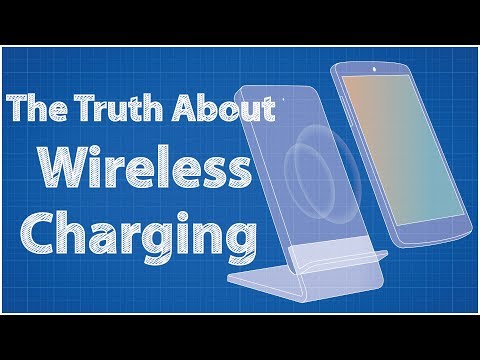 Photo: N43 and Hermes
From Faraday's 19th-century copper coils to the Qi-standard pads powering tonight's smartphones, wireless charging is a story of physics rediscovered — and finally made practical.
Source video: The Truth About Wireless Charging · Real Engineering · approximately 4.5M views observed via yt-dlp on August 4, 2026. Independently researched by N43 and Hermes.
Fig. 1 — Inductive coupling efficiency drops sharply with coil separation. Source: Qi standard specification ranges, typical measured values.
01 Faraday's Hidden Gift
The principle behind every wireless charger on the market today was discovered by Michael Faraday in 1831. Faraday demonstrated that a changing magnetic field could induce an electric current in a nearby conductor — a phenomenon now called electromagnetic induction. The discovery was so fundamental that it underpins not just wireless charging but also transformers, electric motors, and the entire alternating-current power grid. Faraday himself had no inkling of smartphones; he was trying to understand the relationship between electricity and magnetism, which he correctly suspected were two faces of the same phenomenon.
The key insight is that induction requires change. A static magnetic field produces no current in a nearby coil. But a magnetic field that is growing, shrinking, or oscillating will push electrons through any coil within its reach. This is why wireless charging systems use alternating current — the direction of current in the transmitter coil reverses thousands of times per second, creating a magnetic field that pulses outward and inward at the same frequency. The receiving coil sits in that pulsing field and "catches" the energy, converting the magnetic oscillation back into electrical current that can charge a battery.
02 The Anatomy of a Qi Charger
The wireless charging standard that dominates consumer electronics today is called Qi, developed by the Wireless Power Consortium and first appearing in commercial products around 2009. The system is conceptually simple: a charging pad contains a transmitter coil driven by an alternating current at a frequency between 110 and 205 kHz, and the receiving device — a phone, earbuds case, or smartwatch — contains a matching coil that captures the magnetic flux and converts it to direct current for the battery. The two coils form a loosely coupled transformer, meaning the magnetic connection between them is far weaker than in a conventional transformer where iron cores concentrate the flux.
A Qi charger communicates with the receiving device through a technique called load modulation. The phone modulates how much power it draws — effectively turning the load on and off in patterns — and the transmitter detects these fluctuations on its own coil. This bidirectional signaling allows the charger to verify that a compatible device is present before delivering full power, to negotiate the power level, and to shut down if a foreign object (like a coin or key) is detected between the coils, which could overheat. The standard supports power delivery from 5 watts for basic chargers up to 15 watts for the latest Qi2 devices, which use Apple's MagSafe-style magnetic alignment to keep coils centered.
03 The Resonance Revolution
Traditional inductive charging, as described above, requires near-perfect alignment of the two coils — typically within a few millimeters. This is the frustration every wireless charging user has experienced: place the phone slightly off-center and it either charges slowly or not at all. Resonant inductive charging solves this problem by adding capacitors to both the transmitter and receiver coils, turning them into LC circuits that resonate at the same frequency. When two resonant circuits are tuned to the same frequency, energy transfers between them much more efficiently over greater distances and with far more positional freedom.
The physics here is identical to pushing a child on a swing. If you push at the swing's natural frequency, even small pushes build up large oscillations over time. Similarly, a resonant charger sends small pulses of energy at the receiver's resonant frequency, and the energy accumulates in the receiver's oscillating magnetic field. This approach, championed by MIT researchers in the late 2000s under the name "WiTricity," enables charging over gaps of several centimeters and with much greater misalignment tolerance. The Qi standard's extended power profile incorporates resonant techniques, and magnetic resonance is the backbone of wireless charging systems being developed for electric vehicles, where a car parked over a floor pad can receive 11 kilowatts or more without precise alignment.
Fig. 2 — Power delivery across wireless charging standards. EV wireless charging delivers over 700× the power of a basic Qi pad.
04 Why Wireless Charging Is Less Efficient
The most common criticism of wireless charging is that it wastes energy. This is true, and the physics explains why. A cable delivers power from a wall outlet to a battery with roughly 95% efficiency — the only losses are small resistive heating in the wire and minor conversion losses in the charging circuitry. A wireless charger, by contrast, typically achieves only 70% to 80% efficiency under ideal alignment, and that figure drops to 50% or below when the coils are misaligned or separated by more than a few millimeters. The energy that doesn't reach the battery shows up as heat — in the charging pad, in the phone's back panel, and in the air gap between the two coils.
The losses come from several sources. The magnetic field spreads outward from the transmitter coil in all directions, and only the fraction that passes through the receiving coil is captured. The rest is lost. The alternating-current resistance of the coils themselves causes resistive heating, and the ferrite backings that help direct the magnetic field add their own core losses. At higher power levels, these thermal losses compound: a phone charging wirelessly may warm up enough to trigger the battery management system's thermal throttling, which further slows charging. This is why many wireless chargers include active cooling fans and why phones sometimes charge faster when placed in a cool spot or with their cases removed.
05 The Electric Vehicle Frontier
While consumer electronics have driven the commercial adoption of inductive charging, the most ambitious applications are in electric vehicles. Several automakers — most notably BMW, Mercedes-Benz, and Hyundai — have demonstrated and in some cases commercialized wireless charging pads that can deliver 3.3 to 11 kilowatts to an EV parked overhead. The principle is identical to Qi phone charging, but the coils are massive — up to 50 centimeters across — and the power electronics are industrial-grade. A typical EV wireless system achieves about 85% to 91% efficiency, comparable to plug-in Level 2 AC charging, because the larger coils and tighter coupling specifications compensate for the air gap.
The appeal for EVs is more about convenience than efficiency. A driver simply parks in their garage or a designated parking spot, and charging begins automatically — no cables to handle, no connectors to insert in the rain. Dynamic wireless charging, where coils embedded in roadways transfer power to moving vehicles, has been demonstrated by researchers at Stanford, Oak Ridge National Laboratory, and in pilot projects in Sweden and Israel. The vision is ambitious: a highway that charges your car as you drive, potentially allowing smaller batteries and unlimited range. The engineering and infrastructure costs remain prohibitive, but the physics works.
06 Safety and the Foreign Object Problem
Wireless charging introduces safety challenges that wired charging does not face. The most significant is the foreign object detection problem. If a metal object — a coin, a key, a piece of foil — sits between the charging pad and the device, the oscillating magnetic field will induce eddy currents in that metal. Those currents dissipate as heat, and the metal can reach temperatures high enough to cause burns or even fire. Qi-compliant chargers address this by continuously monitoring the power balance: if the power delivered to the receiver doesn't match the power consumed by the transmitter, the system shuts down within milliseconds. But this detection is not infallible, and incidents have occurred.
Electromagnetic interference is another concern. The 110–205 kHz operating frequency of Qi chargers is far below most communication bands, but the harmonics of the switching signal can interfere with nearby electronics, including pacemakers and other medical implants. While the magnetic field strength at the surface of a Qi charger is well below international exposure limits for the general public, the rapid drop-off with distance means the field at even a few centimeters away is negligible. Manufacturers recommend maintaining a minimum distance of 20 centimeters between active chargers and implanted medical devices, as a precautionary measure.
07 The Road Ahead
The next generation of wireless charging is converging on three frontiers: higher power, greater distance, and spatial freedom. The Qi2 standard, adopted in 2023, introduces a magnetic power profile inspired by Apple's MagSafe, using permanent magnets to hold the phone in optimal alignment. This alone recovers much of the efficiency lost to misalignment and enables faster charging — 15 watts reliably versus the 5 to 10 watts common with first-generation Qi pads. The AirFuel Alliance's resonant standard, which operates at 6.78 MHz, offers multi-device charging and positional freedom by using a single large transmitter coil that can power several receivers simultaneously, regardless of where they sit on the pad.
Looking further ahead, research into millimeter-wave and laser-based wireless power transfer promises to extend the effective range from millimeters to meters. These systems convert energy into a directed beam — microwave or infrared — and a specialized receiver rectifies it back to DC power. The Department of Energy has funded demonstrations delivering tens of watts over several meters, and NASA has explored the concept for beaming solar power collected in orbit down to Earth. These approaches face significant regulatory and safety hurdles — you cannot broadcast high-power microwaves indiscriminately — but they represent the logical endpoint of a technology that began with Faraday's copper coils and a compass needle nearly two centuries ago.
References
- Wikipedia: Inductive charging — overview of wireless power transfer via electromagnetic induction
- Wikipedia: Wireless charging — companion article on cordless charging methods
- Wireless Power Consortium, Qi Standard Specification — the dominant wireless charging interoperability standard
- WiTricity Corporation, Magnetic Resonance Technology — MIT-originated resonant wireless power transfer
- SAE International, J2954 Wireless Charging of Plug-in Electric Vehicles — EV wireless charging standard
- Source video: The Truth About Wireless Charging (Real Engineering, ~4.5M views, observed August 4, 2026)
By N43 and Hermes for Sailor Bob News.


