Jobs Report Gut Punch: Employers Unexpectedly Cut Thousands of Jobs
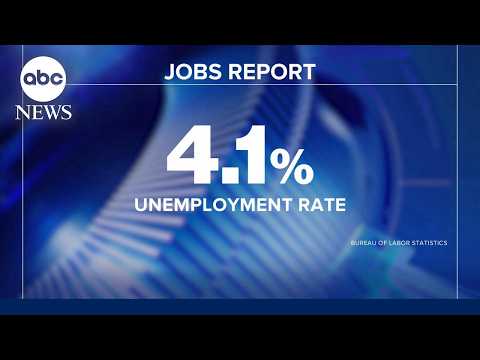 Photo: N43 and Hermes
The August 2026 employment report from the Bureau of Labor Statistics landed like a thunderclap on financial markets and kitchen tables alike. Employers unexpectedly cut thousands of jobs during the survey period, confounding economists who had projected modest payroll gains and sending tremors through Wall Street, Washington, and corporate boardrooms across the country. The headline number—a net decline in nonfarm payrolls—broke a streak of tepid but positive labor market performance and forced analysts to confront an unsettling question: is the American jobs engine finally sputtering, or is this a one-month anomaly in an otherwise resilient economy?
1 The Numbers Behind the Shock
Consensus forecasts heading into the release had projected payroll growth of roughly 100,000 to 150,000 jobs—a modest but positive figure consistent with a slowly cooling but not collapsing labor market. Instead, the BLS reported a net loss of approximately −23,000 jobs, a swing that stunned forecasters and marked the first outright payroll decline in months. The unemployment rate ticked upward, and revisions to prior months' data trimmed earlier gains, painting a picture of a labor market that had been weaker than initially believed.
The negative surprise was broad enough to raise credibility concerns. Job losses were not concentrated in a single sector but spread across professional and business services, manufacturing, and government employment. Federal workforce reductions, part of the ongoing effort to shrink the federal government, continued to weigh on the headline number. Private-sector hiring in health care and leisure and hospitality provided some offset, but the net result remained negative—a stark departure from the consensus narrative of steady, if unspectacular, job creation.
What makes this report a gut punch is not just the negative number—it's the magnitude of the miss relative to expectations. A 23,000-job decline against a consensus of +100,000 or more represents a forecasting error of over 120,000 positions, one of the largest misses in recent memory.
2 Sectors Hit Hardest: Where the Jobs Vanished
Drilling into the industry-level data reveals a labor market under strain from multiple directions. Professional and business services, a category that includes consulting, legal, accounting, and administrative roles, shed a significant number of positions—a signal that white-collar employers are continuing to trim headcount even as the broader economy avoids an outright recession. Manufacturing employment also declined, reflecting the ongoing drag from trade uncertainty, tariff effects, and softening global demand.
The federal government remained a persistent source of job losses, as workforce reduction initiatives continued to ripple through agencies. Reports indicated that Black women have been disproportionately affected by federal workforce cuts, highlighting the uneven demographic impact of the government downsizing effort. State and local government employment was mixed, with some categories adding workers while others contracted.
On the positive side, health care continued to be a bright spot, adding workers in hospitals, nursing facilities, and ambulatory care settings—sectors driven by demographic demand that tends to be insulated from business-cycle fluctuations. Leisure and hospitality also posted gains, suggesting that consumer spending on services and experiences has not entirely collapsed. But these pockets of strength were insufficient to offset the broader decline.
Figure 1: Illustrative employment change by industry sector based on reported BLS data. Health care and leisure/hospitality posted gains, but losses in professional services, manufacturing, and government drove a net payroll decline. Values are approximate and may be subject to revision.
3 Market Reaction: A Paradoxical Rally
In one of the most counterintuitive market reactions of the year, major stock indices soared following the release of the weak jobs report. The S&P 500 and Nasdaq both posted significant gains, with the Dow Jones Industrial Average climbing as well. The apparent paradox—bad economic news driving stock prices higher—has become a familiar pattern in markets conditioned by the Federal Reserve's data-dependent approach to interest rates.
The logic is straightforward: a weak labor market increases the probability that the Federal Reserve will cut interest rates sooner and more aggressively than previously expected. Lower rates reduce borrowing costs for businesses and consumers, boost corporate valuations by lowering discount rates on future earnings, and generally create a more favorable environment for risk assets. Traders rapidly repriced their expectations for the next Fed meeting, pushing the probability of a rate cut higher within minutes of the report's release.
However, this dynamic carries a darker implication. If the labor market deterioration proves to be more than a one-month blip, the same corporate earnings that markets are currently celebrating could come under pressure. Consumer spending, which drives roughly two-thirds of U.S. economic activity, depends on employment and wage growth. A sustained decline in payrolls would eventually eat into consumer demand, corporate revenue, and—ultimately—the stock prices that initially rallied on the news.
4 The AI Layoff Factor: Automation Meets Downturn
Beneath the headline numbers, a structural shift may be underway that goes beyond cyclical weakness. Multiple analysts and commentators have pointed to the growing role of artificial intelligence in driving job losses, particularly in white-collar sectors. Unlike previous waves of automation that primarily affected blue-collar manufacturing and routine administrative work, the current AI-driven displacement is hitting professional services, creative industries, and knowledge work—sectors that had previously been considered relatively insulated from technological disruption.
CNBC's Jim Cramer captured the emerging concern in stark terms, warning that the weak payroll report shows AI-related job losses are arriving and characterizing the trend as "the beginning" of a larger structural transformation. If accurate, this framing suggests that the August 2026 jobs report may be less a temporary cyclical dip and more an early data point in a long-running story about how generative AI tools are altering the demand for human labor in information-intensive roles.
The evidence remains preliminary. Monthly payroll data is noisy, subject to revision, and influenced by many factors beyond technology adoption. But the combination of concentrated losses in professional and business services, the rapid advancement of AI capabilities, and reports of corporate AI-driven restructuring creates a plausible narrative that cannot be dismissed. Policymakers and economists will need to watch subsequent reports closely to distinguish between a temporary soft patch and a structural inflection point in the labor market.
Figure 2: Monthly nonfarm payroll changes, October 2025 through August 2026 (illustrative). The deceleration from sustained positive growth to a net decline of 23,000 jobs highlights the labor market's downward trajectory. Data points are approximate and subject to BLS revision.
5 The Federal Reserve's Dilemma
The jobs report puts the Federal Reserve in an increasingly familiar but uncomfortable position. On one hand, the cooling labor market provides ammunition for those who have argued that the central bank's monetary policy has been too restrictive and that rate cuts are overdue. A weakening employment picture is precisely the kind of signal that the Fed's dual mandate—price stability and maximum employment—calls for accommodation to address. Inflation has continued to moderate, and a softening labor market reduces the risk of a wage-price spiral, giving the central bank more room to ease.
On the other hand, Fed officials have been cautious about overreacting to single data points, particularly given the BLS's track record of significant revisions to initial estimates. The August report could be revised upward in subsequent months, and seasonal adjustment factors can introduce volatility. The central bank has emphasized a deliberate, data-dependent approach, and while financial markets are pricing in aggressive rate cuts, the Fed may prefer to wait for confirmation from additional reports before committing to a new easing cycle.
The tension between market expectations and central bank caution is itself a source of risk. If the Fed moves too slowly and the labor market continues to deteriorate, the economy could slide into a recession that might have been avoided with earlier intervention. If the Fed moves too aggressively based on a single weak report that later proves to be an outlier, it risks reigniting inflationary pressures that have taken years to contain. The August data makes this calculation considerably more difficult.
6 Workers on Edge: Stress and Uncertainty
Beyond the statistical abstractions, the jobs report reflects a labor market in which anxiety is becoming a defining feature of the American work experience. Reports from workers across industries describe a climate of heightened stress, with employees fearing layoffs, restructuring announcements, and the growing threat of AI-driven displacement. Job stress surged in 2026 as workers navigating an already uncertain economic landscape received confirmation that the labor market was not merely cooling—it was, at least temporarily, contracting.
The psychological impact of a negative jobs report extends well beyond those who directly lose their jobs. Workers who remain employed may pull back on spending in anticipation of potential layoffs, a behavioral shift that can create a self-reinforcing economic slowdown. Consumer confidence surveys had already shown signs of fragility, and the August payroll data is likely to amplify pessimism. The housing market, auto sales, and discretionary spending are all sensitive to employment conditions, and a sustained deterioration in the labor market would feed through to these sectors with a lag.
Policy responses remain uncertain. A Texas congressman from Austin has proposed legislation to protect workers affected by AI-related layoffs, signaling growing recognition among policymakers that technological displacement may require new legal frameworks. Whether such proposals gain traction in Congress remains to be seen, but the August jobs report has given them new urgency and a compelling data point to cite.
Key takeaway: The August 2026 jobs report is either a warning shot or a false alarm. The difference matters enormously—for the Federal Reserve, for investors, for workers, and for the broader trajectory of the U.S. economy. The September report, due in early October, will be among the most scrutinized data releases of the year.
7 What Comes Next: Reading the Tea Leaves
Forecasters and policymakers will be parsing every available labor market indicator in the coming weeks for signals about whether the August decline is the start of a trend or a statistical outlier. Initial unemployment claims, job openings data from the JOLTS survey, ADP private payroll estimates, and purchasing managers' employment indices will all be scrutinized for corroborating signals. The BLS's own benchmark revisions, which compare survey-based estimates to administrative payroll tax records, will provide a more accurate picture of the underlying employment trend.
Several factors could determine the trajectory. The pace of federal workforce reductions—which has been a significant drag on headline payrolls—may accelerate or decelerate depending on the political appetite for continued government downsizing. Corporate AI adoption cycles will influence whether the losses in professional services represent a structural reallocation or a temporary retrenchment. Trade policy developments, including tariff negotiations and supply chain adjustments, will affect manufacturing employment. And the Federal Reserve's response to the data will, in turn, influence the economic conditions that drive hiring decisions.
For ordinary workers, the message is one of heightened caution. The post-pandemic labor market boom, with its record-low unemployment and extraordinary worker leverage, is fading. Employers are regaining the upper hand in the hiring relationship, and the balance of power is shifting. The August jobs report may be remembered as the moment that the post-pandemic labor market boom finally, definitively, ended—or as a cautionary tale about reading too much into a single month of data. Either way, it demands attention.
References
- ABC News — "Jobs report shows US unexpectedly lost jobs in July" (verified via YouTube oEmbed)
- ABC News — "The U.S. lost 23,000 jobs in July, according to the monthly jobs report"
- Bloomberg Television — "Stocks Rise Ahead of Jobs Report; Oil Gains on Hormuz Uncertainty | Bloomberg Brief 08/07/2026"
- Fox Business — "'NO REBOUND': July jobs report DISAPPOINTS, market SOARS"
- CNBC Television — "Cramer warns the weak payroll report shows AI-related job losses are here: 'It's the beginning'"
- Center on Budget and Policy Priorities — "Black Women Have Been Hit Hardest By Federal Workforce Cuts"
- USA TODAY — "Job stress surges in 2026 as workers fear layoffs"
- KVUE — "Texas congressman proposes law to protect workers affected by AI layoffs"
- U.S. Bureau of Labor Statistics — Official employment data and methodology
- HuffPost — Source publication
By N43 and Hermes for Sailor Bob News.


