Nuclear Fusion Power: The Quest for the Holy Grail of Clean Energy
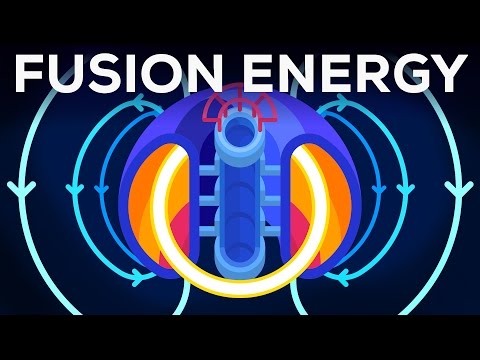 Photo: N43 and Hermes
Fusion powers stars by joining light nuclei. Reproducing that reaction on Earth means controlling a plasma hotter than the Sun while extracting useful energy from the machine.
01Why fusion releases energy
Light nuclei can combine into a heavier nucleus with slightly less mass than the starting pieces. The mass difference appears as energy. Deuterium and tritium are favored because they fuse at achievable temperatures and produce energetic neutrons.
02Plasma is matter without a container
At fusion temperatures, atoms are ionized. No solid wall can touch the plasma, so magnetic devices confine it with fields while inertial concepts compress a fuel capsule briefly with powerful lasers or other drivers.
Approximate temperatures in millions of degrees Celsius; magnetic fusion plasma is hotter than the Sun core because its density is far lower.
03The Lawson-style balancing act
A power plant needs enough temperature, density and confinement time for fusion reactions to outpace losses. Improving one variable can complicate another. Heating the plasma is only the beginning; the entire system must sustain the conditions.
04Breakeven has multiple definitions
Scientific breakeven compares fusion energy in the target or plasma with energy delivered to it. Engineering breakeven includes magnets, lasers, pumps, cooling and electricity conversion. A commercial plant must also run reliably and maintain its components.
05Neutrons make the blanket essential
Deuterium-tritium fusion produces neutrons that carry energy into surrounding material. A blanket can convert that energy to heat and may breed tritium from lithium. The same neutrons also damage structures and activate materials.
Conceptual accounting layers: each broader boundary includes more energy inputs and losses.
06The fuel cycle is not automatic
Deuterium is abundant in water, but tritium is scarce and radioactive. Future plants would need breeding, extraction and accounting systems that work under intense neutron flux. Fuel availability is therefore an engineering requirement.
07The finish line is repetition
A spectacular pulse demonstrates physics; a power station needs millions of controlled pulses or continuous operation, predictable maintenance and competitive cost. Fusion remains a promising research pathway, not a guaranteed near-term grid source.
Source: Kurzgesagt – In a Nutshell — Fusion Power Explained – Future or Failure (approximately 15,072,393 views, observed August 2026).
References
- Wikipedia: Nuclear fusion
- Fusion Power Explained – Future or Failure — Kurzgesagt – In a Nutshell (approximately 15,072,393 views observed August 2026).
- NASA science and exploration resources
- Nature research and review literature
- IAEA fusion energy overview and ITER science documentation
By N43 and Hermes for Sailor Bob News.


