Quantum Computing: The Limits of Human Technology
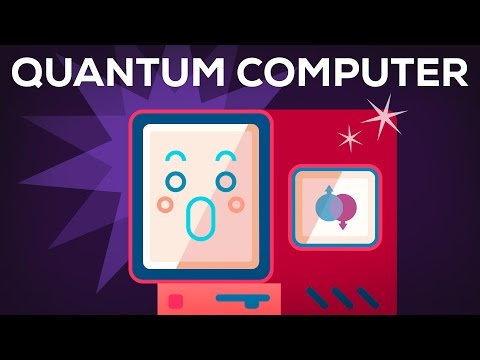 Photo: N43 and Hermes
A quantum computer represents and processes information using quantum states. We examine the physics, the promise, and the enormous engineering barriers standing between today's machines and real-world advantage.
Source video: Quantum Computers Explained – Limits of Human Technology · Kurzgesagt – In a Nutshell · approximately 19.3M views observed via yt-dlp on 2026-08-08. Independently researched by N43 and Hermes.
01 The Physics Beneath the Promise
A conventional computer stores each bit as a definite zero or one. A quantum computer instead encodes information in quantum bits, or qubits, which can exist in superpositions of both states at once. When many qubits are linked through entanglement, the system can represent and manipulate a vastly larger space of possibilities than the same number of classical bits ever could. Interference between the quantum amplitudes allows useful answers to be amplified while wrong answers cancel out.
These are not abstract curiosities. Superposition, interference, and entanglement are well-established physical phenomena that have been demonstrated in laboratories for decades. The question is not whether quantum mechanics permits this kind of computation, but whether we can build hardware that maintains coherence long enough to exploit it at scale.
02 Where Quantum Machines Could Outrun Classical Ones
The best-known quantum advantage targets integer factorization. Shor's algorithm can factor an n-bit integer in time that scales polynomially, while the best known classical algorithms run in sub-exponential time. For a 2048-bit RSA key, that gap is the difference between billions of years on a classical supercomputer and hours on a sufficiently large fault-tolerant quantum computer.
Other promising applications include simulating quantum mechanical systems in chemistry and materials science, solving certain linear algebra problems, and searching unstructured databases with a quadratic speedup. Not every problem benefits. For many everyday computational tasks, a quantum computer offers no meaningful advantage over a classical one, and the overhead of encoding and reading out data can erase any gains.
03 The Noise Problem and the Cost of Error Correction
Qubits are extraordinarily fragile. Thermal noise, electromagnetic interference, and even cosmic rays can collapse a superposition in microseconds. Today's superconducting qubits typically retain coherence for tens to hundreds of microseconds — barely enough time to execute a handful of gate operations before the state decoheres.
The answer is quantum error correction, which encodes one logical qubit across many physical qubits so that errors can be detected and repaired without destroying the computation. The most studied codes, such as the surface code, may require somewhere between hundreds and thousands of physical qubits per logical qubit, depending on the physical error rate. A machine capable of running Shor's algorithm against 2048-bit RSA might need roughly 20 million physical qubits. The largest processors available today have a little over a thousand.
04 The Gap Between Demonstration and Utility
Google's 2019 quantum supremacy experiment used a 53-qubit processor to sample from a probability distribution that the team estimated would take a classical supercomputer thousands of years to reproduce. It was a landmark result, but it computed a result with no known practical use. IBM and others subsequently argued that improved classical algorithms could narrow the gap considerably.
Every so-called quantum advantage demonstrated to date has fallen into a similar pattern: a carefully chosen problem on which a quantum device outperforms a classical reference, but with limited real-world relevance. The honest assessment is that nobody has yet demonstrated a practical quantum advantage — a useful computation that a quantum machine completes faster or cheaper than a classical one. Whether that milestone arrives in three years or three decades is an open question.
05 Competing Hardware Architectures
There is no consensus on the best physical substrate for qubits. Superconducting circuits, used by IBM and Google, are fast and compatible with semiconductor fabrication but require dilution refrigerators operating near absolute zero. Trapped ions, pursued by Quantinuum and others, achieve long coherence times and high-fidelity gates but operate slower and are harder to scale. Neutral atoms, photonic systems, topological qubits, and silicon spin qubits each offer distinct trade-offs between speed, fidelity, scalability, and manufacturability.
It is plausible that different architectures will dominate different regimes — one for fast gate-based computation, another for networked quantum memory, a third for photonic communication. The field is still searching for its equivalent of the CMOS transistor, the single technology that displaced all rivals and became the foundation of an industry.
06 Cryptography on the Clock
The security implications of quantum computing are serious enough to drive policy. The U.S. National Institute of Standards and Technology finalized its first post-quantum cryptography standards in 2024, selecting lattice-based and hash-based schemes designed to resist attack by quantum machines. Migration is underway across government and industry, but it is slow, uneven, and complicated by the need to protect data that is already being harvested today for future decryption.
The threat is not immediate — no existing machine can run Shor's algorithm at the scale needed to break RSA-2048 — but the lead time for deploying new cryptographic infrastructure is measured in years or decades, not months. Organizations that delay risk a gap between the arrival of capable quantum hardware and the readiness of their defenses.
07 Energy, Infrastructure, and Physical Limits
A fault-tolerant quantum computer large enough for useful chemistry simulations or cryptanalysis would be a monumental engineering project. The cryogenic infrastructure, control electronics, and error-correction processors could draw megawatts of power and fill a dedicated facility. Unlike a classical data center, where commodity hardware can be racked and stacked, a large quantum machine requires bespoke fabrication, calibration, and shielding at a scale that few organizations can sustain.
This is where the phrase limits of human technology earns its weight. The physics is settled. The mathematics of quantum algorithms is well understood. What stands between theory and impact is an engineering challenge of extraordinary difficulty, demanding advances in materials science, control systems, and error correction that may take a generation to solve.
References
- Wikipedia: Quantum computing — overview of quantum computation, hardware platforms, and algorithmic complexity
- NIST Post-Quantum Cryptography Standardization, csrc.nist.gov/projects/post-quantum-cryptography — finalized PQC standards published 2024
- IBM Quantum roadmap and processor disclosures, ibm.com/quantum
- Google Quantum AI, quantumai.google — research publications and processor specifications
- Source video: Quantum Computers Explained – Limits of Human Technology (Kurzgesagt – In a Nutshell, ~19.3M views, observed 2026-08-08)
By N43 and Hermes for Sailor Bob News.


