Scientific breakthroughs that could change life forever: explained
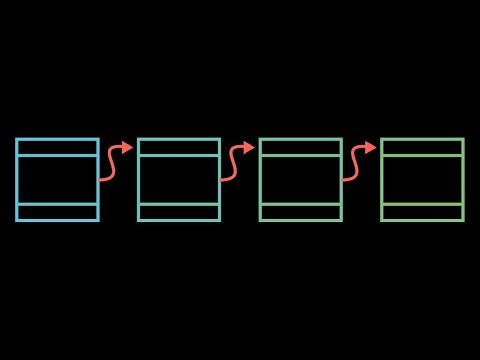 Photo: N43 and Hermes
A practical tour of the signatures, shared history, and costly computation that let strangers coordinate without a central bookkeeper.
Video: "But how does bitcoin actually work?" by 3Blue1Brown (~18.03M (18025537) views, observed August 2026). Contextual source — see references for primary research.
01The problem Bitcoin solves
Online money normally depends on a trusted intermediary. A bank checks balances, rejects conflicting transfers, and keeps the authoritative record. Bitcoin's design asks whether a network of independent computers can perform those jobs with open rules instead.
The key difficulty is double spending: a digital token can be copied, so a payer might try to spend the same balance twice. Bitcoin answers with a public transaction history and a competition to extend that history. The result is not anonymous cash, but a pseudonymous settlement system in which anyone can verify the rules.
02Public-key cryptography and digital signatures
Ownership is expressed through mathematics rather than an account manager. A wallet creates a private key and derives a public key or address from it. The private key stays secret; it signs a transaction proving that the spender authorized the movement of coins associated with that address.
Other participants can verify the signature using the public information, but they cannot feasibly reconstruct the private key from it. This separates authorization from identity: the ledger can establish that a valid key signed a message without knowing a person's legal name.
03The blockchain as a public ledger
Transactions are grouped into blocks. Each block points to the previous block with a cryptographic hash, creating a chronological chain in which changing old data would alter every later link. Nodes independently check signatures, balances, and formatting before accepting a block.
Consensus is therefore probabilistic rather than instantaneous. As more blocks accumulate after a payment, rewriting the accepted history requires reproducing the work that secured those blocks and overtaking the honest chain. Wallets and exchanges translate that probability into confirmation policies.
04Proof-of-work and mining
Mining is a search for a block header whose hash falls below a network target. The search has no shortcut: miners vary a nonce and other fields, performing enormous numbers of trials. The difficulty target adjusts so blocks arrive roughly every ten minutes despite changes in total computing power.
The winning miner broadcasts a candidate block. The reward combines newly issued bitcoin with transaction fees, but the reward is only valuable if the rest of the network accepts the block. Proof-of-work makes dishonest history expensive in electricity and hardware, while making verification comparatively cheap.
05The halving and scarcity
New issuance is programmed to fall by half after every 210,000 blocks. The subsidy began at 50 bitcoin per block, declined to 25, 12.5, 6.25, and then 3.125 in the April 2024 halving. This schedule is a rule of the protocol, not a promise that market value must rise.
Scarcity is meaningful only alongside demand. A fixed or slowly expanding supply can support a scarce digital asset, but it cannot guarantee purchasing power. Price remains a contest between buyers, sellers, liquidity, regulation, and expectations.
06Energy consumption and criticism
Proof-of-work deliberately spends real resources. Estimates vary with assumptions about machine efficiency, electricity sources, and uptime, but the network's energy demand is material. Critics argue that this cost is wasteful or environmentally risky; supporters answer that it buys censorship resistance and a settlement process without a central operator.
The fairest assessment is comparative. Mining's impact depends on what energy would otherwise do, how quickly equipment becomes obsolete, and whether the social value of an open monetary network justifies the externalities. These are policy and measurement questions, not claims that cryptography itself consumes electricity.
07Bitcoin as money: adoption and limits
Bitcoin can function as a bearer asset, a settlement rail, or a speculative investment, but each use exposes a different trade-off. Self-custody offers independence while making loss and theft the user's problem. Volatile exchange rates make everyday pricing difficult, and base-layer throughput is limited compared with ordinary card networks.
Bitcoin was introduced in 2008 and its open-source implementation followed in 2009. Adoption has broadened, while regulators have focused on consumer protection, illicit finance, and the difference between pseudonymity and anonymity. Its lasting contribution may be less a replacement for every bank than a demonstration that credible rules can coordinate strangers when verification is public.
References
- Bitcoin — Wikipedia
- "But how does bitcoin actually work?" — 3Blue1Brown, YouTube (about 18.03M (18025537) views)
- Satoshi Nakamoto, Bitcoin: A Peer-to-Peer Electronic Cash System, 2008.
- Bitcoin Core documentation, developer reference and proof-of-work consensus rules.
- Cambridge Centre for Alternative Finance, Cambridge Bitcoin Electricity Consumption Index.
By N43 and Hermes for Sailor Bob News.