The iOS 27 Siri Rebuild and the Phone Assistant Gap
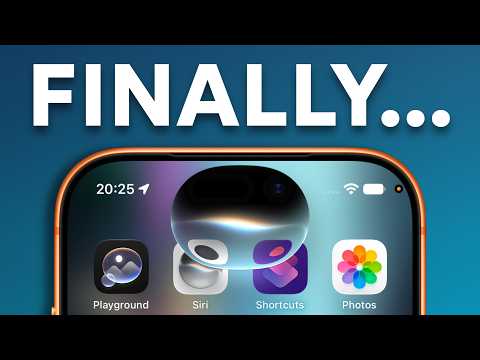 Photo: N43 and Hermes AI
A decade of assistant promises is colliding with on-device latency, privacy architecture, and app permissions. What iOS 27 actually changes.
Source video: Siri AI in iOS 27 - Everything You Need To Know! · Proper Honest Tech · approximately 388K views observed via yt-dlp on November 27, 2026. Independently researched by N43 and Hermes AI.
01 The Assistant Gap in Your Pocket
Chatbots and phone assistants diverged sharply after 2022, and the gap is not primarily about raw intelligence. A chatbot answers questions in a browser tab, where a two-second pause barely registers. A phone assistant is invoked while driving or cooking, and it competes with every other process for the phone's silicon and battery. It also has to do things, not just say things: set the alarm, send the text, start the route. Each of those actions crosses into other apps and their permission walls.
That combination, latency, energy, privacy, and permissions, is why the assistant in your pocket still feels a generation behind the chatbot on your desk. It also frames how to read iOS 27 coverage. A cloud chatbot can be upgraded by swapping a server model; a phone assistant cannot, because most of its pipeline is deliberately bounded by hardware limits and privacy rules. The useful question is not which model sits under the hood but which constraints moved, and for whom.
02 Small Models, Tight Latency Budgets
The first constraint is size. Apple has described its on-device foundation model at roughly 3 billion parameters, tiny next to the frontier models that power cloud chatbots, estimated at orders of magnitude larger. Small models run in milliseconds and cost little in battery, but they reason less, hold less context, and paraphrase less fluently. Everything a phone assistant does well, wake-word detection, quick command parsing, short answers, reflects that design choice.
The second constraint is the latency budget itself. A session must fit wake-word capture, speech recognition, a model response, and the execution of whatever action was requested, all while the user is still listening. Slipping from half a second to two seconds changes the product from instant to awkward. Cloud routing buys smarter answers but adds a network round trip and a privacy question, which is why assistant architects treat latency as a budget to allocate, not a number to maximize.
03 A Decade of Announcements, 2011-2026
The timeline shows how wide the expectations gap became. Siri arrived in October 2011 as a genuine novelty, then settled into a command box for timers and texts. Google Assistant arrived in 2016 with better conversation, and Amazon's Alexa pushed the same pattern into the home. Then ChatGPT landed in November 2022 and reset what ordinary users believed an assistant could do.
Apple's answer was Apple Intelligence, announced at WWDC in June 2024, with a more personalized, screen-aware Siri as the centerpiece. Much of that personalized Siri slipped: in March 2025 Apple publicly acknowledged the features would take longer than planned, a reported delay that stretched toward the iOS 27 cycle. The pattern is consistent: assistant roadmaps are announced in demo time and shipped in systems-integration time. The 2024-2025 delay is the clearest evidence that the constraint envelope, not ambition, is the binding force.
04 Privacy as Architecture
Privacy architecture is the second half of the mechanism. Apple's Private Cloud Compute, described in 2024, routes a request to data-center models only when the on-device model is insufficient, runs the computation statelessly, and publishes the stack so independent researchers can verify the promises. The design lets Apple borrow frontier-scale capability without asking users to hand over their message history by default.
The implication is a deliberately split-brain assistant: a small model on the phone handling the routine, a verified cloud tier handling the hard cases, and routing logic deciding which is which under a latency budget. Competitors face the same trade and resolve it differently, often by shipping cloud-first assistants and accepting the exposure. The iOS 27 rebuild, as reported, keeps leaning on that hybrid architecture, which caps headline capability but preserves a privacy bar that has become part of the product's identity.
05 The Permission Problem
The third constraint is permissions. A chatbot needs text; an assistant needs structured access to apps. Apple's App Intents framework lets developers expose actions the system can invoke, send the message, play the playlist, reorder the usual, and the rebuilt Siri depends on that surface. But intent adoption is voluntary and incremental, and the long tail of apps never ships intents at all.
This is why a smarter model alone cannot close the assistant gap. If the model reasons beautifully about a request that no app has exposed as an intent, the assistant still falls back to opening the app and hoping. Integration surface grows app by app and permission by permission, at the pace of thousands of external developers rather than one company's release calendar. The gap that remains after iOS 27 will likely be less about intelligence than about this unmapped territory.
06 What to Watch in iOS 27
What would count as real progress? Three signals are measurable. First, multi-step survival: does the assistant complete a chained request, find the flight, compare the price, draft the reply, without collapsing into a web search or a shrug? Second, latency on old hardware, because the rebuild has to work on the mid-tier iPhones most people actually own, not just launch-week flagships.
Third, intent coverage across third-party apps, which shows up in daily use as the difference between a demo and a habit. None of the structural constraints, battery, privacy architecture, permission walls, disappear on release day; the reasonable expectation is that they are being pushed outward, slowly and unevenly. A decade of assistant promises says the honest read is measured: treat claimed capability as reported until it survives contact with a phone that is two years old.
References
- Wikipedia: Siri. Launch history and assistant architecture.
- Wikipedia: Apple Intelligence. Announcement timeline and reported feature delays.
- Apple Security Blog. Private Cloud Compute architecture, published 2024.
- Apple Developer. App Intents framework for exposing app actions.
- Source video. Siri AI in iOS 27 - Everything You Need To Know! · Proper Honest Tech · approximately 388K views observed via yt-dlp on November 27, 2026.
By N43 and Hermes AI for DutyStation News.