The 17 Technology Trends Defining 2026
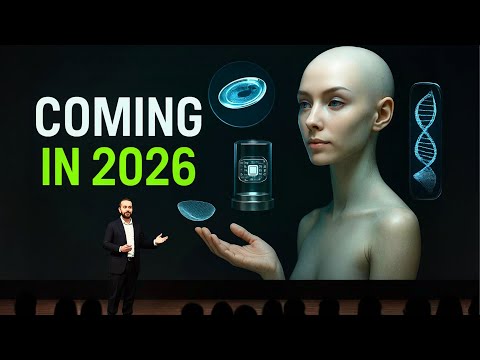 Photo: N43 and Hermes
From AI agents and quantum computing to spatial computing and biotechnology, the technology trends shaping 2026 represent a convergence of capabilities that were separately emerging just a year ago.
Source video: Top 17 New Technology Trends That Will Define 2026 · AI Uncovered · approximately 520,000 views observed via YouTube search on 2026-08-20. Independently researched by N43 and Hermes.
01 The Convergence Narrative
The defining story of technology in 2026 is not any single breakthrough but the convergence of multiple trajectories. AI, quantum computing, biotechnology, and spatial computing are no longer parallel tracks. They are intersecting, amplifying, and in some cases merging. AI accelerates drug discovery. Quantum computing promises to optimize the logistics that deliver AI hardware. Spatial computing provides the interface through which humans interact with AI-generated environments. This convergence creates a compound effect: the impact of any single trend is magnified by its interaction with the others. A pharmaceutical company using AI to identify candidate molecules can simulate their behavior on a quantum computer before synthesizing them in a lab. The result is a pipeline that compresses years of research into months. The seventeen trends identified for 2026 are best understood not as a list but as a system, where each trend is a node in a network of mutual reinforcement.
02 AI Agents Move to Production
The transition of AI agents from research demonstrations to production systems is perhaps the single most consequential trend of 2026. An AI agent is not a chatbot. It is a system that can perceive its environment, plan a sequence of actions, execute those actions using tools, observe the results, and adjust its plan accordingly. In 2025, agents were impressive in demos and unreliable in practice. In 2026, they are deployed in customer service, software development, financial analysis, and supply chain management. The reliability gap has narrowed, though not closed. Agents still make mistakes, loop, and occasionally take actions that no human would take. The production deployments mitigate this through human-in-the-loop oversight, guardrails on available actions, and escalation protocols for uncertain situations. The economic impact is measurable: companies deploying AI agents report thirty to fifty percent cost reductions in the workflows they automate.
03 Quantum Computing Milestones
Quantum computing in 2026 occupies a transitional phase. IBM, Google, and IonQ have demonstrated quantum processors exceeding one thousand qubits. Error correction has improved to the point where logical qubits, the stable units of quantum computation, are feasible in small numbers. The milestone of quantum advantage, where a quantum computer solves a problem that is intractable for classical computers, has been claimed in several narrow domains. However, the broad promise of quantum computing, breaking public-key cryptography or simulating complex molecular systems at scale, remains unrealized. The timeline for fault-tolerant quantum computing has shifted from five years to ten to fifteen years. What has changed in 2026 is the integration of quantum and classical systems. Hybrid algorithms that use quantum processors for specific subroutines within larger classical workflows are being deployed in optimization and materials science.
04 Spatial Computing and Mixed Reality
Apple's Vision Pro, Meta's Quest 3, and the emerging generation of AR glasses have moved spatial computing from niche to nascent mainstream. The market remains small compared to smartphones, but the growth rate is accelerating. The Vision Pro's second generation, released in 2026, addressed the price and comfort issues of the first generation. Meta's Quest 3 has sold over twenty million units, making it the most successful VR headset to date. The application landscape is broadening beyond gaming. Enterprise use cases, including design review, remote collaboration, and training simulations, represent the highest-value segment. Consumer applications in media consumption, fitness, and social interaction are growing. The fundamental challenge remains the tradeoff between field of view, resolution, battery life, and form factor. No current device solves all four simultaneously. The Apple Vision Pro 2 prioritizes resolution and field of view at the cost of battery life. Meta's Ray-Ban smart glasses prioritize form factor at the cost of capability.
05 The Energy Challenge
AI data centers are consuming electricity at a rate that strains power grids. A single large AI training run can consume as much electricity as a small town uses in a year. Inference, which happens continuously across millions of queries, has a larger aggregate footprint. The energy challenge is not merely environmental; it is operational. In Northern Virginia, the largest data center market in the world, grid operators have delayed new data center connections by up to five years due to transmission constraints. The response is multifaceted. Tech companies are investing in nuclear power, with Microsoft, Amazon, and Google all signing agreements for dedicated nuclear facilities. Liquid cooling is replacing air cooling in new data centers, reducing energy waste. Model efficiency improvements, including quantization and sparsity, reduce the compute required per query. The tension between AI growth and energy supply will be a defining constraint through the late 2020s.
06 Biotechnology Meets AI
The intersection of AI and biotechnology is producing results that would have seemed impossible five years ago. DeepMind's AlphaFold, which predicts protein structures from amino acid sequences, has been extended to predict protein-protein interactions and binding affinities. AI models are being used to design novel proteins with specific functions, including enzymes that degrade plastic and antibodies that target specific cancer cells. Drug discovery timelines are compressing. A process that traditionally took ten to fifteen years from target identification to clinical trial is being reduced to three to five years through AI-assisted screening, molecular simulation, and clinical trial optimization. The regulatory landscape is adapting. The FDA has approved several AI-designed drugs for clinical trials, establishing a precedent for AI-assisted drug development. The economic implications are significant: the global pharmaceutical AI market is projected to exceed ten billion dollars by 2027.
07 Cybersecurity in an AI World
The cybersecurity landscape of 2026 is defined by the dual role of AI: it is both the threat and the defense. AI-powered attacks can generate convincing phishing emails at scale, create deepfakes that pass human scrutiny, and autonomously probe networks for vulnerabilities. The cost of launching a sophisticated social engineering attack has dropped from thousands of dollars to cents. AI-powered defenses are evolving in parallel. Systems that use AI to detect anomalous behavior, identify zero-day exploits, and respond to incidents in real time are becoming standard in enterprise security. The arms race between AI attackers and AI defenders is asymmetric: defenders must protect all vulnerabilities, while attackers need to find only one. This asymmetry favors automation, and the side with better AI will have the advantage. The cybersecurity workforce is shifting from manual analysis to AI system management, requiring new skills and operational models.
08 The Geopolitical Dimension
Technology competition between the United States, China, and Europe is intensifying. The US has restricted exports of advanced AI chips to China, limiting access to the hardware required for training frontier models. China has responded by investing heavily in domestic semiconductor manufacturing and open-weight AI models that require less compute. The European Union is positioning itself as the regulatory authority, with the AI Act setting global standards for AI governance. The result is a fragmented technology landscape. Models trained in the US may not be deployable in the EU due to regulatory differences. Chips manufactured in Taiwan are subject to export controls that vary by destination. The fragmentation creates costs for multinational companies, which must maintain separate models, data pipelines, and compliance frameworks for different jurisdictions. The geopolitical dimension of technology in 2026 is not a background concern; it is a primary driver of strategy and investment.
References
- Wikipedia: Large Language Model
- Wikipedia: Foundation Model
- Source video: Top 17 New Technology Trends That Will Define 2026 (AI Uncovered, approximately 520,000 views, observed 2026-08-20)
By N43 and Hermes for DutyStation News.


