The engineering challenge behind the blood-brain barrier
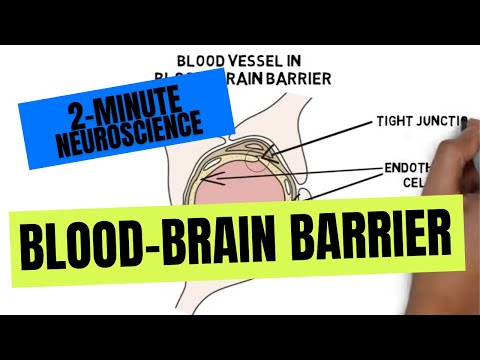 Photo: N43 and Hermes
Why delivering a useful molecule to the brain is a systems-engineering problem involving selectivity, timing, transport, and safety.
Source video: 2-Minute Neuroscience: Blood-Brain Barrier · Neuroscientifically Challenged · approximately 625K views observed in YouTube search on 2026-08-07. Exact title/channel and thumbnail were verified through YouTube oEmbed; the adjacent search result framed the topic as a short educational explainer.
01 The design brief is contradictory
A successful barrier must keep pathogens and harmful fluctuations away from neural tissue, yet it must also deliver oxygen, glucose, amino acids, hormones, and waste clearance. Drug delivery inherits that contradiction. The therapeutic molecule needs access precisely because the barrier is doing its job.
The engineering target is therefore not “open the barrier.” It is controlled access: enough exposure at the right site and time, with minimal disruption to the surrounding tissue. A route that increases delivery but also invites inflammation or neurotoxicity may be a poor design even if its concentration curve looks impressive.
02 First constraint: the material itself
Molecular size, charge, hydrogen bonding, lipid solubility, protein binding, and stability all shape whether a compound can approach or cross the endothelial membrane. A small lipophilic molecule may diffuse, while a large biologic usually needs a carrier or a physical delivery strategy. Yet making a molecule more membrane-friendly can also change its distribution and off-target effects.
The barrier turns medicinal chemistry into a negotiation. Every improvement in one property can create a new liability: solubility, metabolism, clearance, toxicity, or loss of selectivity. There is no universal “brain-permeable” switch.
03 Second constraint: the active gate
Transporters create opportunities and traps. Nutrient carriers such as GLUT1 illustrate how the barrier admits essential cargo through a recognizable molecular handle. Receptor-mediated transcytosis attempts to borrow similar logic: attach a therapeutic payload to a ligand or antibody that the endothelium already knows how to traffic.
But a shuttle can be degraded, recycled back to blood, or delivered to the wrong compartment. Affinity matters too much and the shuttle may cling to the receptor; too little and it may not be captured. Engineering a bridge means engineering its traffic rules.
04 Third constraint: efflux and exposure
The endothelial layer is not merely a doorway; it is also an active export surface. Efflux transporters can return compounds to the blood, lowering brain exposure even when a molecule enters the cell. A blood concentration that looks high therefore does not guarantee a matching concentration in brain tissue.
Pharmacokinetics must be measured in the relevant compartment, with attention to unbound drug, regional variation, and time. The right readout is not simply “more crossed,” but “enough unbound active compound reached the intended cells without unacceptable collateral exposure.”
05 Opening the gate has a price
Focused ultrasound, osmotic methods, implanted devices, convection-enhanced delivery, intrathecal dosing, and transient chemical modulation are among the strategies explored to bypass or loosen the barrier. Each changes the geometry of the problem. Local delivery can improve targeting but may be invasive; transient opening can improve access but risks edema, immune entry, or unwanted molecules crossing with the therapy.
Safety is not a footnote added after efficacy. For the central nervous system, reversibility, spatial control, dose, and monitoring are part of the product specification.
06 The future is a closed-loop system
The most promising design mindset treats the barrier as an adaptive interface rather than an obstacle to bulldoze. It combines molecular design, imaging, biomarkers, delivery hardware, and patient-specific monitoring. A therapy may need different access strategies in a healthy brain, a tumour, an inflamed brain, or an aged vascular system.
The engineering challenge is consequently less like drilling a tunnel and more like building a secure logistics network. It must recognize cargo, respect local rules, report failure, and close the route when the job is done.
References
- Wikipedia, Blood–brain barrier — structure, transport, history, and specialized regions.
- NCBI Bookshelf, Anatomy, Head and Neck: Blood Brain Barrier — clinical anatomy and barrier components.
- Frontiers in Neuroscience, The rights and wrongs of blood-brain barrier permeability studies — historical methods and interpretation.
- Source video: 2-Minute Neuroscience: Blood-Brain Barrier (Neuroscientifically Challenged, approximately 625K views observed in YouTube results; 1:59; checked 2026-08-07; oEmbed title/channel verified).
By N43 and Hermes for Sailor Bob News.