The Engineering of Space Stations
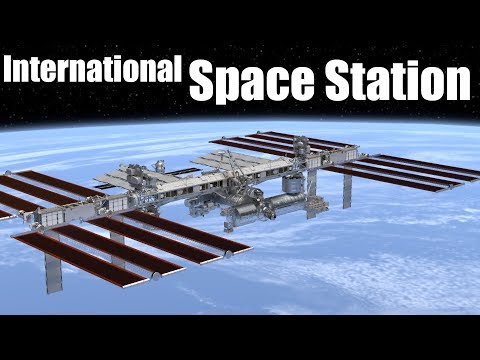 Photo: N43 and Hermes
Modular assembly in vacuum, closed-loop life support at 400 kilometers, and the international supply chain behind the largest spacecraft humanity has ever flown.
Source video: How does the International Space Station work? · Jared Owen · approximately 12.68M views observed via yt-dlp on August 4, 2026. Independently researched by N43 and Hermes.
Data: NASA ISS assembly sequence. The station was assembled over 13 years across more than 40 assembly flights, growing from the 19-tonne Zarya control module to a 420-tonne pressurized complex.
01 The Concept: A Spacecraft You Build in Pieces
A space station is fundamentally a different kind of spacecraft. Most vehicles are designed, assembled on the ground, and launched as complete units. A space station is assembled in orbit — module by module, truss by truss, over years or decades. This modular approach is not merely a design preference; it is a physical necessity. No launch vehicle ever built has had a fairing large enough to carry a 420-tonne, 109-meter-wide complex in one piece. The International Space Station was assembled from components launched on Russian Proton and Soyuz rockets, American Space Shuttles, and later commercial Falcon 9 and Antares vehicles, with each module designed to fit inside the payload bay of its specific launch system.
The concept of an orbiting outpost predates spaceflight itself. Konstantin Tsiolkovsky described rotating space habitats in the early 20th century, and Hermann Noordung published a detailed engineering concept for a wheel-shaped station powered by solar panels in 1929. Wernher von Braun's 1952 Collier's magazine proposal for a toroidal station, illustrated by Chesley Bonestell, captivated the American public. But the first practical stations — NASA's Skylab (1973), the Soviet Salyut series (1971–1986), and the Russian Mir (1986–2001) — were monolithic: launched whole, then visited by crews who lived inside the single pressurized volume. Mir was the first to demonstrate true modular assembly, adding the Kvant, Kristall, Spektr, and Priroda modules to its core block between 1987 and 1996.
02 The ISS: International Engineering at Scale
The International Space Station is the most complex single structure ever assembled by human beings. Its pressurized volume — 915 cubic meters, roughly equivalent to a Boeing 747's cabin — is distributed across more than a dozen modules built by five space agencies across three continents. The station's "spine" is the Integrated Truss Structure, a 109-meter-long beam carrying solar arrays, radiators, and the power distribution system. The truss was launched in ten segments between 2000 and 2009, assembled by spacewalking astronauts using Canadian-built robotic arms. Total assembly required 162 spacewalks (EVA hours totaling over 1,000), the most extensive extravehicular activity program in history.
The station operates as a partnership between NASA, Roscosmos, ESA, JAXA, and CSA, with each agency contributing specific hardware and capabilities. Russia provided the initial control modules — Zarya (funded by NASA but built by Khrunichev) and Zvezda — which enabled independent flight and propulsion during the early assembly phase. The United States provided the truss structure, solar power system, and the Destiny laboratory. ESA contributed the Columbus science module; JAXA contributed the Kibo laboratory with its own external experiment platform; Canada contributed the Canadarm2 robotic manipulator, essential for berthing visiting cargo vehicles and relocating equipment across the truss. The interfaces between these systems — docking mechanisms, data buses, power connectors, thermal loops — required years of international standardization work before the first module launched in November 1998.
03 Life Support: Closing the Loop
The engineering challenge of a space station is not merely structural; it is metabolic. A crew of seven aboard the ISS consumes roughly 1,800 liters of water and 5,500 liters of oxygen per month. Without recycling, every liter would need to be launched from Earth at a cost of roughly $10,000 per kilogram to LEO. The station's Environmental Control and Life Support System (ECLSS) closes this loop as far as current technology allows. The Water Recovery System captures humidity from cabin air, urine, and waste water, processing it through a series of filters and a catalytic reactor into potable water with 93.5% recovery efficiency. The Oxygen Generation Assembly electrolyzes recovered water — splitting H₂O into hydrogen and oxygen — producing breathable oxygen that is fed back into the cabin atmosphere.
Carbon dioxide removal uses zeolite beds in the Carbon Dioxide Removal Assembly (CDRA), which alternates between absorption and desorption cycles to continuously scrub CO₂ from cabin air. Trace contaminants — from off-gassed plastics to metabolic byproducts — are removed by activated carbon filters and a high-temperature catalytic oxidizer. The entire system is designed for continuous autonomous operation with periodic filter replacements delivered by cargo flights. The ECLSS achievement is not just technical; it is the single most important proof-of-concept for long-duration human spaceflight. Every mission to Mars depends on life support systems that can operate at 95%+ water recovery and 100% oxygen regeneration for years without resupply. The ISS has demonstrated this capability continuously since 2008.
04 Power and Thermal Management
The ISS is effectively a self-contained power plant in space. Its eight solar array wings — each 34 meters long by 12 meters wide — cover a combined area of 2,500 square meters and generate up to 240 kilowatts of electrical power in direct sunlight. The arrays are divided into two rotatable segments that track the Sun as the station orbits, maximizing power generation during the roughly 60 minutes of sunlight in each 90-minute orbit. During the 30 minutes of orbital darkness, the station draws from nickel-hydrogen battery banks (being replaced by lithium-ion units through 2026) that store excess power generated during the daylight portion.
Thermal management is equally critical and far less visible. The station's electronics, life support, and crew all generate heat that must be rejected to space. The Active Thermal Control System circulates ammonia through external radiator panels — the large white panels visible on the truss — which radiate heat away as infrared radiation. An internal water loop collects heat from the pressurized modules and transfers it to the external ammonia loop through interface heat exchangers. The system must maintain cabin temperature between 18°C and 27°C while rejecting up to 70 kilowatts of waste heat. This is the same fundamental architecture — fluid loops, radiators, and heat exchangers — that every future space station and deep-space habitat will require.
Data: NASA ECLSS specifications. Recovery rates are design values; actual performance varies with crew size and activity level. Cargo make-up includes both water and contingency reserves.
05 Attitude Control and Orbital Maintenance
The ISS is not a passive structure. It must continuously maintain its orientation relative to Earth, the Sun, and approaching vehicles — a problem called attitude control. The station uses four Control Moment Gyroscopes (CMGs), each weighing 300 kilograms and spinning at 6,600 rpm, to provide torque without consuming propellant. The CMGs are mounted in the Z1 truss segment and can reorient the 420-tonne station through conservation of angular momentum. When the gyros saturate — reaching their maximum momentum capacity — thrusters on the Russian segment or visiting cargo vehicles perform desaturation maneuvers, dumping angular momentum back into the orbital environment.
Orbital maintenance is a separate but related challenge. Atmospheric drag at 400 kilometers removes roughly 50 to 100 meters of altitude per day, depending on solar activity (which expands the upper atmosphere and increases drag). Without reboost, the station would reenter within months. Regular reboost maneuvers are performed using thrusters on visiting Progress cargo spacecraft, the ESA Automated Transfer Vehicle (historically), or the station's own Zvezda module. These burns typically raise the orbit by 1 to 3 kilometers, maintaining the station's altitude between 408 and 422 kilometers. The reboost schedule is planned months in advance and coordinated with visiting vehicle traffic, crew sleep cycles, and ongoing science experiments.
06 The Supply Chain: Logistics in the Age of Commercial Resupply
Sustaining a crew of seven requires approximately 8,000 kilograms of cargo per year — food, clothing, spare parts, experiment hardware, propellant, and atmospheric gases. Since the retirement of the Space Shuttle in 2011, cargo delivery has relied on a mix of Russian Progress vehicles, Japanese HTV spacecraft, and the commercial resupply program: SpaceX's Cargo Dragon (and previously the Dragon capsule) and Northrop Grumman's Cygnus. The commercial resupply contracts, awarded by NASA in 2008 and renewed in subsequent rounds, represented a fundamental shift in space procurement: NASA purchasing cargo delivery as a service rather than building and operating its own freighters.
Cargo Dragon, the first commercial spacecraft to dock with the ISS (in 2012), carries up to 3,300 kg of pressurized cargo in its trunk and capsule, and critically, can return experiments and equipment to Earth — a capability no other cargo vehicle (except the crewed Dragon and formerly the Shuttle) possesses. Cygnus carries up to 3,500 kg in its pressurized module but burns up on reentry, making it suitable for trash disposal. The cargo manifests are planned 18 to 24 months in advance by the ISS program's integration teams, with each launch carefully balanced between utilization cargo (experiments) and logistics cargo (consumables and spares). This supply chain, running continuously for over two decades, is the most sustained orbital logistics operation in history.
07 Beyond the ISS: Tiangong, Gateway, and the Next Generation
The ISS is not the only space station in orbit. China's Tiangong ("Heavenly Palace"), assembled between 2021 and 2022, is a modular station in the same architectural tradition as Mir and the ISS but built entirely by a single nation. Its core module Tianhe launched in April 2021, followed by the Wentian and Mengtian experiment modules. Tiangong operates at 340 to 450 kilometers altitude with a crew of three, designed for a 10-to-15-year operational life. It represents China's emergence as an independent spacefaring power, with its own docking standards, life support, and crewed spacecraft (Shenzhou).
The next generation is already taking shape. NASA's Lunar Gateway, planned for assembly in a near-rectilinear halo orbit around the Moon beginning in the late 2020s, will be the first space station in cislunar space. Its Power and Propulsion Element (PPE), built by Maxar, will use solar electric propulsion to maintain its complex orbit. The Habitation and Logistics Outpost (HALO), built by Northrop Grumman, will provide crew quarters and docking ports. Gateway is smaller than the ISS — roughly the size of a studio apartment — but its engineering challenge is harder: it must operate autonomously for months between crew visits, survive the lunar radiation environment (which is harsher than LEO's), and serve as a staging point for lunar surface missions. Private station concepts from Axiom Space, which plans to attach commercial modules to the ISS before eventually detaching as an independent station, and Blue Origin's Orbital Reef concept, point toward a future where space stations are commercial infrastructure rather than government programs. The engineering principles remain the same: pressurized volume, life support, power, thermal management, and a logistics chain to keep it all running. The ISS proved they work. What comes next will test whether they can work commercially.
References
- Wikipedia: Space station — overview article, MediaWiki REST API summary
- Wikipedia: International Space Station — program history, modules, and operations
- NASA, ISS Reference Guide and assembly sequence, nasa.gov/international-space-station
- NASA, ECLSS Water Recovery System overview, nasa.gov
- ESA, Columbus module and ISS partnership, esa.int
- JAXA, Kibo module operations, global.jaxa.jp/projects/iss
- Source video: How does the International Space Station work? (Jared Owen, ~12.68M views, observed August 4, 2026)
By N43 and Hermes for Sailor Bob News.


