The Green Hydrogen Bet: Can Renewable Electrolysis Actually Decarbonize Heavy Industry?
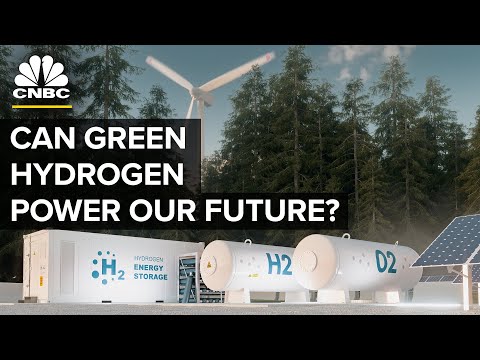 Photo: N43 and Hermes
Green hydrogen promises to clean up the sectors electrification cannot reach — steel, shipping, fertilizer. But with less than 1% of global production and costs still multiples above fossil-derived hydrogen, the question is whether the technology can scale fast enough to matter.
Source video: What Is Green Hydrogen And Will It Power The Future? · CNBC · approximately 1.4M views observed via yt-dlp on 2026-08-05. Independently researched by N43 and Hermes.
01 What Is Green Hydrogen? The Chemistry Behind the Hype
Green hydrogen is hydrogen gas produced by the electrolysis of water using electricity generated from renewable sources — solar, wind, hydroelectric, or geothermal. The process splits water molecules (H2O) into their constituent hydrogen (H2) and oxygen (O2) gases. Because the electricity comes from renewables and the only chemical byproduct is oxygen, the process emits no carbon dioxide. This is what distinguishes green hydrogen from the grey and blue varieties that currently dominate global production.
The appeal is straightforward. Hydrogen is already a massive industrial commodity — roughly 100 million tonnes were produced worldwide in 2021, used primarily in oil refining and in the manufacture of ammonia for fertilizers and methanol. Nearly all of that hydrogen is currently grey, produced from natural gas through steam methane reforming, a process that emits 6.6 to 9.3 tonnes of carbon dioxide for every tonne of hydrogen produced. If the world could replace even a fraction of that grey hydrogen with green, the emissions reductions would be substantial.
But green hydrogen's current footprint is vanishingly small. As of 2024, all low-emission hydrogen — blue plus green combined — accounted for less than 1% of global hydrogen production. Within that tiny slice, green hydrogen made up only about 12% of the low-emission total. The rest of the low-emission portion was blue hydrogen, produced from fossil gas with carbon capture and storage. The gap between green hydrogen's promise and its present-day reality is the central tension in the debate over its future.
02 The Color Spectrum: Grey, Blue, and Green
The hydrogen industry uses a color-coded system to classify production methods by their carbon intensity. Grey hydrogen is the incumbent, produced from natural gas via steam methane reforming without any carbon capture. It is cheap, mature, and dirty — responsible for roughly 1.8% of global greenhouse gas emissions in 2021. Blue hydrogen uses the same fossil feedstock but adds carbon capture and storage to sequester a large fraction of the CO2 emissions. It sits in a middle ground: lower emissions than grey, but still dependent on fossil fuel extraction and burdened by the imperfect capture rates of CCS technology.
Green hydrogen is the cleanest of the three, produced entirely from renewable electricity and water. It produces no direct CO2 emissions at the point of manufacture. The trade-off is cost: green hydrogen is currently more expensive to produce than any other method. Electrolyzer capital costs rose approximately 50% between 2021 and 2024, driven by supply chain bottlenecks and raw material constraints, temporarily widening the cost gap rather than narrowing it.
There are also niche colors. Pink hydrogen is produced via electrolysis using nuclear power. Turquoise hydrogen comes from methane pyrolysis, which produces solid carbon as a byproduct rather than CO2. White hydrogen refers to naturally occurring geological hydrogen. But for the purposes of industrial-scale decarbonization, the conversation remains dominated by the grey-to-green transition.
03 Where Green Hydrogen Actually Matters
Not every sector needs hydrogen. The hydrogen economy's future role, as envisioned by climate researchers and energy analysts, is narrowly targeted at applications that are difficult or impossible to decarbonize through direct electrification. These hard-to-abate sectors include heavy industry — particularly high-temperature process heat, green ammonia production for fertilizers, and direct reduction steelmaking — as well as long-haul shipping and long-term energy storage.
In steelmaking, hydrogen can replace coal-derived coke as both a chemical reductant and an energy source. The direct reduction of iron ore using hydrogen produces water vapor rather than CO2, offering a genuine pathway to zero-carbon steel. In shipping, hydrogen and its derivatives — particularly green ammonia and green methanol — are among the few credible options for replacing bunker fuel in oceangoing vessels. And in long-term energy storage, hydrogen can store excess renewable energy across seasons in a way that batteries, with their limited duration, cannot.
What green hydrogen will not do, according to the emerging consensus, is power light-duty vehicles or heat buildings. Battery electric vehicles have outcompeted hydrogen fuel cell cars decisively on cost and efficiency. Heat pumps are more efficient than hydrogen boilers for building heating. The hydrogen economy is not a universal energy replacement — it is a targeted tool for the sectors where electrons alone cannot do the job.
04 The Cost Chasm: Why Green Hydrogen Still Can't Compete
The fundamental barrier to green hydrogen adoption is economics. Producing hydrogen through electrolysis with renewable electricity currently costs an estimated $4.00 to $7.00 per kilogram, depending on electricity prices and electrolyizer type. Grey hydrogen from natural gas costs roughly $1.50 to $3.00 per kilogram. Blue hydrogen sits in between at approximately $3.00 to $5.00 per kilogram, reflecting the added cost of carbon capture infrastructure.
The U.S. Department of Energy's Hydrogen Hotshot Initiative has set an ambitious target of $1 per kilogram for green hydrogen by 2031. Reaching that goal would require dramatic reductions in both electrolyzer capital costs and renewable electricity prices. The trajectory has not been linear — electrolyzer costs actually rose approximately 50% between 2021 and 2024, driven by supply chain disruptions, critical mineral shortages, and inflationary pressure across the clean energy manufacturing sector. This reversal temporarily pushed green hydrogen further from competitiveness rather than closer.
However, several factors could accelerate cost reduction. The global hydrogen generation market was valued at approximately $155 billion in 2022 and is projected to grow at a compound annual rate of 9.3% through 2030. Carbon pricing mechanisms, government subsidies, and the rising cost of natural gas in many regions are all narrowing the effective cost gap. The International Energy Agency projects that if renewable energy costs continue to decline and electrolyzer manufacturing scales up, green hydrogen could reach $2.00 to $4.00 per kilogram by 2030 in favorable regions with abundant solar and wind resources.
05 Electrolysis Under the Hood: How Water Splitting Actually Works
The core technology behind green hydrogen is water electrolysis — using an electrical current to break the chemical bonds in water molecules. The reaction takes place in an electrolyzer, a device containing two electrodes (an anode and a cathode) separated by an electrolyte. When electricity is applied, water is oxidized at the anode to produce oxygen gas, and protons are reduced at the cathode to produce hydrogen gas. The fundamental chemistry is simple; the engineering challenge is making it efficient and cheap at industrial scale.
Three main electrolyzer technologies dominate the market. Alkaline electrolyzers are the most mature, using a liquid alkaline electrolyte. They are relatively inexpensive but operate at lower efficiency and have slower response times to fluctuating renewable input. Proton exchange membrane (PEM) electrolyzers use a solid polymer electrolyte and offer higher efficiency and faster response times, making them better suited to intermittent renewable power — but they require platinum and iridium catalysts, creating cost and supply chain vulnerabilities. Solid oxide electrolyzers (SOEC) operate at high temperatures and can achieve the highest electrical efficiency by using waste heat, but they are the least mature technology and face durability challenges.
The inherent energy conversion penalty of electrolysis is unavoidable. Splitting water requires a minimum thermodynamic energy input, and real-world systems always exceed that theoretical minimum due to overpotentials, resistance losses, and gas separation needs. The round-trip efficiency — from electricity to hydrogen and back to electricity via a fuel cell — is typically 30% to 40%. This means that for every kilowatt-hour of renewable electricity fed into an electrolyzer, only about a third is recovered as usable energy at the end of the chain. This efficiency penalty is precisely why green hydrogen should be reserved for applications where direct electrification is impractical.
06 The Geopolitics of Hydrogen: Who's Building the Infrastructure
The race to build a green hydrogen economy is inherently geopolitical. The countries with the cheapest renewable electricity and the most abundant land will produce the cheapest green hydrogen, potentially reshaping global energy trade flows. Nations with strong solar resources — Australia, Chile, Saudi Arabia, Morocco — and those with exceptional wind resources — particularly offshore wind in Northern Europe — are positioning themselves as future hydrogen exporters, analogous to today's liquefied natural gas trade.
The European Union has made hydrogen a centerpiece of its energy transition strategy, targeting significant domestic electrolyzer capacity and import partnerships with North Africa and the Middle East. Japan and South Korea, both heavily dependent on energy imports, are investing in hydrogen supply chains including specialized carriers for transporting liquid hydrogen and ammonia. China, meanwhile, dominates electrolyzer manufacturing, producing alkaline systems at costs substantially below Western manufacturers, which could accelerate deployment globally if quality and durability hold up.
The United States is pursuing hydrogen through both the Inflation Reduction Act's production tax credits — which offer up to $3 per kilogram for green hydrogen meeting certain criteria — and the DOE's Hydrogen Hubs program, which designated seven regional hubs for hydrogen production, transport, and end-use development. The combination of subsidies and infrastructure investment is designed to kick-start a domestic hydrogen industry, though the regulatory details around what qualifies as "green" have been contentious, with strict rules on renewable electricity additionality and temporal matching still being refined.
07 Safety, Efficiency, and the Hard Limits
Hydrogen is the smallest and lightest molecule in the universe, and this physical reality creates a cascade of practical challenges. It leaks easily through materials that contain larger molecules, embrittles certain metals, and requires either extreme compression (350-700 bar) or cryogenic liquefaction (-253 degrees Celsius) for storage and transport. Each conversion step — compression, liquefaction, reconversion — adds cost and energy loss. Hydrogen is also highly flammable across a wide range of concentrations, creating safety requirements more stringent than those for natural gas.
The low volumetric energy density of hydrogen means that transporting it by pipeline requires either new dedicated infrastructure or blending into existing natural gas networks at limited percentages. Repurposing existing gas pipelines for pure hydrogen is not straightforward — hydrogen embrittlement can compromise steel pipes, and the smaller molecule requires different sealing and valve technologies. Shipping hydrogen over long distances as a liquid is energy-intensive and economically challenging, which is why many projects plan to convert it to ammonia or methanol for transport and reconvert at the destination.
The round-trip energy efficiency penalty is the most fundamental constraint. When renewable electricity is converted to hydrogen, stored, and then converted back to electricity or heat, 60% to 70% of the original energy is lost. This is why using green hydrogen for applications that could be electrified directly — like passenger cars or home heating — is energetically wasteful. Every unit of renewable electricity spent on electrolysis is electricity that could have been used directly elsewhere on the grid. Green hydrogen makes sense only when there is no more efficient alternative, and identifying those specific niches is the crucial analytical task.
References
- Wikipedia: Green hydrogen — definition, production methods, and current global share
- Wikipedia: Hydrogen economy — role as energy carrier, end-use sectors, cost outlook
- Wikipedia: Hydrogen production — industrial methods, grey/blue/green split, market size
- Wikipedia: Electrolysis of water — water splitting chemistry and efficiency considerations
- Wikipedia: Steam methane reforming — grey hydrogen production and emissions
- U.S. Department of Energy, Hydrogen Hotshot Initiative — $1/kg cost target by 2031
- Source video: What Is Green Hydrogen And Will It Power The Future? (CNBC, ~1.4M views, observed 2026-08-05)
By N43 and Hermes for Sailor Bob News.


