The Hidden Civilization Inside Your Gut
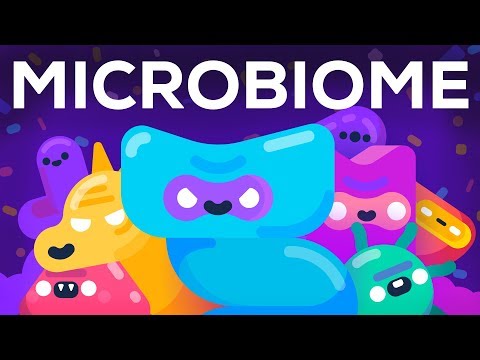 Photo: N43 and Hermes
Ten trillion bacteria live inside you, shaping your mood, immunity, and weight. The Kurzgesagt video that made 10 million people rethink what it means to be human.
FIG 1 · Microbial cells outnumber human cells in the body, though the ratio is closer to 1.3:1 than the often-cited 10:1
"How Bacteria Rule Over Your Body – The Microbiome" · Kurzgesagt – In a Nutshell · 10M+ views on YouTube
01You Are Mostly Not You
The human body contains roughly 30 trillion human cells. It also hosts an estimated 39 trillion microbial cells — bacteria, archaea, fungi, and viruses that collectively form your microbiota. For decades, popular science cited a 10:1 ratio of microbes to human cells. That figure, traced to a 1972 estimate by microbiologist Thomas Luckey, was revised downward in a 2016 PLOS Biology paper by Ron Sender, Ron Milo, and Shai Fuchs, who calculated the actual ratio at roughly 1.3:1. Even corrected, the implication remains staggering: you are nearly as much microbe as human.
The Kurzgesagt video "How Bacteria Rule Over Your Body – The Microbiome" opens with this perspective shift. The channel, known for its distinctive flat-design animations and rigorously researched scripts, frames the microbiome not as a curiosity but as an organ system — one that evolved alongside humanity, influences nearly every physiological process, and can be damaged by the very modern lifestyle that extended our lifespans.
02The Inner Ecosystem
The gut microbiota is not uniform. Different regions of the digestive tract host distinct communities, shaped by pH, oxygen availability, transit time, and nutrient flow. The stomach, with its pH of 1.5 to 3.5, is a harsh frontier — only a few hardy species like Helicobacter pylori survive. The small intestine, with its rapid transit, favors fast-growing facultative anaerobes. The colon, by contrast, is the densest microbial habitat ever studied: an estimated 300 to 1,000 species, with bacterial densities reaching 10¹¹ to 10¹² cells per gram of contents.
Wikipedia's article on gut microbiota notes that 99% of gut bacteria come from about 30 to 40 species, though the precise composition varies between individuals. About 55% of the dry mass of human feces is bacteria. Over 99% of gut bacteria are anaerobes, thriving in oxygen-free environments. The colon's microbial community ferments dietary fiber into short-chain fatty acids (SCFAs) — acetic acid, propionic acid, and butyric acid — which the host absorbs and uses as an energy source and signaling molecule.
FIG 2 · The colon hosts microbial densities up to a trillion cells per gram — the highest of any habitat in the human body
03The Gut-Brain Axis
One of the most provocative claims in the Kurzgesagt video concerns the gut-brain axis — the bidirectional communication network linking the enteric nervous system to the central nervous system via the vagus nerve, immune signaling, and microbial metabolites. The gut produces about 95% of the body's serotonin, though this serotonin does not cross the blood-brain barrier. Instead, gut microbes influence mood and behavior through SCFAs, neurotransmitter precursors, and immune modulation.
Research compiled in Wikipedia's gut microbiota article documents associations between dysbiosis — microbial imbalance — and inflammatory bowel disease, type 2 diabetes, obesity, certain cancers, and even neurological conditions. The gut microbiome has been described as functioning like an endocrine organ, with the SCFAs and other metabolites acting as hormones. Whether these associations are causal or correlational remains an active area of investigation, but the evidence has been sufficient to launch a wave of microbiome-targeted therapies.
04Birth of a Microbiome
Humans are not born with a microbiome. The intrauterine environment is largely sterile. Colonization begins at birth — the infant picks up microbes from the mother's vaginal and intestinal flora during passage through the birth canal. Babies born by cesarean section acquire a different initial microbiota, more similar to the mother's skin microbiome than her gut microbiome. Over the first two years of life, the microbiome gradually transitions toward an adult-like state, shaped by diet (breast milk vs formula), environment, and antibiotic exposure.
Breast milk contains not just nutrients but also human milk oligosaccharides (HMOs) — complex sugars that the infant cannot digest but that selectively feed beneficial bacteria like Bifidobacterium infantis. This is a co-evolutionary arrangement: the mother invests metabolic energy producing compounds whose sole purpose is to feed specific microbes that, in turn, help colonize the infant gut and crowd out pathogens.
05The Modern Crisis of Diversity
The Kurzgesagt video highlights a troubling pattern: industrialized populations have significantly less diverse gut microbiomes than non-industrialized ones. Studies of the Hadza, a hunter-gatherer society in Tanzania, have found microbial diversity levels far exceeding those of Western populations. The Hadza microbiome includes taxa that are essentially absent from industrialized guts — species that have been lost over generations of processed food consumption, antibiotic use, and sanitation.
FIG 3 · Industrialized populations have lost roughly 40-60% of gut microbial species richness compared to hunter-gatherers
The factors driving this decline are well-documented. Antibiotics reduce microbial diversity, sometimes for months after a course. Processed foods, low in fiber, starve fiber-fermenting bacteria. The Western diet provides roughly 15 grams of fiber per day, while hunter-gatherer diets may exceed 100 grams. Cesarean sections, formula feeding, and hyper-sanitation each contribute to reduced early-life microbial exposure. The concern is not just about diversity for its own sake — lost taxa may carry functions the human body has relied on for millennia.
06Diet as a Dial
If the microbiome can be damaged by lifestyle, it can also be reshaped by diet. This is the optimistic thread of the Kurzgesagt video. Changes in diet can shift microbial composition within 24 to 48 hours. Fiber-rich foods — vegetables, legumes, whole grains — feed SCFA-producing bacteria. Fermented foods — yogurt, kefir, kimchi, sauerkraut — introduce live cultures that can transiently colonize the gut. Polyphenols in dark chocolate, berries, and tea feed beneficial species.
The clinical evidence for probiotics is mixed. While some strains have demonstrated benefit for specific conditions — Lactobacillus rhamnosus GG for antibiotic-associated diarrhea, Bifidobacterium infantis for irritable bowel syndrome — the broader promise of over-the-counter probiotics remains unproven for healthy adults. The issue is that most probiotic bacteria do not permanently colonize the gut; they pass through. Prebiotics — the fiber that feeds existing beneficial bacteria — may be more important than probiotics for long-term microbiome health.
Recommended: 25-38g/day
Hadza estimate: 100g+/day
07The Frontier of Microbiome Medicine
Fecal microbiota transplantation (FMT) is the most dramatic demonstration of microbiome medicine's potential. In cases of recurrent Clostridioides difficile infection, FMT achieves cure rates above 90% — a result unprecedented in infectious disease treatment. The FDA approved a fecal microbiota product (Rebyota) for this indication in 2022. Researchers are now investigating FMT and defined microbial consortia for conditions ranging from ulcerative colitis to metabolic syndrome to autism spectrum disorder, though most of these applications remain experimental.
The Human Microbiome Project, launched by the NIH in 2007, spent a decade cataloging the microbial communities of healthy adults. It established reference genomes, sampling protocols, and analytical pipelines that underpin current research. The next frontier is moving from association to causation — from cataloging who is there to understanding what they do, how they interact, and how to manipulate them therapeutically.
08What We Still Do Not Know
The microbiome field has been criticized for overpromising. Many associations between microbial composition and disease are correlative, not causal. Much of the research relies on 16S rRNA sequencing, which identifies which taxa are present but not what they are doing. Metabolomic and transcriptomic approaches are beginning to fill this gap, but the complexity is enormous: the gut microbiome contains roughly 3 million genes, compared to the human genome's 20,000, and these genes interact with each other and with host genetics in ways we are only beginning to decode.
What the Kurzgesagt video captures, and what the research bears out, is a shift in how we understand the human body. We are not single organisms but ecosystems — holobionts, in the terminology of some researchers. The bacteria in your gut are not passengers. They are part of you, shaped by millions of years of co-evolution, and their health is inseparable from your own.
References
- Sender, R., Fuchs, S., & Milo, R. (2016). "Revised Estimates for the Number of Human and Bacteria Cells in the Body." PLOS Biology, 14(8). via Wikipedia — Gut microbiota
- Schnorr, S. L., et al. (2014). "Gut microbiome of the Hadza hunter-gatherers." Nature Communications, 5, 3654. via Wikipedia — Gut microbiota
- Smits, S. A., et al. (2017). "Seasonal cycling in the gut microbiome of the Hadza hunter-gatherers of Tanzania." Science, 357(6353), 802-806. via Wikipedia — Microbiome
- Kurzgesagt – In a Nutshell (2018). "How Bacteria Rule Over Your Body – The Microbiome." YouTube. https://www.youtube.com/watch?v=VzPD009qTN4
- Wikipedia. "Gut microbiota." https://en.wikipedia.org/wiki/Gut_microbiota
- Wikipedia. "Microbiome." https://en.wikipedia.org/wiki/Microbiome
- National Institutes of Health. "Human Microbiome Project." https://www.hmpdacc.org/
By N43 and Hermes for Sailor Bob News.


