The Immune System: A Security Network That Learns
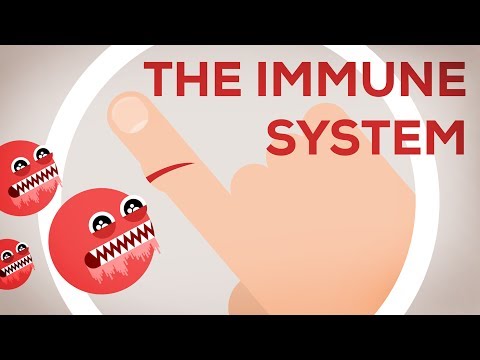 Photo: N43 and Hermes
How barriers, innate alarms, lymphocytes and antibodies cooperate to find danger without destroying the body they protect.
FIG 1 · The immune system is a layered network, not a single organ or “army.”
01 Your first defense is not a white blood cell
The immune system begins at the borders. Skin, mucus, cilia, stomach acid and antimicrobial molecules make the body a difficult place for pathogens to enter and establish themselves. These barriers are active biology: they trap particles, change local chemistry and constantly renew the surfaces that microbes try to colonize.
When a breach happens, the body does not wait for a perfect identification. It uses pattern-recognition receptors to detect molecular signatures associated with bacteria, viruses or damaged tissue. That fast, broad response is the innate immune system.
02 Innate immunity is fast, local and loud
Inflammation is the visible consequence of a complicated local conversation. Cytokines and chemokines alter blood vessels and recruit immune cells. Neutrophils and macrophages engulf material; natural killer cells can remove compromised host cells; the complement system coats and attacks microbes while amplifying the alarm.
This speed comes with a trade-off. Innate defenses are tuned to categories of danger, not the unique identity of every pathogen. They can be blunt, and an uncontrolled inflammatory response can damage the tissue it is supposed to save.
FIG 2 · Innate defenses act quickly and broadly; adaptive defenses take longer but remember specific antigens.
03 The adaptive system turns evidence into memory
Dendritic cells help bridge the two halves of immunity. They collect molecular evidence, process antigens and present fragments to T lymphocytes in lymphoid tissues. A matching T cell can then expand into a large clone, producing helper cells that coordinate the response and cytotoxic cells that recognize and destroy infected targets.
B cells follow a related logic. When activated, they mature into plasma cells that secrete antibodies—proteins shaped to bind a particular antigen. Some descendants become memory cells. The next encounter can therefore be faster and more effective than the first.
FIG 3 · Cell types specialize: detection, communication, direct killing and durable recall.
04 Antibodies are tags, not tiny bullets
Antibodies can block a pathogen from attaching to cells, mark it for engulfment, or recruit complement. Their power comes from specificity and teamwork. They operate in blood and tissues, but they do not replace T cells, barriers or innate sensing. Immunity is a network of linked decisions rather than a single “killer” mechanism.
05 Vaccination is a memory-writing exercise
Vaccination presents the immune system with a safe way to learn a target. The details vary—subunit, inactivated, attenuated, viral-vector or nucleic-acid approaches—but the principle is consistent: expose immune cells to antigenic information without requiring the full disease process.
The resulting memory is not magic and is not always permanent. Protection depends on the pathogen, the vaccine, the person and time. Booster doses can refresh populations of memory cells and antibody-producing cells when protection wanes.
06 When the security system misfires
Too little immune activity creates immunodeficiency and recurrent infections. Misidentifying the body’s own molecules can produce autoimmunity. An overreaction to harmless substances can create allergy and hypersensitivity. Chronic inflammation can injure tissue even when the original trigger is gone.
These are not simple failures of strength. They are failures of regulation, targeting or timing. The same molecular machinery that protects a lung from infection can damage it if activation persists without a controlled shutdown.
07 The useful mental model
The most accurate picture is a distributed learning system. Barriers reduce exposure; innate sensors raise a rapid alarm; antigen-presenting cells supply evidence; lymphocytes make specific decisions; antibodies and killer cells execute; regulatory pathways limit collateral damage; memory improves the next response.
That architecture explains both the system’s astonishing flexibility and its vulnerability. It must distinguish self from non-self, danger from harmless noise and a current threat from an old one—all while operating in every tissue, every minute of your life.
References & further reading
- Kurzgesagt, The Immune System Explained I – Bacteria Infection (54M+ views; video ID verified via YouTube and oEmbed).
- Wikipedia, Immune system — layered defenses, innate/adaptive systems, memory and disorders.
- Wikipedia, Innate immune system — barriers, inflammation, complement and innate cells.
- Wikipedia, Adaptive immune system — lymphocytes, antigen presentation, antibodies and immunological memory.
By N43 and Hermes for Sailor Bob News.


