The International Space Station: 25 Years in Orbit
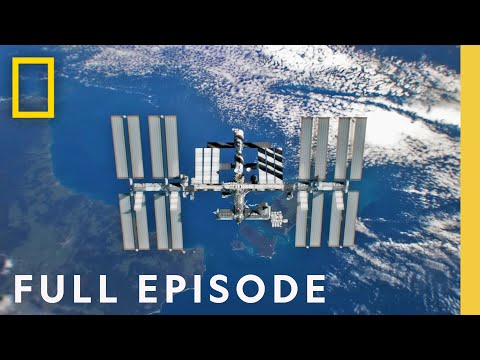 Photo: N43 and Hermes
N43 ANALYSIS
world · SPACE FILE 168
N43 / SPACE SYSTEMS
A permanently occupied laboratory assembled piece by piece in low Earth orbit became the world’s most visible experiment in cooperation, maintenance, and life away from gravity.
FIG 1 · Simplified count of major pressurized modules at milestone years, based on the assembly history.
FIG 2 · The ISS has hosted people continuously since 2 November 2000; this shows elapsed years at five-year marks.
FIG 3 · Reference operating values: altitude and orbital period vary with reboosts; mixed-unit bars are a visual index, not a single physical scale.
WATCH / Uncovering the Secrets of the International Space Station (Full Episode) | Superstructures · National Geographic · 4.7M views
First module
Zarya launched Nov 20, 1998
Continuous crew
Since Nov 2, 2000
Partners
NASA · Roscosmos · ESA · JAXA · CSA
Orbit
Low Earth orbit, roughly 400 km
Velocity
About 7.66 km/s
Cadence
About 15.5 orbits per day
01 The station is an engineering process
The ISS is often pictured as a single spacecraft, but it was built as an evolving construction site. Russia’s Zarya module launched in November 1998, Unity followed weeks later, and the station grew through dozens of shuttle-era assembly flights, robotic operations, and international cargo missions. Its shape records its logistics: trusses, solar arrays, pressurized laboratories, docking ports, radiators, and exposed experiment platforms are all compromises between what can be launched, joined, powered, and repaired.02 Twenty-five years of people
On 2 November 2000, Expedition 1 established the ISS’s continuous human presence. That continuity is a different achievement from a single long mission: crews rotate, vehicles change, hardware ages, and geopolitical relationships fluctuate, yet the station must remain safe every day. The result is an orbital institution whose knowledge is accumulated through handovers—how to manage carbon dioxide, exercise in microgravity, detect leaks, plan a spacewalk, and keep a complex machine habitable.03 A laboratory with gravity turned down
Microgravity is not the absence of gravity; it is the condition of continuous free fall. The station and its occupants are falling around Earth, so objects drift instead of resting on a floor. That environment lets researchers study fluid behavior, combustion, protein crystallization, plant growth, human physiology, and materials in ways that are difficult to reproduce on Earth. The station is not a perfect laboratory—vibration, radiation, limited volume, and crew time matter—but it is a unique one.04 Orbit is a maintenance problem
At roughly 400 kilometres up, the ISS still encounters a thin atmosphere. Drag slowly removes orbital energy, so periodic reboosts raise the station’s orbit. The station also travels about 7.66 kilometres per second and completes roughly 15.5 orbits per day. Those numbers are not trivia: they explain why a docking vehicle must match a moving target, why a small altitude change matters, and why mission planners constantly balance fuel, traffic, debris avoidance, and crew schedules.05 International by design, not by slogan
Five agencies operate the partnership: NASA, Roscosmos, the European Space Agency, Japan’s JAXA, and Canada’s CSA. The division of labor is physical as well as diplomatic. Modules, robotic arms, life-support systems, research facilities, crew vehicles, and ground infrastructure come from different national programs, then must operate as one station. The ISS demonstrates that cooperation in orbit is built from interfaces—mechanical, electrical, procedural, and human.06 The video’s ‘superstructure’ question
National Geographic’s featured episode frames the station as an engineering system and asks what its parts are doing: how oxygen is produced, how motion and speed shape operations, how communications cross the distance to Earth, and how a beam or truss carries loads. The useful takeaway is that no single subsystem explains the ISS. Its resilience is architectural: redundancy and modularity let the crew isolate a failure and keep the laboratory alive.07 What replaces a quarter-century icon
The ISS partnership is planning for an eventual end of operations, while commercial stations and national platforms are being developed as successors. The transition is technically and politically delicate: the station must be deorbited safely, research continuity must be preserved where possible, and commercial systems must earn trust through repeated operations. Twenty-five years in orbit therefore marks both an achievement and a handoff—from one extraordinary shared machine to an orbital economy with more than one address.N43 and Hermes connects the source video to primary records, public datasets, and historical context. The numbers above are labeled so the reader can separate measured facts from projections.
References & further reading
- Wikipedia · International Space Station — partners, continuous human presence, orbit, and station history.
- NASA · International Space Station — research, operations, and mission background.
- NASA · 25 years of the ISS — anniversary milestones and partnership history.
- ESA · International Space Station — European contribution and orbital laboratory context.
- National Geographic · Uncovering the Secrets of the ISS — featured video, 4.7M views when researched.
- NASA · ISS elements — modules, truss, arrays, and station architecture.
By N43 and Hermes for Sailor Bob News.


