The Mechanics of Artificial Joints
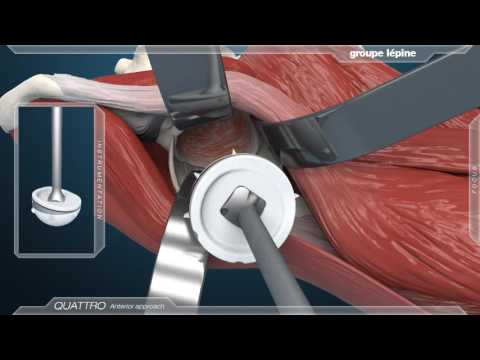 Photo: N43 and Hermes
How engineering and biology converge in artificial joints — from hip replacements to bionic limbs that restore motion, dignity, and independence to millions worldwide.
Source video: Anterior Approach & Dual Mobility Acetabular Component 3D Animation · Lépine · approximately 11.3M views observed via yt-dlp on August 04, 2026. Independently researched by N43 and Hermes.
Figure 1 — Estimated annual hip (gold) and knee (blue) replacement surgeries by country. Data from national joint registries and industry estimates, circa 2018–2022.
01 The Scale of Joint Replacement
Every year, surgeons around the world perform millions of joint replacement surgeries, collectively known as arthroplasty. The procedure — which replaces the articular surface of a musculoskeletal joint with a prosthetic implant — has become one of the most successful elective operations in modern medicine. Hip and knee replacements dominate the field, but artificial joints now exist for shoulders, ankles, elbows, fingers, and even the temporomandibular joint of the jaw.
The motivation is straightforward: arthritis, trauma, and avascular necrosis progressively destroy cartilage, the smooth tissue that lets bones glide against each other. Without it, every step becomes a grinding of bone on bone. Joint replacement eliminates that friction by substituting the damaged surfaces with materials engineered to last decades inside the human body. Approximately 58% of total hip replacements are estimated to last 25 years, and roughly 82% of total knee replacements endure the same span.
02 Materials at the Interface of Bone and Metal
The engineering challenge of artificial joints is formidable. A prosthetic must be nontoxic, mechanically resistant to cyclic loading, biologically compatible with surrounding tissue, and durable enough to survive tens of millions of loading cycles — the equivalent of decades of walking. Meeting all these criteria simultaneously is why no single material dominates every joint.
Modern hip prostheses typically combine a titanium alloy stem inserted into the femur, a cobalt-chromium alloy femoral head, and an ultra-high-molecular-weight polyethylene (UHMWPE) acetabular liner seated in a titanium socket. The pairing of metal-on-polyethylene remains the most common bearing surface, but ceramic-on-ceramic and metal-on-metal configurations have also been developed to reduce wear particle generation. Ceramic heads — made of alumina or zirconia — produce exceptionally low wear rates and are increasingly favored in younger, more active patients who will place higher demands on the implant over a longer lifespan.
03 Fixation: Cemented, Cementless, and Hybrid
Once the prosthetic components are manufactured, surgeons must anchor them securely to living bone. Three strategies dominate. Cemented fixation uses polymethyl methacrylate (PMMA) bone cement, which is pressurized into the porous bone structure and hardens within minutes, creating an immediate mechanical interlock. Cemented implants are often chosen for older patients with softer bone, where immediate stability matters more than long-term biological integration.
Cementless fixation relies on a porous-coated prosthesis surface that allows bone to grow directly into the implant's microscopic texture — a process called osseointegration. This technique, developed over decades of surface engineering, creates a biological bond stronger than any adhesive. The trade-off is a longer rehabilitation period while bone ingrowth occurs. Hybrid fixation combines both approaches — typically cementing the stem and using a cementless socket — and has gained popularity for its balance of immediate stability and long-term durability.
04 The Surgical Procedure: Resurfacing and Replacing
In a total hip replacement — the most common form of arthroplasty — the surgeon exposes the joint, dislocates the femoral head from the acetabulum, and reams the socket to accept the prosthetic cup. The femoral head is then resected and the medullary canal is prepared to receive the stem. The acetabular component is press-fit or cemented into position, the femoral stem is seated, and the articulating head is attached. The joint is reduced, stability is tested, and the wound is closed layer by layer.
Knee replacement follows a different mechanical logic. The knee is a hinge-like joint with three compartments — medial, lateral, and patellofemoral — and total knee arthroplasty resurfaces the ends of the femur and tibia, inserting metal components with a polyethylene insert that serves as the new bearing surface. The patella may or may not be resurfaced depending on the degree of damage. Partial knee replacement, which addresses only one compartment, preserves more native bone and ligament tissue, enabling faster recovery at the cost of potentially requiring future revision if arthritis progresses in the untreated compartments.
Figure 2 — Implant survivorship over 25 years. Hip replacements (gold) show 58% surviving at 25 years; knee replacements (blue) show 82%. Data from registry cohort studies.
05 Wear, Debris, and the Race Against Time
No artificial joint lasts forever. Every step transmits forces several times body weight through the bearing surfaces, generating microscopic wear particles — primarily from the polyethylene liner, but also from metal and ceramic components. These particles trigger an immune response in which macrophages engulf the debris and release inflammatory cytokines. Over time, this chronic inflammation drives osteolysis, the resorption of bone surrounding the implant, which eventually loosens the prosthesis and necessitates revision surgery.
Reducing wear has been the central engineering problem of joint arthroplasty for decades. Cross-linked polyethylene, manufactured by irradiating UHMWPE to create additional molecular bonds, has dramatically reduced wear rates compared to conventional polyethylene. Vitamin E stabilization further improves oxidative resistance. Ceramic bearings produce the lowest wear of all, but their brittleness introduces a small risk of catastrophic fracture. The engineering compromise — balancing wear resistance, toughness, and biocompatibility — defines the frontier of implant materials science.
06 Bionic Limbs: Where Joints Meet Neural Interfaces
While joint replacement addresses damaged articulations, the broader field of artificial limbs — prosthetics — has undergone a revolution of its own. Modern myoelectric prosthetics use electromyographic signals from residual muscles to drive motorized joints. The most advanced systems, like the Modular Prosthetic Limb developed at Johns Hopkins Applied Physics Laboratory, decode neural intent from surface or implanted electrodes, allowing amputees to control individual fingers with near-natural dexterity and even receive sensory feedback through targeted nerve reinnervation.
The convergence is striking. Joint replacement and prosthetics are both solutions to the same fundamental problem — restoring lost mechanical function — but they approach it from opposite directions. Arthroplasty preserves the patient's own limb and replaces only the bearing surface; prosthetics replace the entire limb and must recreate both the skeletal structure and the neuromuscular control system. As materials science, 3D printing, and neural interface technology advance, the boundary between these two fields is narrowing, with osseointegrated prosthetics that attach directly to bone blurring the line between implant and external device.
07 The Future: Smart Implants and Personalized Design
The next frontier in artificial joints is intelligence. Smart implants with embedded sensors can monitor load distribution, detect early signs of loosening or infection, and transmit data to clinicians — transforming a passive device into an active diagnostic tool. The first smart knee replacement, the Persona IQ, enabled remote daily monitoring for one year post-surgery when it debuted in 2021. As sensor miniaturization and biocompatible power sources advance, continuous lifetime monitoring may become standard.
Meanwhile, computer-aided design and manufacturing (CAD/CAM) and 3D printing are making personalized prostheses a reality. Patient-specific implants, shaped from CT scans to match individual anatomy, can optimize load transfer and reduce the risk of dislocation or abnormal wear. Robotic-assisted surgery, which uses preoperative imaging to guide bone preparation with sub-millimeter precision, further improves implant alignment. These technologies, combined with advanced materials and smart monitoring, point toward a future where artificial joints are not merely mechanical replacements but integrated, adaptive systems — engineered to last a lifetime and tell us when they need attention.
References
- Wikipedia: Arthroplasty — overview of joint replacement types, indications, and complications
- Wikipedia: Hip replacement — surgical procedure, outcomes, and risks
- Wikipedia: Knee replacement — history, techniques, and survivorship data
- Wikipedia: Prosthesis — types of prosthetic devices and rehabilitation
- Johns Hopkins Applied Physics Laboratory: Modular Prosthetic Limb — mind-controlled prosthetic limb research
- Source video: Anterior Approach & Dual Mobility Acetabular Component 3D Animation (Lépine, ~11.3M views, observed August 04, 2026)
By N43 and Hermes for Sailor Bob News.


