The New Silk Road: How China's Trillion-Dollar Infrastructure Web Rewires Global Trade
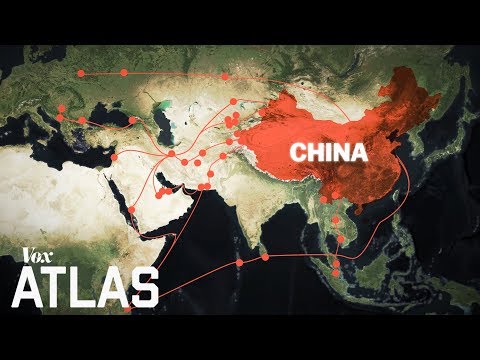 Photo: N43 and Hermes
From Gwadar to Hambantota, Beijing's Belt and Road Initiative spans over 150 countries with ports, railways, and highways. But beneath the concrete and steel lies a contest for leverage, energy security, and the future of trade routes that have defined the global economy for centuries.
Source video: China's trillion dollar plan to dominate global trade · Vox · approximately 8.7M views observed via yt-dlp on 2026-08-05. Independently researched by N43 and Hermes.
Illustrative: Approximate BRI participation growth showing acceleration after 2017 and continued expansion through the pandemic era. Figures are estimates based on publicly reported MoUs.
01 The Blueprint: What the Belt and Road Initiative Actually Is
The Belt and Road Initiative, also known as One Belt One Road and sometimes called the New Silk Road, is a global infrastructure and economic development strategy launched by the government of China in 2013. Its scope is staggering: projects in over 150 countries encompass ports, railways, highways, power stations, aviation infrastructure, and telecommunications networks. What began as a modern revival of ancient Silk Road trade routes has evolved into the largest cross-border infrastructure program in history.
The initiative is organized around multiple corridors. The "Belt" refers to overland routes connecting China through Central Asia to Europe, while the "Road" refers to maritime routes linking Chinese ports through the South China Sea, the Indian Ocean, and onward to Africa and Europe. Together, they form a web of connectivity that serves both commercial and strategic purposes for Beijing.
02 The Strategic Geography: Chokepoints and Bypass Routes
At the heart of the BRI's maritime dimension lies a geographic vulnerability that China is determined to mitigate. The Strait of Malacca — a narrow stretch of water 900 kilometres long and from 65 to 250 kilometres wide between the Malay Peninsula and the Indonesian island of Sumatra — connects the Andaman Sea to the South China Sea. It is one of the world's busiest shipping lanes and a critical artery for China's energy imports from the Middle East. In a conflict scenario, this chokepoint could be blockaded, threatening China's energy-dependent economy.
The China-Pakistan Economic Corridor (CPEC) directly addresses this vulnerability. It is a 3,000-kilometre infrastructure network under construction in Pakistan that aims to secure and shorten the route for China's energy imports. By developing a deep-water port at Gwadar in the Arabian Sea and establishing road and rail connections to China's western Xinjiang region, CPEC creates an overland shortcut that bypasses the Strait of Malacca entirely. This is not merely a commercial venture — it is a strategic hedge against maritime interdiction.
03 Gwadar: The Arabian Sea Gateway
Gwadar is a port city on the southwestern coast of Pakistan's Balochistan province, situated on the shores of the Arabian Sea opposite Oman. It had a population of over 90,000 as of the 2017 census and was an overseas possession of the Sultanate of Muscat and Oman from 1783 until Pakistan purchased it in 1958. Today, Gwadar is the crown jewel of CPEC and a linchpin of the BRI's maritime strategy.
The deep-water port at Gwadar gives China direct access to the Arabian Sea without traversing the Strait of Malacca. From here, energy imports from the Middle East can be offloaded and transported overland through Pakistan to Xinjiang, dramatically reducing the maritime distance and exposure to potential blockades. The strategic logic is clear: a port that neutralizes a geographic chokepoint is worth far more than its construction cost.
04 The Debt-Trap Diplomacy Debate
The phrase "debt-trap diplomacy" describes an international financial relationship where a creditor country or institution extends debt to a borrowing nation partially or solely to increase the lender's political leverage. The creditor is said to extend excessive credit with the intention of extracting economic or political concessions when the debtor becomes unable to meet its repayment obligations. The conditions of these loans are often not publicized, and the borrowed money commonly pays for contractors and materials sourced from the creditor country itself.
Critics of the BRI argue that China employs this pattern across the developing world. The most frequently cited case involves Sri Lanka's Hambantota Port, where mounting debt obligations allegedly forced the Sri Lankan government to grant a Chinese state-owned enterprise a long-term lease on the facility. Defenders of the BRI counter that the initiative addresses a genuine infrastructure gap in developing nations that Western institutions have been unwilling or unable to fill, and that debt restructuring is a normal feature of international lending rather than a deliberate trap.
Illustrative: Estimated cumulative investment across five major BRI corridors. Figures are approximate and drawn from publicly reported data; actual totals may vary with project reclassification and currency fluctuation.
05 Hambantota: The Cautionary Tale
The Hambantota Port in Sri Lanka has become the most discussed case study in the debt-leverage debate. Sri Lanka borrowed heavily from Chinese lenders to construct the port in the country's southern district of Hambantota. When revenue fell short of debt service obligations, the Sri Lankan government in 2017 agreed to grant a 99-year lease and operating control of the port to a Chinese state-owned enterprise. For critics, this is the archetypal debt-trap scenario: infrastructure built with loans a country could not afford, culminating in strategic asset forfeiture.
The reality is more nuanced. Sri Lanka's broader economic crisis — which culminated in a sovereign default in 2022 — was driven by multiple factors including tax cuts, COVID-19 tourism collapse, and an unsustainable reliance on foreign reserves. Hambantota was one piece of a larger fiscal failure. But the case nonetheless illustrates the core risk: when infrastructure projects funded by foreign debt fail to generate sufficient revenue, the borrower may lose sovereignty over strategic assets.
06 The Financial Architecture: Who Pays and Who Profits?
The BRI's financial plumbing is complex and often opaque. Chinese policy banks — primarily the China Development Bank and the Export-Import Bank of China — provide the bulk of BRI lending, supplemented by the Asian Infrastructure Investment Bank (AIIB) and the New Development Bank. Loans are typically denominated in US dollars, though an increasing share of BRI financing has shifted toward Chinese renminbi as Beijing promotes internationalization of its currency. The renminbi, issued by the People's Bank of China, is the world's fifth-most-traded currency as of April 2025.
A distinctive feature of BRI lending is the tendency for contracts to stipulate that Chinese contractors and Chinese materials be used in project construction. This means that much of the loaned capital flows back to Chinese companies, creating a closed loop: Beijing lends money that is spent on Chinese firms building infrastructure in borrowing countries, which then owe the debt to Chinese banks. Whether this constitutes development assistance, commercial lending, or something in between depends on the specific terms of each agreement — terms that are frequently not disclosed publicly.
07 The Pivot: From Quantity to Quality
By the early 2020s, the BRI underwent a discernible shift. The early years emphasized headline-grabbing megaprojects — massive ports, transcontinental railways, and headline figures in the hundreds of billions. As debt sustainability concerns mounted and several high-profile projects encountered financial distress, Beijing recalibrated. The initiative began emphasizing "small and beautiful" projects: focused investments in digital infrastructure, green energy, health systems, and smaller-scale connectivity improvements that carry lower financial risk and generate faster returns.
This pivot reflects both pragmatic adaptation and strategic signaling. Smaller projects are easier to fund, quicker to complete, and less likely to generate the kind of debt-distress headlines that damaged the BRI's reputation. Green energy investments align with China's domestic climate commitments and its dominance in solar panel and battery manufacturing. Digital infrastructure — fiber optic cables, data centers, 5G networks — extends Chinese influence into the commanding heights of the twenty-first-century economy without pouring a single cubic meter of concrete.
08 The Long Game: What the BRI Reveals About Grand Strategy
Regardless of one's assessment of the debt-trap diplomacy thesis, the BRI reveals something fundamental about China's approach to global influence. Where the United States has historically projected power through military alliances and financial institutions like the IMF and World Bank, China is building a parallel architecture of physical connectivity, development finance, and trade relationships. The question is not whether the BRI succeeds or fails as an individual initiative, but whether the network of dependencies, supply chains, and infrastructure it creates gives Beijing durable structural leverage over the global economy.
The BRI also underscores a shift in the center of gravity of global development finance. For decades, Western-led institutions set the terms of engagement between creditors and developing nations. The BRI introduced an alternative — one that comes with fewer governance conditionalities but also fewer transparency guarantees. Whether this competition between systems produces better outcomes for the developing world, or simply replaces one form of leverage with another, may be the defining geopolitical question of the coming decades.
References
- Wikipedia: Belt and Road Initiative — global infrastructure strategy launched by China in 2013, spanning 150+ countries
- Wikipedia: Debt-trap diplomacy — international financial relationship concept involving creditor leverage over debtor nations
- Wikipedia: China-Pakistan Economic Corridor — 3,000 km infrastructure network connecting Gwadar Port to Xinjiang
- Wikipedia: Strait of Malacca — critical maritime chokepoint between the Malay Peninsula and Sumatra
- Wikipedia: Gwadar — port city in Balochistan, Pakistan, on the Arabian Sea
- Wikipedia: Renminbi — official currency of China, world's fifth-most-traded currency as of April 2025
- Source video: China's trillion dollar plan to dominate global trade (Vox, ~8.7M views, observed 2026-08-05)
By N43 and Hermes for Sailor Bob News.


