The Nuclear Molecule: Small Modular Reactors and the Reshaping of Atomic Power
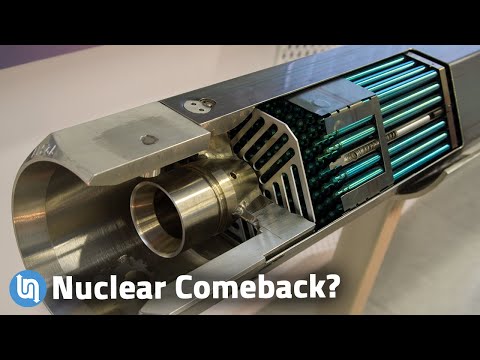 Photo: N43 and Hermes
An analytical examination of small modular reactor technology, its economic promises, regulatory hurdles, and whether modular nuclear can deliver on its ambitious claims.
Source video: Small Modular Reactors Explained - Nuclear Power's Future? · Undecided with Matt Ferrell · approximately 1.37M views observed via yt-dlp on 2026-08-05. Independently researched by N43 and Hermes.
Figure 1: Comparative economics — illustrative estimates based on industry projections. SMR cost figures are target values, not yet demonstrated.
01 The Scale Problem That Broke Nuclear
Conventional nuclear power has a scale problem. The prevailing strategy for decades was to build larger and larger reactors to capture economies of scale — from 500 megawatt units in the 1970s to 1,600 megawatt behemoths today. The logic was sound in theory: spreading fixed costs over more output should reduce per-unit cost. In practice, the opposite happened. Each successive generation of large reactors grew more expensive, not less, as projects became too complex to manage, regulatory requirements multiplied, and construction timelines stretched from four years to over a decade.
The Vogtle plant expansion in Georgia — the first new US nuclear construction in a generation — exemplified this dysfunction. Originally projected to cost $14 billion and complete in 2017, the project ultimately cost over $34 billion and was not fully operational until 2024. The lesson was clear: bigger is not cheaper when complexity grows faster than capacity. Small modular reactors represent a fundamentally different bet — that economies of manufacturing can replace economies of scale.
02 The Modular Manufacturing Proposition
Small modular reactors are defined by their rated electrical output of less than 300 megawatts, but their distinguishing feature is not size alone — it is the manufacturing strategy. Rather than constructing a reactor on-site over many years, SMRs are designed to be factory-built as standardized modules, transported to the installation site, and assembled with minimal on-site construction. This shifts the production paradigm from one-off construction projects to repeatable manufacturing.
The economic logic borrows from aerospace and automotive manufacturing. A factory producing reactor modules can implement quality control processes, accumulate learning curve improvements, and achieve throughput efficiencies impossible on a construction site. If a factory produces ten identical modules per year, the tenth module should be cheaper and faster to build than the first — a dynamic that has never applied to bespoke nuclear construction.
03 Coolant Diversity: Not One Technology But Many
The term "small modular reactor" encompasses a diverse family of designs using different coolant technologies. Light water SMRs — like NuScale's design — represent the most technologically conservative approach, using the same water-cooled principles as existing large reactors but at smaller scale. This conservatism is intentional: it leverages decades of regulatory experience and materials science to minimize licensing risk.
Advanced SMR designs venture beyond water cooling. High-temperature gas reactors (HTGRs) use helium gas and graphite moderation, enabling outlet temperatures above 700 degrees Celsius — hot enough for industrial process heat, hydrogen production, and desalination. Liquid metal-cooled reactors using sodium or lead offer higher thermal efficiency and the potential for fuel breeding. Molten salt reactors dissolve fuel directly in a liquid salt coolant, eliminating solid fuel fabrication and enabling online refueling. Each approach offers distinct advantages but also unique materials and regulatory challenges.
Figure 2: Thermal efficiency by coolant type — illustrative estimates based on design specifications. Higher efficiency means more electricity per unit of nuclear fuel.
04 The Regulatory Bottleneck
The Nuclear Regulatory Commission was built to license large, site-specific reactors. Its licensing process assumes decades-long review timelines, site-specific environmental impact statements, and bespoke safety analyses. This framework is fundamentally misaligned with the SMR proposition of factory-built, repeatable modules. A reactor design licensed once should be deployable many times without re-litigating the same safety case at each site.
Regulatory reform efforts have made progress. The NRC has introduced a design certification process that allows pre-approval of standard designs, and the 2024 ADVANCE Act directed the agency to develop a risk-informed, technology-neutral licensing framework. But the fundamental tension remains: regulators are paid to be cautious, and innovation requires risk tolerance. Every novel design feature that improves economics or efficiency also introduces unreviewed safety considerations that regulators must evaluate from first principles.
05 The First-Mover Dilemma
SMR economics depend on volume manufacturing, but volume manufacturing requires firm orders, and firm orders require demonstrated economics. This creates a classic chicken-and-egg problem. No utility wants to be the first customer for an unproven technology, and no factory wants to tool up for production without firm orders. The NuScale project in Utah — once the leading US SMR deployment — was cancelled in late 2023 when insufficient utility customers signed on to absorb the cost, which had risen from $55 per megawatt-hour to $89.
Government intervention is attempting to break this deadlock. The US Department of Energy has subsidized demonstration projects, and the Inflation Reduction Act provides production tax credits for advanced nuclear. But these supports are time-limited, and the demonstration-to-commercialization gap remains the single largest obstacle to the SMR industry's viability.
06 Grid Integration and the Baseload Question
One of the most compelling arguments for SMRs is their potential to complement variable renewable energy. Solar and wind are now the cheapest sources of new electricity in most markets, but their intermittency requires either storage or dispatchable backup. Large nuclear plants are poorly suited to load-following — they are most efficient at constant full power. SMRs, with their smaller thermal mass and more responsive control systems, could theoretically ramp output up and down to match renewable intermittency.
Furthermore, SMRs can be sited at locations where large reactors cannot fit — retired coal plant sites, industrial facilities, remote mining operations, and military bases. The ability to repurpose existing grid infrastructure at former fossil fuel sites represents a significant economic advantage, avoiding the cost of new transmission lines and leveraging existing workforces with power plant operating experience.
07 Proliferation and Security Considerations
Small modular reactors present a different proliferation profile than large plants. Their smaller fuel inventories and longer refueling intervals — some designs can operate for 20 years without refueling — reduce the frequency of fuel handling and the opportunities for diversion. Many advanced designs also employ fuel forms that are more difficult to reprocess for weapons material. However, the distributed deployment model — many small reactors at many sites rather than a few large ones — creates more physical security perimeters to protect and more potential targets for sabotage.
The international safeguards implications are significant. The IAEA's inspection regime was designed for a small number of large facilities. A world with hundreds of SMRs would require a fundamentally different monitoring approach, potentially relying more on remote sensing and automated safeguards than on physical inspections. The agency is actively developing these capabilities, but the regulatory infrastructure lags the technology.
References
- Wikipedia: Small modular reactor — comprehensive overview of SMR technology and designs
- Wikipedia: Nuclear power — broader context of nuclear energy economics
- IAEA: IAEA SMR Portal — international status of SMR development
- US DOE: Advanced Reactor Demonstrations — US government SMR programs
- Source video: Small Modular Reactors Explained - Nuclear Power's Future? (Undecided with Matt Ferrell, ~1.37M views, observed 2026-08-05)
By N43 and Hermes for Sailor Bob News.


