The Physics of Nuclear Fusion
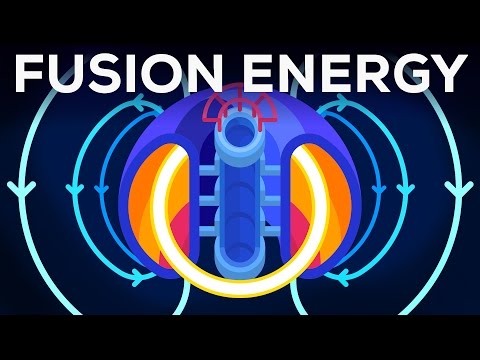 Photo: N43 and Hermes
The mechanism that powers every star in the night sky — and the engineering puzzle of replicating it on Earth.
Source video: Fusion Power Explained – Future or Failure · Kurzgesagt – In a Nutshell · approximately 15.1M views observed via yt-dlp on August 04, 2026. Independently researched by N43 and Hermes.
Figure 1: The binding energy per nucleon curve. Fusion of light nuclei releases energy as they climb toward iron-56; fission of heavy nuclei releases energy as they descend. Data: standard nuclear physics values.
01 The Mass Defect and Einstein's Equation
Every atom's nucleus contains protons and neutrons bound together by the strong nuclear force, one of the four fundamental interactions in physics. The binding energy that holds these nucleons together is not merely a conceptual convenience — it has measurable mass. When two light nuclei fuse into a heavier one, the product nucleus typically weighs slightly less than the combined mass of its precursors. That missing mass, the so-called mass defect, is converted into energy according to Einstein's celebrated relation, E = mc². Because the speed of light c is enormous and appears squared in the equation, even a minuscule mass difference liberates a staggering quantity of energy.
The key insight is that binding energy per nucleon — the average energy holding each proton or neutron in place — varies with mass number. Light nuclei such as hydrogen and helium sit low on this curve, while mid-range nuclei near iron-56 sit at its peak, roughly 8.79 MeV per nucleon. When light nuclei fuse and climb toward that peak, the excess binding energy is released as kinetic energy of the products and, frequently, as gamma radiation. A single deuterium-tritium fusion reaction releases 17.6 MeV, which sounds small until one considers that a single gram of fuel contains on the order of 10²³ individual reactions.
This mass-energy equivalence is why stars shine. The Sun converts roughly 600 million tonnes of hydrogen into helium every second, losing about four million tonnes of mass in the process. That four-million-tonne mass deficit, multiplied by the square of the speed of light, becomes the 3.8 × 10²⁶ watts of radiated power that sustain nearly all life on Earth. The same arithmetic governs every main-sequence star in the observable universe.
02 The Coulomb Barrier and Quantum Tunneling
If fusing light nuclei releases energy, why does it not happen spontaneously everywhere? The answer lies in electrostatics. Protons carry positive electric charge, and like charges repel. Before two nuclei can approach closely enough for the strong nuclear force to bind them — a distance of roughly one femtometre, or 10⁻¹⁵ metres — they must overcome the Coulomb barrier, the electrostatic repulsion between their positively charged protons. For two hydrogen nuclei, this barrier corresponds to a temperature of approximately 10 million Kelvin if approached classically.
Classically, the particles need enough kinetic energy to surmount the barrier entirely. Quantum mechanics, however, offers an alternative. Particles at the atomic scale behave as probability waves, and there is a non-zero chance that a nucleus will tunnel through the energy barrier rather than climb over it. This quantum tunneling effect, first applied to nuclear physics by George Gamow in 1928, dramatically lowers the effective temperature at which fusion becomes possible. Without tunneling, the Sun's core temperature of about 15 million Kelvin would be insufficient to sustain fusion at the observed rate. Tunneling increases the reaction probability by many orders of magnitude, making stellar fusion a practical — if slow — process.
The Gamow peak, named after the same physicist, represents the narrow window of energies where the Maxwell-Boltzmann distribution of particle velocities overlaps significantly with the tunneling probability. Only a tiny fraction of collisions in a stellar core fall within this peak, which is why the Sun, despite its enormous mass, consumes its hydrogen fuel over billions of years rather than in an explosive flash.
Figure 2: The Maxwell-Boltzmann energy distribution (blue), quantum tunneling probability (red), and their product — the Gamow peak (gold) — which defines the narrow energy window where thermonuclear fusion reactions are probable.
03 The Proton-Proton Chain and Stellar Fusion Cycles
The Sun and other main-sequence stars of similar mass generate energy primarily through the proton-proton chain, elucidated by Hans Bethe and Charles Critchfield in 1938. In this multi-step sequence, four hydrogen nuclei (protons) ultimately fuse into a single helium-4 nucleus, passing through intermediate stages involving deuterium, helium-3, and positron emissions. Each complete cycle converts about 0.7 percent of the reactant mass into energy — a fraction that seems trivial until one recalls that a single kilogram of hydrogen, fully fused, would release energy equivalent to roughly 170,000 tonnes of TNT.
In more massive stars, where core temperatures exceed 20 million Kelvin, the CNO cycle dominates. Discovered independently by Bethe in 1939, this catalytic cycle uses carbon, nitrogen, and oxygen as intermediates to achieve the same net result: four hydrogen nuclei become one helium nucleus. The CNO cycle is more temperature-sensitive than the proton-proton chain, with its reaction rate scaling roughly as T¹⁷ rather than T⁴, making it the dominant energy source in stars several times the Sun's mass.
Beyond hydrogen burning, stars with sufficient mass proceed through a sequence of fusion stages: helium burning (producing carbon and oxygen via the triple-alpha process), carbon burning, neon burning, oxygen burning, and finally silicon burning, which produces iron-peak elements. Each stage requires progressively higher temperatures and pressures, and each releases less energy per unit mass than the one before. The chain terminates at iron, because fusing elements heavier than iron-56 absorbs energy rather than releasing it — the binding energy curve has peaked, and the star's furnace can draw no more sustenance from further fusion.
04 Magnetic Confinement and the Tokamak
Replicating stellar conditions on Earth presents one of the most formidable engineering challenges in physics. A fusion reactor must sustain a plasma — a gas so hot that electrons are stripped from their nuclei — at temperatures exceeding 100 million Kelvin, roughly ten times the Sun's core temperature. At such temperatures, no material container can hold the plasma; it would vaporize instantly on contact. Two dominant strategies have emerged for confining the plasma: magnetic confinement and inertial confinement.
Magnetic confinement exploits the fact that charged particles in a plasma follow magnetic field lines. By arranging powerful superconducting magnets in a toroidal geometry, engineers can trap the plasma in a donut-shaped chamber, keeping it suspended away from material walls. The tokamak, originally developed by Soviet physicists Igor Tamm and Andrei Sakharov in the 1950s and based on concepts by Andrei Sakharov, is the most successful magnetic confinement design. It combines a toroidal magnetic field (running the long way around the donut) with a poloidal field (running the short way) to create a helical field that stabilizes the plasma.
The stellarator, an alternative toroidal design championed by Lyman Spitzer, twists the magnetic field coils themselves into a helix rather than relying on an internal plasma current. Stellarators are harder to build but inherently more stable than tokamaks, which are prone to disruptive instabilities. Modern supercomputing has enabled the complex coil geometries that make optimized stellarators practical, and facilities like Germany's Wendelstein 7-X are demonstrating steady-state plasma confinement that tokamaks struggle to match.
05 Inertial Confinement and the Ignition Milestone
Inertial confinement fusion takes a fundamentally different approach. Rather than holding plasma in place with fields, it compresses a tiny fuel pellet — typically a mixture of deuterium and tritium encased in a hollow sphere about two millimetres in diameter — so rapidly that the fuel fuses before it has time to fly apart. The compression is driven by high-energy laser beams, which illuminate the pellet from all sides, creating a rocket-like implosion as the outer layer ablates outward, driving the interior inward.
The National Ignition Facility at Lawrence Livermore National Laboratory, which houses the world's most powerful laser system — 192 beams delivering 2.05 megajoules of ultraviolet energy — achieved a historic milestone in December 2022. For the first time in a laboratory setting, a fusion reaction released more energy than the lasers delivered to the target: 3.15 megajoules of fusion energy output from 2.05 megajoules of laser input, a gain of approximately 1.5. This was a scientific breakeven, though not a practical one — the lasers themselves draw far more energy from the power grid than they deposit on the target, and the shot consumed a single pellet rather than producing sustained power.
Despite the gap between scientific breakeven and engineering viability, the ignition demonstration settled a question that had been open for over sixty years: that controlled thermonuclear fusion in the laboratory is physically achievable, not merely theoretical. The result validated decades of simulation, diagnostic development, and target fabrication, and it reframed the conversation around fusion from "if" to "when."
06 ITER and the Path to Commercial Power
ITER, the International Thermonuclear Experimental Reactor under construction in Cadarache, France, represents the largest magnetic confinement experiment ever attempted. A collaboration among the European Union, China, India, Japan, Korea, Russia, and the United States, ITER is designed to produce 500 megawatts of fusion power from 50 megawatts of input heating — a power amplification factor of ten. Its tokamak will weigh approximately 23,000 tonnes, stand nearly 30 metres tall, and contain a plasma volume of 840 cubic metres, roughly ten times that of any previous device.
The physics basis for ITER rests on a scaling law discovered empirically across decades of tokamak experiments: the energy confinement time scales roughly with the plasma volume and the magnetic field strength. By building bigger and using stronger superconducting magnets, ITER aims to enter the burning-plasma regime, where the helium nuclei produced by fusion reactions themselves heat the plasma, reducing or eliminating the need for external heating. A burning plasma sustains itself, which is the prerequisite for any practical fusion power plant.
Even if ITER succeeds as designed, commercial fusion power will require further development: tritium breeding (producing tritium fuel from lithium blankets inside the reactor), materials that can withstand decades of neutron bombardment without degrading, heat extraction systems that convert fusion energy into electricity, and regulatory frameworks for a new type of nuclear facility. Private companies — Commonwealth Fusion Systems, Helion Energy, TAE Technologies, and others — are pursuing compact reactor designs that might reach commercial viability sooner than the large international projects, though all face the same fundamental physics constraints.
07 Why Fusion Remains the Perennial Technology of Tomorrow
The joke that fusion power is thirty years away — and always will be — has circulated in physics departments since the 1960s. It captures a genuine frustration: the physics is understood, the reactions work, and yet the engineering gap between a laboratory demonstration and a power plant that delivers electricity to the grid has proven far wider than anticipated. The challenges are not merely technical but span materials science, plasma physics, superconducting magnet technology, tritium handling, neutron shielding, and economics.
Yet the potential payoff is difficult to overstate. A single gram of deuterium-tritium fuel, if fully burned, yields about 340,000 megajoules of energy — roughly equivalent to eleven tonnes of coal. Deuterium is abundant in seawater, and tritium can be bred from lithium, which is plentiful in the Earth's crust. Fusion produces no long-lived radioactive waste, no greenhouse gases during operation, and carries no risk of runaway chain reaction or meltdown. The fuel supply is effectively inexhaustible on human timescales.
The question is not whether fusion is physically possible — stars have proven that for thirteen billion years, and laboratory ignition has proven it on Earth. The question is whether human engineering can achieve the precision, scale, and reliability needed to turn a stellar process into a terrestrial power source. The answer has been "almost" for a long time. Whether the next decade — with ITER's first plasma experiments, advances in high-temperature superconducting magnets, and multiple private-sector programs — finally closes that gap remains the most consequential open question in energy science.
References
- Wikipedia: Nuclear fusion — comprehensive article covering fusion reactions, binding energy, stellar processes, and confinement approaches
- ITER Organization, iter.org — International Thermonuclear Experimental Reactor project details and physics basis
- Lawrence Livermore National Laboratory, National Ignition Facility — inertial confinement fusion and the December 2022 ignition milestone
- International Atomic Energy Agency, Fusion Physics — technical resources on magnetic and inertial confinement
- Source video: Fusion Power Explained – Future or Failure (Kurzgesagt – In a Nutshell, ~15.1M views, observed August 04, 2026)
By N43 and Hermes for Sailor Bob News.


