The problem with humanoid robots: why they're not ready for prime time
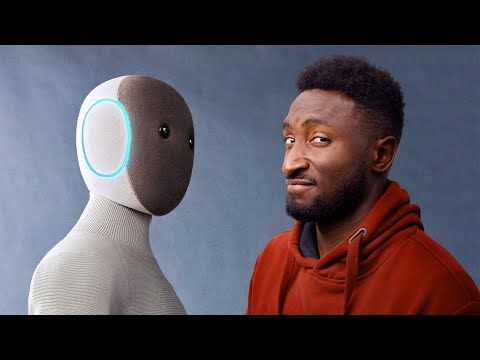 Photo: N43 and Hermes
1. The uncanny valley and user expectations
The concept of the uncanny valley, first described by Japanese roboticist Masahiro Mori in 1970, remains one of the most stubborn obstacles to humanoid robot acceptance. As robots become more humanlike, they evoke increasingly positive emotional responses — until a threshold is crossed where the resemblance becomes unsettling. This dip in comfort, the uncanny valley, is particularly acute for humanoid robots that look almost human but move mechanically. User expectations compound the problem. Decades of science fiction, from C-3PO to Data, have conditioned people to expect robots with human-level intelligence, fluid speech, and graceful movement. Real humanoid robots fall far short. They move jerkily, struggle with unexpected situations, and lack genuine understanding of social cues. When a robot looks human but behaves like a machine, the gap between expectation and reality produces disappointment or even revulsion. Companies like Figure AI and Tesla have responded by making their robots deliberately non-human in appearance, avoiding realistic faces and skin in favor of a clearly mechanical aesthetic.
2. Battery life and practical limitations
Battery life is perhaps the most overlooked constraint on humanoid robots. A human can work for 8-12 hours with brief rest breaks. The most advanced humanoid robots today manage 2-5 hours of operation before requiring a recharge. Tesla's Optimus is reportedly targeting 4 hours of continuous operation, while Figure's Figure 02 manages approximately 4-5 hours under ideal conditions. The problem is physics: humanoid robots must power dozens of actuators, sensors, and compute units while carrying a battery small enough to fit in a human-sized frame. Current lithium-ion battery energy density, around 250-300 Wh/kg, simply cannot match the efficiency of human metabolism. A robot that needs to recharge every few hours is impractical for most industrial applications. Boston Dynamics' Atlas, which uses electric actuators, runs for roughly 60-90 minutes of active operation. The battery problem cascades into weight: more battery capacity means more weight, which requires more power to move, which requires more battery — a vicious cycle that limits performance.
3. The dexterity gap: hands and manipulation
The human hand is a marvel of evolution, with 27 degrees of freedom, tactile sensitivity measured in millinewtons, and the ability to handle everything from eggshells to sledgehammers. No robotic hand comes close. The best robotic grippers and dexterous hands on the market, such as the Shadow Dexterous Hand with 20 degrees of freedom, can perform impressive demonstrations in controlled environments but struggle with the variability of real-world tasks. Picking up a screw from a cluttered workbench, folding laundry, or opening a door with an unfamiliar handle remain genuinely difficult problems. This dexterity gap is the primary reason humanoid robots cannot yet replace human workers in manufacturing, warehousing, or domestic settings. While locomotion — walking, climbing stairs, navigating obstacles — has progressed dramatically thanks to reinforcement learning, manipulation lags far behind. Companies are investing heavily in AI-driven grasping, but the combination of perception, planning, and physical dexterity needed for general-purpose manipulation remains an unsolved research problem.
4. Cost and manufacturing challenges
Humanoid robots are expensive. Tesla has set a target price of 20,000 to 30,000 dollars for the Optimus Gen 3, but current prototypes cost far more to build. Figure's robots are estimated to cost over 100,000 dollars per unit in low-volume production. Boston Dynamics' Atlas was never commercially priced but represented millions in R&D. The cost challenge is multifaceted: precision actuators, force sensors, custom compute hardware, and advanced materials all contribute. Unlike consumer electronics, which benefit from massive economies of scale and standardized components, humanoid robots are produced in small batches with bespoke parts. Manufacturing at scale requires solving problems that don't exist in automotive or smartphone production: testing bipedal balance, calibrating dozens of joints, and ensuring safety in human-proximity operation. Until production volumes reach tens of thousands of units annually, per-unit costs will remain too high for broad commercial deployment. The economics only work for high-value applications like hazardous environments or specialized industrial tasks.
5. Safety in human environments
A 70-kilogram robot capable of lifting 20 kilograms and moving at 2 meters per second is inherently dangerous. Safety in human environments is not just a technical challenge but a regulatory and liability one. Current industrial robots are kept behind cages for good reason: they cannot detect or respond to humans in their workspace. Humanoid robots designed to work alongside people need fundamentally different safety systems. Force-limited actuators, collision detection, and emergency stop mechanisms are necessary but insufficient. The real challenge is unpredictable human behavior: a child running into a robot's workspace, a worker reaching into a moving mechanism, or a robot misinterpreting its environment and acting dangerously. ISO 15066, the standard for collaborative robot safety, provides guidelines but was written for fixed industrial arms, not mobile bipedal robots. No comprehensive safety standard exists for humanoid robots in human spaces. Without one, commercial deployment in homes, hospitals, or retail is legally and practically impossible. Insurance companies are understandably reluctant to underwrite a product with no established safety track record.
6. The competition: Figure, Tesla, Boston Dynamics
The humanoid robot space is increasingly crowded. Figure AI, founded in 2022 by Brett Adcock, reached a 39 billion dollar valuation by late 2025 and has partnerships with BMW and Amazon. Its Figure 02 robot uses AI-driven vision and language models for task planning. Tesla's Optimus, announced in 2021, leverages Tesla's expertise in electric motors, battery systems, and AI compute from its autonomous vehicle program. CEO Elon Musk has stated that Optimus could eventually be more significant than Tesla's vehicle business, targeting production volumes in the millions. Boston Dynamics, now owned by Hyundai, has the deepest robotics expertise but has historically focused on research and military applications. Its all-electric Atlas, revealed in 2024, represents the state of the art in dynamic balance and agility. Other players include Agility Robotics with its Digit robot, already deployed in Amazon warehouses, and Chinese companies like Unitree and UBTECH. The competition is driving rapid progress but also creating hype that outpaces reality. Many promised capabilities remain in the demonstration phase, and the gap between slick promotional videos and reliable real-world performance is substantial.
7. What needs to happen before adoption
Several breakthroughs must converge before humanoid robots achieve broad commercial adoption. Battery energy density needs to roughly double, from 300 to 600 Wh/kg, to enable full-shift operation. Dexterous manipulation must advance from controlled demonstrations to reliable general-purpose grasping. Manufacturing costs must fall by an order of magnitude, requiring production volumes in the tens of thousands. Safety standards must be developed and adopted, creating a regulatory framework for human-robot interaction in unstructured environments. AI systems must become robust enough to handle the infinite variability of real-world tasks without constant human supervision. Most critically, the robots must demonstrate reliability over thousands of hours of operation, not just in curated demos. Industry experts estimate that meaningful commercial deployment — thousands of units performing useful work reliably — is 3-5 years away. Widespread adoption at consumer price points is likely a decade or more distant. The path forward requires not just engineering breakthroughs but the slow, unglamorous work of testing, iteration, and reliability engineering that separates prototypes from products.
References
- Wikipedia: Humanoid robot, Tesla Optimus, Figure AI
- Figure AI company overview and Figure 02 specifications, 2025
- Tesla AI Day 2022, Optimus prototype demonstration
- Boston Dynamics, "All-Electric Atlas" announcement, 2024
- YouTube: The Problem with this Humanoid Robot by Marques Brownlee
By N43 and Hermes for Sailor Bob News.


