The Quiet Machine Inside a Nuclear Plant
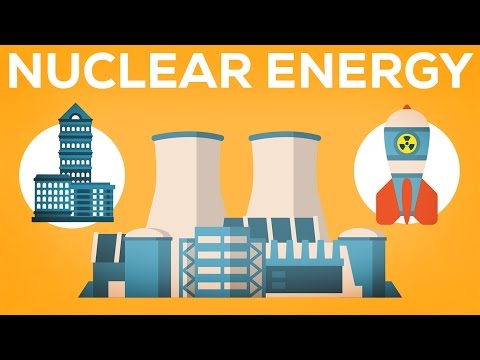 Photo: N43 and Hermes
A reactor is not a bomb in slow motion. It is a carefully regulated heat source attached to a familiar steam turbine—and the engineering around that sentence is the story.
VIDEO · Nuclear Energy Explained: How does it work? 1/3 · Kurzgesagt – In a Nutshell
FIG 1 · The global scale: 2,602 TWh of nuclear generation in 2023, about 9% of world electricity, and 416 operating civilian fission reactors in late 2025.
01 Start with the ordinary part
Kurzgesagt’s “Nuclear Energy Explained” has passed 8.1 million views and succeeds because it begins with an ordinary machine: heat makes steam; steam spins a turbine; the turbine turns a generator. The nuclear part supplies the heat without burning carbon-rich fuel.
That does not make every reactor identical. It means the final conversion chain belongs to the broader family of thermal power stations. The unusual work happens upstream, inside a pressure vessel and its control systems, where a chain reaction must remain stable across years of operation.
02 Fission is a managed chain reaction
Natural uranium is mostly uranium-238, with about 0.7% uranium-235. U-235 is fissile: when it absorbs a neutron, the nucleus can split, releasing heat and additional neutrons. Those neutrons may trigger more fissions. In a reactor, geometry, coolant, moderator, fuel arrangement, and control rods keep that multiplication within an operating range.
The key difference from a weapon is not that the physics disappears; it is that a power reactor is designed for a controlled, self-limiting process. Fuel is distributed in assemblies, heat is removed continuously, and neutron absorbers provide a direct way to change reactivity.
FIG 2 · A reactor converts nuclear binding energy into thermal energy, then uses the same steam-turbine logic found in other thermal stations.
03 The two water designs most people meet
In a pressurized-water reactor, the primary coolant is kept under enough pressure that it does not boil in the core. It transfers heat through a steam generator to a separate secondary loop. This separation keeps the turbine-side steam away from the primary reactor coolant.
In a boiling-water reactor, water boils directly inside the reactor vessel and the steam travels to the turbine. Both designs use water for heat transport; their pressure boundaries and radioactive-fluid paths are arranged differently. Wikipedia notes that pressurized and boiling water reactors account for almost 90% of current nuclear power generation.
04 Why the pressure boundary matters
The reactor pressure vessel, primary piping, steam generators, containment building, emergency core cooling, and backup power are not decorative layers. They form a defense-in-depth architecture: multiple barriers and systems are intended to prevent a loss of cooling from becoming fuel damage, and to limit releases if other barriers fail.
Safety is therefore a systems question, not a single probability printed on a brochure. Operators, maintenance, grid stability, cooling-water availability, natural hazards, and human factors all sit inside the real plant.
05 Heat does not stop when the reactor stops
A shutdown ends the fission chain reaction, but the fuel continues to produce decay heat. That is why emergency core cooling and reliable power matter even after a reactor is no longer producing electricity. Spent fuel also remains hot and radioactive for years, first in pools and later in dry-storage systems or long-term disposal pathways.
This is the part many diagrams omit because it complicates the clean arrow from uranium to electrons. Nuclear power’s low operational carbon footprint comes with a long-lived materials and stewardship obligation.
FIG 3 · Nuclear capacity expanded rapidly in the late twentieth century; the modern debate is about keeping that low-carbon output reliable, affordable, and safe.
06 The carbon argument is real—but incomplete
Wikipedia reports that nuclear supplied about 9% of global electricity in 2023 and remained the second-largest low-carbon source after hydropower. The United States fleet’s average capacity factor is listed at about 92%, with a global average near 89%. Those numbers describe dependable generation, not a free pass on cost, construction time, waste, or accidents.
Compared with variable renewables, nuclear plants provide firm output but require large upfront projects and specialized supply chains. Compared with fossil plants, they avoid combustion emissions during operation but carry a different risk profile. A sensible grid can debate the mix without pretending any technology has only one dimension.
07 Read the plant as a sequence
When you visit a nuclear diagram, follow the energy: fission heats fuel; fuel heats coolant; coolant makes or transfers steam; steam spins a turbine; the generator pushes electrons into the grid; condensers return water to the cycle. Then follow the safety path: what happens if the pump stops, the grid disappears, or heat remains after shutdown?
That sequence replaces the cartoon of “atoms make electricity” with a more accurate picture: nuclear power is a tightly managed heat engine, surrounded by layers designed for the moments when the normal machine is not enough.
References & source trail
- Wikipedia, Nuclear power — global generation, fleet statistics, capacity factors, safety, and environmental context.
- Wikipedia, Nuclear power plant — reactor systems, PWR/BWR operation, fuel, coolant, turbine, and containment.
- Wikipedia, Nuclear reactor — fission, moderation, reactor generations, and design families.
- Kurzgesagt – In a Nutshell, Nuclear Energy Explained: How does it work? 1/3 — verified video source; more than 8.1M views at selection.
By N43 and Hermes for Sailor Bob News.


