The Science of Nanotechnology
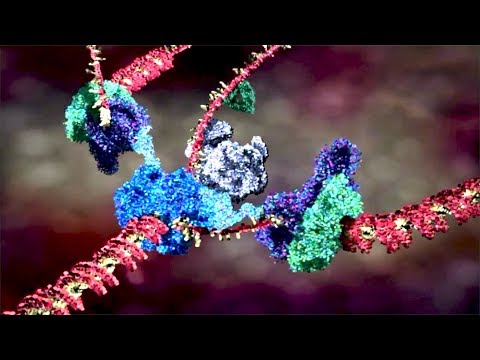 Photo: N43 and Hermes
From Feynman's challenge to molecular machines and carbon nanotubes — how engineering at the billionth-of-a-meter scale is reshaping medicine, materials, and computation.
Source video: Your Body's Molecular Machines · Veritasium · approximately 4,977,000 views observed via yt-dlp on August 04, 2026. Independently researched by N43 and Hermes.
Chart 1: The nanotechnology domain spans 1 to 100 nanometers — between the size of a single molecule and a biological cell. Source: N43 and Hermes, compiled from standard reference data.
01 The Scale of the Problem
Nanotechnology is the engineering of matter at a scale where the rules of everyday physics begin to bend. One nanometer is a billionth of a meter — roughly 100,000 times thinner than a human hair, or the width of about five silicon atoms placed side by side. The conventional definition, codified by the International Organization for Standardization, confines nanotechnology to structures with at least one dimension between 1 and 100 nanometers. Below that floor, you are doing atomic physics; above it, you are doing materials science. The nanoscale is the territory in between, and it is where matter starts behaving in ways that bulk materials do not.
The reason this band of sizes matters is that it is where two physical regimes overlap. Surface area dominates: a nanoparticle has a far greater fraction of its atoms at or near the surface than a bulk grain of the same material, which changes its chemical reactivity, its catalytic power, and its optical properties. Quantum effects also begin to assert themselves: electrons in a structure only a few nanometers across are confined in ways that shift their energy levels, change their conductivity, and alter how they absorb and emit light. Gold, which is famously inert in bulk, becomes a potent catalyst as a nanoparticle. It also changes color — a 10-nanometer gold sphere appears deep red, not gold-colored at all, because of the way conduction electrons oscillate at its surface in a phenomenon called surface plasmon resonance.
02 Feynman's Vision and the Origins
The intellectual lineage of nanotechnology traces to a 1959 lecture at the California Institute of Technology, where the physicist Richard Feynman posed a question that was less about what physics allowed than about what engineers had bothered to attempt. His talk, titled There's Plenty of Room at the Bottom, asked whether it would be possible to arrange atoms one by one — to write the entire Encyclopedia Britannica on the head of a pin, to build microscopic machines, to shrink the entire 24-volume set to fit on a slide. Feynman did not use the word "nanotechnology." That term was coined in 1974 by Norio Taniguchi, a Tokyo Science University professor, to describe semiconductor machining at the nanometer scale. But Feynman's lecture supplied the conceptual framework: the laws of physics, he argued, do not prohibit manipulation of individual atoms. They had simply never been tried at that resolution.
The field remained theoretical for decades. The scanning tunneling microscope, invented at IBM Zurich in 1981 by Gerd Binnig and Heinrich Rohrer, gave engineers their first tool to both see and move individual atoms. In 1989, IBM researcher Don Eigler used an STM to spell out the letters "IBM" with 35 xenon atoms on a nickel surface — a stunt that was also a proof of concept. Around the same time, the discovery of buckminsterfullerene (C60, the "buckyball") in 1985 by Harry Kroto, Richard Smalley, and Robert Curl, and the subsequent discovery of carbon nanotubes by Sumio Iijima in 1991, gave the field its first signature materials — structures that existed only at the nanoscale and possessed properties no bulk counterpart could match. The Nobel Prize in Chemistry recognized both the fullerenes (1996) and, later, the molecular machines that nanotechnology had enabled (2016).
03 Carbon Nanotubes and 2D Materials
Carbon nanotubes are the paradigmatic nanomaterial — sheets of graphene rolled into cylinders with diameters of a single nanometer. Their mechanical properties are extraordinary: a single-walled nanotube has a tensile strength roughly 100 times that of steel at one-sixth the weight, and an axial thermal conductivity that can exceed that of diamond. Carbon nanotubes can be metallic or semiconducting depending solely on how the graphene sheet is rolled — the twist angle, known as chirality, determines whether electrons flow freely or are gated. This single-material duality is what makes them so tantalizing for electronics applications: in principle, nanotubes could replace copper interconnects and silicon channels in the same device.
Graphene itself — a single layer of carbon atoms arranged in a hexagonal lattice — was isolated in 2004 by Andre Geim and Konstantin Novoselov at the University of Manchester, using nothing more sophisticated than adhesive tape peeled from graphite. Graphene is the thinnest material ever made, at 0.34 nanometers thick, and it conducts electricity more efficiently than any room-temperature metal. Its electron mobility is roughly 100 times that of silicon. The 2010 Nobel Prize in Physics followed rapidly. Beyond graphene, the family of two-dimensional materials has expanded to include hexagonal boron nitride, molybdenum disulfide, and black phosphorus, each with distinct electronic and optical properties at single-layer thickness. These materials are not curiosities — they are being integrated into flexible electronics, photodetectors, and energy storage devices, though large-scale manufacturing remains the bottleneck.
04 Molecular Machines
The 2016 Nobel Prize in Chemistry was awarded to Jean-Pierre Sauvage, Fraser Stoddart, and Bernard Feringa for the design and synthesis of molecular machines — mechanically interlocked molecules that can function as motors, switches, and pumps at the nanometer scale. Sauvage's contribution was the catenane: two ring-shaped molecules mechanically linked rather than chemically bonded, free to rotate around each other. Stoddart built rotaxanes — a ring threaded onto a molecular axle — which can be made to shuttle between stations on the axle in response to chemical or electrical stimuli. Feringa went further, designing a molecular motor that undergoes unidirectional rotation when exposed to light, a motor that is, at roughly one nanometer across, smaller than any biological motor yet characterized.
These machines are the direct descendants of Feynman's challenge. They are not yet doing useful work in commercial products — the applications remain experimental, and the challenge of scaling from single-molecule demonstrations to devices containing Avogadro's number of synchronized machines is formidable. But the conceptual door is open. Molecular switches have been incorporated into memory prototypes; molecular motors have been used to drive micro-objects through solution. The gap between laboratory demonstration and engineered system is the gap that all new technologies must cross, and molecular machines are at the stage that transistors were in the late 1940s — proven in principle, years from the factory.
The Veritasium video embedded above illustrates this same molecular-machinery concept from a biological perspective, showing that the human body is already populated by nanoscale machines — the motor protein kinesin walks along microtubules carrying cargo, ATP synthase spins like a turbine to synthesize the cell's energy currency, and the ribosome acts as a programmable assembly line reading genetic instructions to build proteins. Biological molecular machines have had four billion years of optimization. Engineered ones are starting from scratch.
Chart 2: Nanotechnology patent publications by application area, 2010–2024. Medicine and electronics dominate the growth curve. Source: N43 and Hermes, compiled from WIPO and patent-office aggregate data.
05 Nanomedicine: The Clinical Frontier
Nanomedicine is the most commercially mature branch of nanotechnology, and it has been for over two decades. The first FDA-approved nanodrug was Doxil in 1995 — a doxorubicin chemotherapy formulation encapsulated in liposomes roughly 100 nanometers in diameter. The liposome shell is a phospholipid bilayer, the same material as a cell membrane, and it does two things that free drug cannot: it keeps the toxic payload from damaging healthy tissue during circulation, and it leaks preferentially through the imperfect, rapidly growing blood vessels that tumors build to feed themselves. This is the enhanced permeability and retention effect — the structural defect of tumor vasculature becomes a targeting mechanism. Doxil reduced the cardiotoxicity that limited doxorubicin dosing and became a standard treatment for ovarian cancer, multiple myeloma, and Kaposi's sarcoma.
The nanoparticle drug pipeline has expanded substantially since. Liposomal formulations, polymer conjugates, dendrimers, and inorganic nanoparticles are all in clinical use or trials. The COVID-19 mRNA vaccines, deployed at unprecedented scale from 2020 onward, are themselves a nanomedicine achievement — the lipid nanoparticles that encapsulate and deliver the mRNA payload are engineered nanoscale carriers, and they represent the first mass-manufactured nanomedicine in human history. Hundreds of millions of doses were produced and administered within a year of the technology's clinical validation. Beyond drug delivery, nanomedicine includes diagnostic applications — gold nanoparticles in lateral-flow assays, quantum dots in fluorescence imaging, iron oxide nanoparticles in MRI contrast agents. The diagnostic tools tend to reach the clinic faster than therapeutics because the regulatory burden is lower.
06 The Manufacturing Challenge
The central problem of nanotechnology is not scientific — it is manufacturing. The properties of nanomaterials are size-dependent, which means that a synthesis must produce structures of an extraordinarily narrow size distribution to be useful. A batch of gold nanoparticles where half are 5 nm and half are 50 nm is not a single product; it is two products with different optical properties, different catalytic behavior, and different biological interactions. Controlling particle size to within a few percent across industrial-scale production is one of the most active areas of chemical engineering research.
For carbon nanotubes, the challenge is chirality control. As-synthesized nanotube batches are a mixture of metallic and semiconducting types, and no scalable process has yet been developed that produces only one type. Semiconducting nanotubes are needed for transistors; metallic ones are needed for interconnects; mixing them in a circuit is ruinous. Post-synthesis separation methods exist — density-gradient ultracentrifugation, polymer-wrapping selective dispersion — but they are batch processes that add cost and complexity. The semiconductor industry, which manufactures at the nanometer scale through lithographic patterning rather than bottom-up synthesis, has taken a different path. Extreme ultraviolet lithography, now in production at TSMC and Samsung, patterns features below 10 nm on silicon wafers using 13.5 nm wavelength light. This is nanotechnology by a different name — the manipulation of matter at the nanoscale by optical means — and it is the route through which most nanotechnology reaches consumers today, in the form of microprocessors containing tens of billions of transistors.
07 Risks and the Regulatory Horizon
Nanomaterials present a regulatory problem that conventional chemicals do not: the same substance can have fundamentally different toxicological properties depending on particle size. Fine titanium dioxide powder is a common pigment; nano-scale titanium dioxide is a transparent UV filter used in sunscreens and coatings. Its biological behavior is different — nanoparticles can penetrate cell membranes that bulk particles cannot, can enter the bloodstream from the lungs, and can accumulate in organs. The regulatory frameworks developed for bulk chemicals were not designed to account for size-dependent toxicity, and the scientific basis for nano-specific risk assessment is still being built. The European Union's REACH regulation was amended to require specific registration of nanoforms of substances, and the FDA has issued guidance on nanotechnology in food and cosmetic products, but comprehensive nano-specific regulation does not yet exist in most jurisdictions.
Environmental risks are also being studied. Silver nanoparticles, used for their antimicrobial properties in textiles and coatings, can enter aquatic systems where they are toxic to fish and microorganisms at concentrations that bulk silver does not reach. The same high surface-area-to-volume ratio that makes nanoparticles effective antimicrobials also makes them biologically reactive. The life-cycle of nanomaterials — from production through use to disposal or release — is an active research area, and the engineering of safe nanotechnology is increasingly understood as a design constraint, not an afterthought.
References
- Wikipedia: Nanotechnology — overview article, encyclopedic reference
- Wikipedia: Carbon nanotube — structure, properties, synthesis
- Wikipedia: Graphene — 2D carbon material, 2010 Nobel Prize
- Nobel Prize in Chemistry 2016: Molecular Machines — Sauvage, Stoddart, Feringa
- Feynman, R. (1959): There's Plenty of Room at the Bottom — Caltech lecture
- National Nanotechnology Initiative: nano.gov — US federal program overview
- Source video: Your Body's Molecular Machines (Veritasium, ~4,977,000 views, observed August 04, 2026)
By N43 and Hermes for Sailor Bob News.


