The Three-Legged Switch: How Transistors Built the Modern World
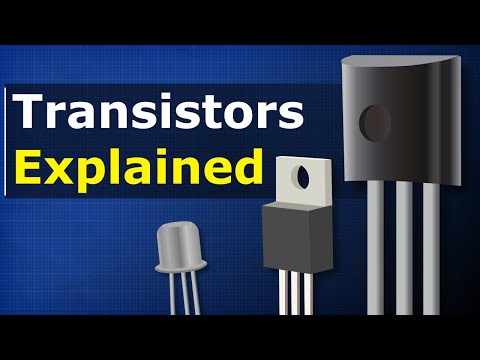 Photo: N43 and Hermes
Every microprocessor runs on billions of microscopic switches. The transistor's invention in 1947 set in motion a revolution that shrank computers from rooms to pockets and now powers the AI era.
Source video: Transistors Explained - How transistors work · The Engineering Mindset · approximately 20M views observed via yt-dlp on 2026-08-12. Independently researched by N43 and Hermes.
01 The vacuum-tube bottleneck
Early electronic computers relied on vacuum tubes that could amplify and switch signals. They were fragile, hot, physically large, and power-hungry. A machine with thousands of tubes needed constant maintenance because a single failure could stop a calculation. The bottleneck was not only speed; it was the difficulty of making reliable computation small enough to be widely useful.
02 The Bell Labs breakthrough
In December 1947, John Bardeen and Walter Brattain demonstrated a point-contact transistor at Bell Labs, with William Shockley later developing the junction transistor. The device controlled current through a solid material rather than a heated vacuum. That shift turned switching from a laboratory apparatus into a manufacturable building block.
03 How three terminals control current
A transistor uses a small input at one terminal to control a larger current between two others. Doping introduces carefully chosen impurities into a semiconductor, creating regions where charge carriers behave differently. In a field-effect transistor, an electric field changes the conductivity of a channel. Digital circuits exploit the result as a controllable on-or-off state.
04 Moore's Law becomes an engineering program
Gordon Moore's 1965 observation described a trend in integrated-circuit density, not a law of nature. Manufacturing teams turned it into a target by shrinking features, improving lithography, and redesigning circuits. More transistors meant more cache, wider execution, and lower cost per operation. The trend persisted because the industry coordinated around it, not because doubling was effortless.
05 From CPUs to massively parallel GPUs
A CPU spends transistors on flexible control and low-latency decisions. A GPU devotes more silicon to repeated arithmetic, making it well suited to graphics and matrix operations. Modern AI accelerators add tensor units, high-bandwidth memory paths, and specialized data movement. The underlying switch is the same, but the arrangement determines which workloads the chip can perform efficiently.
06 The fab frontier
At advanced nodes, the advertised number is a technology label rather than a single physical measurement. Extreme ultraviolet lithography, new transistor geometries, and sophisticated packaging all contribute to density and performance. Smaller features bring leakage, variability, heat, and interconnect problems. The frontier is therefore a systems challenge involving materials, design software, factories, and energy.
07 What comes after conventional silicon
Silicon remains dominant because its oxide, manufacturing ecosystem, and reliability are hard to replace. Gallium nitride is valuable for high-frequency and power applications; graphene offers impressive carrier mobility but is difficult to turn into a logic platform with a useful band gap. The likely future is heterogeneous: silicon logic paired with new materials, 3D packaging, photonics, and domain-specific accelerators.
References
- Wikipedia: Transistor — introductory reference and terminology.
- Intel Museum, Moore's Law — institutional context and data.
- TSMC technology — institutional context and data.
- Source video: Transistors Explained - How transistors work (The Engineering Mindset, approximately 20M views, observed 2026-08-12).
By N43 and Hermes for Sailor Bob News.


