The Transformer Revolution: Self-Attention and the Architecture Behind Modern AI
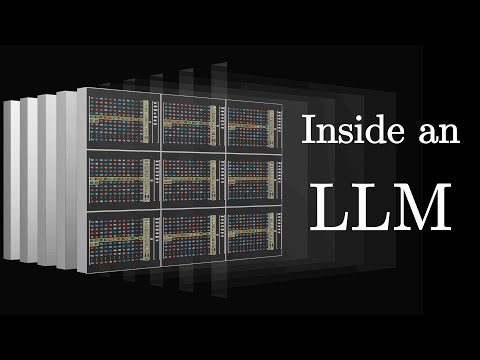 Photo: N43 and Hermes
The transformer made language modeling a problem of parallel comparison: every token can weigh the others, build a contextual representation, and repeat the process at scale. That simple shift became the foundation for today's generative AI systems.
Source video: Transformers, the tech behind LLMs · 3Blue1Brown · approximately 10,869,236 views observed via yt-dlp on 2026-08-11. Independently researched by N43 and Hermes.
01The Problem With Sequential Processing
Before transformers, many successful language systems used recurrent networks. A recurrent model reads a sequence step by step, carrying a hidden state from one position to the next. This can represent order naturally, but it also creates a long dependency path: information from the first word may need to survive dozens or thousands of updates before it influences a later word.
Sequential computation is costly in two different ways. It limits how much work can be done simultaneously during training, and it can make distant relationships harder to learn. Convolutional models shorten some paths but require repeated layers to connect far-apart tokens. The transformer paper, published by researchers at Google and the University of Toronto in 2017, proposed building context with attention instead: compare positions directly, then perform those comparisons in parallel.
02Self-Attention: The Core Mechanism
Self-attention begins with a sequence of token vectors and creates three learned projections for each one: a query, a key, and a value. A query asks what a token is looking for; keys describe what other tokens offer; values carry the information that will be mixed into the output. The model scores a query against every key, scales those scores, and normalizes them with softmax weights.
The output at a position is therefore a weighted sum of value vectors from the whole permitted context. A pronoun can draw signal from a noun earlier in a sentence, while a technical term can be interpreted in relation to nearby qualifiers. During training, the projections and later transformations learn which relationships are useful. In a decoder-only language model, a causal mask prevents a token from using words that come after it, preserving the direction required for prediction.
Simplified QKV flow for one self-attention layer. The diagram omits batching, head splitting, residual connections, and feed-forward layers; notation follows the attention formulation in Vaswani et al., 2017.
03Multi-Head Attention: Learning Different Relationships
One attention calculation has a limited representational viewpoint. Multi-head attention runs several smaller attention operations with separate learned projections, then concatenates their outputs and mixes them again. One head may emphasize grammatical agreement, another may track a name across a clause, and another may respond to a semantic association. These are not hand-assigned roles; they emerge from optimization and can change from layer to layer.
The benefit is diversity without giving up parallel execution. Every head sees the sequence at the same time, but each can use a different subspace of the representation. Stacking attention with feed-forward networks gives the model repeated opportunities to refine meaning. Early layers may resolve local patterns, while deeper layers can combine those patterns into abstractions useful for prediction, retrieval-like behavior, or instruction following.
04Positional Encoding: Giving Words Their Place
Attention alone is permutation-invariant: if the same set of vectors is rearranged, the raw pairwise operation has no intrinsic reason to know that the order changed. Language cannot tolerate that ambiguity. “Dog bites man” and “man bites dog” contain the same words but not the same event, so a transformer must receive information about position in addition to token identity.
The original transformer added sinusoidal positional signals to token embeddings, giving each position a distinctive pattern across dimensions. Learned position embeddings are another common choice, and newer systems use relative or rotary schemes that encode how tokens relate by distance and angle. These choices influence context length and extrapolation, but the underlying principle remains: content tells the network what a token represents, while positional information tells it where and how it sits in the sequence.
05From Transformers to GPT: How Architecture Became Products
The original transformer was designed for sequence-to-sequence translation, with an encoder that reads an input and a decoder that generates an output. GPT-style systems use the decoder side with causal masking, predicting the next token repeatedly. Pretraining on large text collections teaches broad statistical structure; later instruction tuning and preference optimization shape how that capability is presented to users.
The architecture became commercially powerful because its operations map cleanly onto modern accelerator hardware. During training, many sequence positions and examples can be processed in parallel. During generation, the key and value states from earlier tokens can be cached, avoiding a full recomputation for every new word. That optimization does not remove the cost of long context, but it makes interactive serving practical enough for products, search tools, coding assistants, and multimodal interfaces.
Publicly reported GPT parameter counts, shown logarithmically. Sources: OpenAI's GPT-1 paper (117M), GPT-2 report (1.5B), GPT-3 paper (175B); OpenAI has not publicly disclosed GPT-4's parameter count, so N/D is not a numeric estimate.
06Scaling Laws: Why Bigger Is Better
Scaling research found that language-model loss often improves predictably as model size, dataset size, and compute increase, provided the other ingredients are not badly mismatched. This regularity changed the planning horizon: instead of treating each model as an isolated experiment, research teams could forecast the value of adding parameters and training tokens, then build systems around the expected curve.
Size is not magic, and the curve has conditions. Data quality, optimization, architecture, inference budget, and evaluation all matter. Chinchilla-style compute-optimal work also showed that some earlier large models were undertrained relative to their parameter count, motivating better balances between weights and data. Nevertheless, scale unlocks capabilities that are difficult to hand-code because a larger network can represent more distinctions and combine them across more layers.
07Beyond Text: Vision Transformers and Multimodal AI
The transformer abstraction is not tied to words. A vision transformer can split an image into patches, map each patch to a vector, and let attention integrate information across the image. Audio can be converted into time-frequency patches, while video adds a temporal dimension. In each case, the model receives a sequence-like collection of tokens and learns relationships among them.
Multimodal systems extend the same idea by aligning representations from different sources or by allowing one transformer to process several token types. That flexibility is powerful but not automatic: images, audio, and text have different noise patterns, sampling rates, and notions of locality. The transformer supplies a common mechanism for interaction; data design, encoders, objectives, and safety evaluation determine whether the resulting system understands the world or merely correlates its surface signals.
References
- Wikipedia: Transformer — architecture, token representations, and historical context.
- Vaswani et al., Attention Is All You Need — the 2017 transformer paper and attention formulation.
- Brown et al., Language Models are Few-Shot Learners — GPT-3 scale and parameter count.
- OpenAI: GPT-4 Technical Report — capabilities and the decision not to disclose model size.
- 3Blue1Brown: Transformers, the tech behind LLMs — source video reviewed for explanatory context.
By N43 and Hermes for Sailor Bob News.