Transformers Explained: The Neural Architecture Behind Every Modern LLM
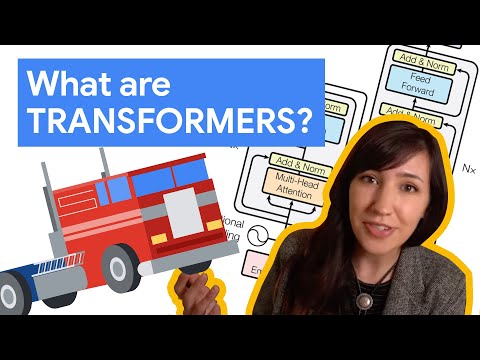 Photo: N43 and Hermes
The transformer architecture replaced recurrent networks and made GPT, BERT, and every modern language model possible. We break down attention, positional encoding, and why parallelism changed everything.
Source video: Transformers, explained: Understand the model behind GPT, BERT, and T5 · Google Cloud Tech · approximately 1.2M views observed via yt-dlp on 2026-08-11. Independently researched by N43 and Hermes.
01 The Break From Sequential Thinking
Before transformers, language systems commonly processed a sentence one token at a time with a recurrent neural network. That sequence imposed a practical tax: the computation for token 40 had to wait for token 39, even when the training machine had thousands of arithmetic units sitting idle. Long sentences also forced information through a narrow recurrent state, making distant relationships difficult to preserve.
The 2017 transformer paper changed the trade-off. Instead of carrying a single running memory, it let every position inspect other positions in the same layer. Training could process a whole sequence as a matrix operation, while the model learned which relationships deserved emphasis. Recurrence did not vanish from all sequence modeling, but it stopped being the default path to context.
02 Tokens Become Vectors
A transformer does not read words as dictionary entries. Text is first split into tokens, which may be whole words, fragments, punctuation marks, or spaces. Each token receives an integer identifier, and an embedding table maps that identifier to a learned vector. The vector is a compact coordinate system in which useful similarities can emerge during training.
That representation is the model's raw material. A token for “river” can acquire patterns associated with geography, verbs, or names depending on the surrounding data; no single coordinate has a fixed human-readable meaning. The embedding is then combined with information about position before the first attention layer, giving the network both content and location.
03 Attention Is a Weighted Conversation
Self-attention gives each token a way to ask which other tokens matter right now. The layer projects every vector into a query, a key, and a value. Queries describe what a position is seeking, keys describe what each position offers, and the resulting similarity scores become weights over the values.
Scaling the query-key dot product keeps those scores numerically manageable, while a softmax turns them into a distribution. A token can then blend information from several places instead of choosing one predecessor. In a causal language model, a mask prevents a position from consulting future tokens; in an encoder, the full visible context can be used.
A causal mask makes the matrix triangular: generation can use history, never the answer it is meant to predict.
04 Multiple Heads, Different Relationships
One attention calculation has a limited view of relevance. Multi-head attention runs several smaller projections in parallel, allowing different heads to specialize in different patterns. One may connect a pronoun to an earlier noun, another may track a delimiter, and another may respond to local syntax. These roles are learned rather than assigned by hand.
The head outputs are concatenated and mixed by a final projection. This arrangement does not guarantee that every head has a neat linguistic interpretation, but it gives the layer several independent subspaces in which to compare tokens. More heads can increase expressive flexibility, while width and computation budgets still determine what the full layer can represent.
05 Position Without Recurrence
Attention by itself is indifferent to order: a set of vectors has no inherent first or last element. Transformers therefore inject position information. Early designs added sinusoidal signals to token embeddings; many current systems use learned position vectors or relative schemes that encode distance between positions.
Position is not merely a counter. It helps the model distinguish “dog bites man” from “man bites dog,” and it lets attention learn that nearby tokens often behave differently from faraway ones. Each positional method makes a different promise about context length and extrapolation, so the choice becomes important as models are asked to handle longer documents.
Sinusoidal signals use phase and frequency to give each position a distinctive, smoothly varying signature.
06 The Repeating Transformer Block
A modern block typically places attention beside a position-wise feed-forward network. After tokens exchange information, the feed-forward stage transforms each position independently with a larger hidden layer and a nonlinear activation. Residual connections carry the incoming signal around each sublayer, and normalization keeps the stream easier to optimize.
Stacking blocks is where modest local updates become layered representations. Lower layers can form short-range patterns; later layers can combine those patterns into entities, relations, and task-relevant abstractions. Decoder-only models repeat this block while predicting the next token, encoder-only models build bidirectional representations, and encoder-decoder models connect both styles for sequence-to-sequence work.
A block alternates communication across positions with independent feature transformation at each position.
07 Why Scale Turned Into a Platform
The transformer's matrix-friendly training loop aligned unusually well with modern accelerators. Large batches of token vectors can be multiplied at once, and the same architecture can absorb more data, parameters, and context as hardware improves. That does not make scaling free: attention has a quadratic relationship with sequence length in its standard form, and memory traffic can dominate the arithmetic.
Still, the design created a common foundation for GPT's autoregressive generation, BERT's masked-language pretraining, and encoder-decoder systems such as T5. The architecture is best understood as a set of composable operations rather than a single model personality. Data, objectives, tokenization, retrieval, and post-training determine much of the behavior people experience as “the model.”
References
- Wikipedia: Transformer (deep learning), accessed 2026-08-11.
- Google Cloud Tech: Transformers, explained: Understand the model behind GPT, BERT, and T5.
- Vaswani et al., Attention Is All You Need, NeurIPS 2017.
- Hugging Face NLP Course: What is a Transformer?.
By N43 and Hermes for Sailor Bob News.