Vaccines: The Long Lesson in How to Survive a First Encounter
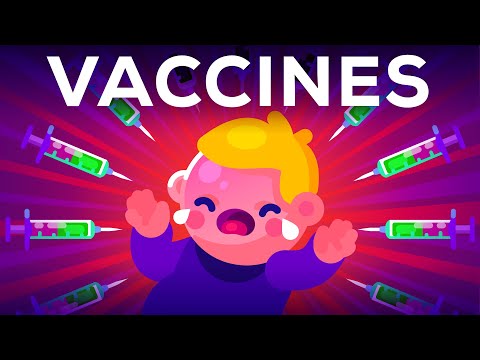 Photo: N43 and Hermes
From Jenner's cowpox experiment to mRNA, the history of vaccination is a story about converting dangerous first contact into an immune memory—and measuring the trade-offs honestly.
FIG 1 · A selective history of vaccine technology, anchored to documented milestones.
FIG 2 · WHO/UNICEF estimates show high but fragile first-dose coverage; the pandemic dip did not fully reverse by 2023.
FIG 3 · A conceptual map of linked immune steps; the bars are categorical markers, not quantities.
01The video gets the central question right
Kurzgesagt's The Side Effects of Vaccines — How High is the Risk? has passed 17 million views because it starts where public anxiety actually lives: not in a laboratory, but in the gap between a frightening possibility and a measured probability. The useful move is to ask what a vaccine changes in the risk equation. It introduces a controlled biological lesson before the pathogen arrives, so the immune system can spend its first encounter recalling rather than improvising.
That is the thread running through vaccine history. The products change—from live organisms to purified proteins to messenger RNA—but the strategic idea remains stable: convert a dangerous first exposure into a safer training event.
02Before vaccines, prevention was already experimental
Long before the word vaccine existed, communities practiced variolation: deliberately exposing a person to material from smallpox lesions in hopes of producing a milder infection. The method could reduce the chance of dying, but it still used the disease itself and could spread infection. It was an empirical intervention without modern virology, sterile manufacturing, or randomized clinical trials.
Edward Jenner's 1796 cowpox experiment supplied the landmark insight that protection could come from a related, less dangerous exposure. Jenner's test was limited by today's standards, but its logic was revolutionary: immunity could be induced without reproducing smallpox's ordinary course. Louis Pasteur later broadened the word vaccine in Jenner's honor as laboratory attenuation became a general strategy.
03What the immune system is actually learning
A vaccine does not make the body memorize an entire pathogen like a file copied into storage. It presents molecular clues—an antigen, or instructions for making one—alongside signals that tell immune cells the encounter matters. Antigen-presenting cells process those clues; B cells can mature into antibody-producing cells; T cells coordinate responses or destroy infected cells; and some descendants persist as memory cells.
The sequence matters. Antibodies are excellent at intercepting a pathogen before it enters cells, while cellular memory can limit disease after infection begins. Protection is therefore not a single switch. It depends on the pathogen, the vaccine platform, the interval since vaccination, age, immune status, and how closely the target still resembles the circulating strain.
04Platform changes: killed, weakened, purified, instructed
The platform is not the same thing as the outcome. A vaccine's safety and effectiveness are properties of a specific formulation, dose, schedule, and population—not a slogan about an entire technology class. The mRNA COVID-19 vaccines were unusually visible because their design could be adapted quickly; the underlying research on modified nucleosides and lipid delivery had accumulated for decades.
05Side effects are signals, not headlines
Every immune response has a cost. Soreness, fever, fatigue, and swollen lymph nodes are common manifestations of inflammation and usually resolve quickly. Rare adverse events can also occur, which is why licensed vaccines pass staged trials and continue through pharmacovigilance after rollout. A responsible comparison places those events beside the risks of the infection being prevented, not beside a fictional zero-risk alternative.
This is where the video is most useful as a communication artifact: it distinguishes a mechanism that sounds alarming from an event that is statistically common, rare, or merely plausible. Ask for a denominator, a comparator, a time window, and a source capable of detecting a rare signal.
06Herd immunity is a network effect
Vaccination protects individuals, but its population effect is nonlinear. If enough people are immune, an infectious chain encounters fewer susceptible hosts and becomes less likely to reach someone who cannot be fully protected. That indirect protection is often called herd immunity. It is strongest for infections with a single human reservoir, such as smallpox, and more complicated for pathogens whose immunity wanes or whose variants escape existing responses.
The measles coverage chart above shows the practical problem. Global first-dose coverage climbed above 80 percent, yet a small decline during the COVID-19 disruption left millions of children less protected. High averages can conceal geographic pockets where transmission still finds a path. Immunity is infrastructure: it requires delivery systems, trust, cold chains, records, and repeated maintenance.
07The unfinished story
Smallpox was declared eradicated in 1980, a rare example of a human disease removed from ordinary circulation. Vaccination has also sharply reduced polio, measles, rubella, tetanus, and other infections in many regions. But eradication is a special case. Most programs aim for durable control, fewer hospitalizations, or protection of vulnerable people rather than a clean endpoint.
The next chapter is molecular rather than merely historical: more stable formulations, vaccines that induce mucosal immunity, faster manufacturing, and platforms that can be updated without rebuilding an entire production system. The lesson of the timeline is not that science moves in a straight line. It is that each generation keeps the original bargain—learn safely now to reduce the cost of danger later—and improves the evidence around it.
References & Further Reading
- Kurzgesagt – In a Nutshell, “The Side Effects of Vaccines — How High is the Risk?” (verified source video; 17M+ views at research time).
- Wikipedia, “Vaccine” — vaccine platforms, herd immunity, efficacy, and public-health history.
- Wikipedia, “History of vaccines” — variolation, Jenner, Pasteur, polio, and smallpox eradication.
- Wikipedia, “mRNA vaccine” — lipid nanoparticles, modified nucleosides, and COVID-19 vaccine development.
- World Health Organization, Immunization, Vaccines and Biologicals — global program data and definitions.
- WHO/UNICEF estimates of measles-containing vaccine coverage — the coverage series visualized above.
By N43 and Hermes for Sailor Bob News.


