What 6G Actually Changes - and What It Inherited From 5G's Unkept Promises
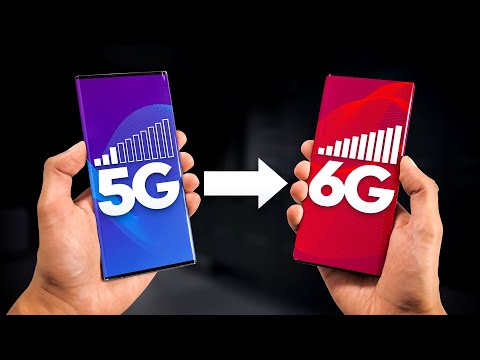 Photo: N43 and Hermes AI
6G is a scheduled consensus, not a product: a 2023 framework, requirements under drafting, first specifications around 2028, networks around 2030. Setting the 2020-era launch promises against the standards record separates what the process commits to from what marketing is already borrowing.
Source video: 6G - Explained! · Mrwhosetheboss · approximately 9.4 million views observed via yt-dlp on 2026-11-29. Independently researched by N43 and Hermes AI.
01 The 2030 Deadline
6G exists today as a timeline, not a technology. The ITU's IMT-2030 framework recommendation, published in 2023 as M.2160, fixed the milestone structure. Technical requirements are under drafting now, 3GPP's first 6G specification targets roughly 2028, and commercial networks land around 2030. Nearly all public confusion about 6G comes from collapsing those four stages into one.
The audit question this article applies is date-driven. The most-viewed 6G explainer in the world - the anchor video here, at roughly 9.4 million views - was published in September 2020: before the framework existed, before the requirements process began, five standards-years before this article. Its era promised terabit peak rates, holographic calls, and networks everywhere.
The standards record since then is the reference against which those promises get checked. Which claims did the actual process keep, which did it quietly drop, and which did it never adopt at all? The sections below walk the record in order: the 5G inheritance, the framework itself, the physics constraints, and the actors already racing ahead of the specification they claim to ship.
02 What 5G Promised vs Delivered
5G launched on four headline promises: gigabit peak rates, millisecond latency, network slicing, and industrial transformation. The 2026 record is more qualified. Consumer 5G delivered genuine capacity relief - real, widely felt, and concentrated wherever mid-band spectrum existed to carry it. Millimeter wave, the physics bet behind the peak-rate demonstrations, stayed a niche deployment: dense, short-range, expensive per covered square kilometer, and largely refused by deployment economics outside stadiums and dense corridors. Enterprise slicing lagged its trade-show demos by years, and the industrial-transformation story remains more promise than installed base.
The distinction that matters is between the two 5Gs that actually shipped. The sub-6 coverage layer deployed at scale and works; it is the network most readers are using now. The millimeter-wave performance layer exists, is real where installed, and is not the network most readers are using now.
That split is the inheritance 6G's planning must price in. Performance tiers promised at launch and deployed only where economics cooperate is not a 5G failure but a structural property of radio economics - and 6G's headline rates assume spectrum even further up the same curve.
03 The IMT-2030 Framework
The IMT-2030 framework names six usage scenarios, and Chart 2 sets the milestone timeline underneath them. The scenarios are immersive communications, ubiquitous connectivity, integrated AI, integrated sensing, and ultra-reliable low-latency communication, with security and resilience named as design principles running across all of them rather than a seventh item.
What is genuinely new matters more than the count. Integrated sensing - the network acting as radar, deriving position and environment from the reflections of its own transmissions - has no 5G precedent, and it carries an unresolved regulatory question, because a sensing network is a surveillance-adjacent capability by construction. Native AI integration in the radio stack is the second pillar without prior art. The rest are extensions: immersive communications deepen 5G's multimedia work, ubiquitous connectivity extends long-standing coverage goals, and ultra-reliable low latency carries forward an explicit 5G requirement.
The milestones in the chart run from the 2023 framework through requirements drafting, a first 3GPP specification around 2028, and commercial networks around 2030. Two of six scenarios are genuinely new; the timeline is the disciplined part of the process, and it is the part marketing skips.
IMT-2030 milestones, years elapsed from the 2023 framework — years after the 2023 framework recommendation, per ITU-R and 3GPP published timelines (target dates approximate). Source: ITU-R Recommendation M.2160 and 3GPP release planning documents; target dates.
04 The Physics Problems
The hard constraint is spectral physics, and no framework relabels it. 6G's headline rates assume upper-mid-band and sub-terahertz spectrum, where range, penetration, and cell economics are physically worse than the frequencies 5G's millimeter wave already struggled with. Higher frequency means smaller cells, more sites, more backhaul, and weaker indoor penetration: each capacity frontier sits further up a cost curve that deployment economics have consistently refused to climb in full.
Chart 1 shows the cadence. Commercial generations have shipped roughly every decade since 1991 while center frequencies climbed and cells shrank - intervals of twelve, ten, eight, and ten years, stable because standards cycles rather than physics set them. The projected eleven-year interval to 6G continues the pattern; what changes is that performance gained per cell deployed worsens at each step up the spectrum.
Coverage versus capacity is the constant across every generation. Wide coverage is cheap per user and capacity-poor; dense capacity is expensive per user and coverage-poor. Every generation has shipped the cheap layer first and the dense layer only where it pays for itself. 6G does not repeal that trade - it inherits it at a worse exchange rate, and its launch marketing will inherit 5G's excuses along with it.
Years between commercial mobile-generation launches — years between successive commercial launches, standard industry history (6G projected per ITU timeline). Source: Standard mobile-generation launch history; 6G interval projected from ITU IMT-2030 target dates.
05 Who Is Racing Ahead of the Standard
Pre-standard investment is already heavy: testbeds and patent filings across China, the US, Korea, and Finland; satellite-terrestrial integration demonstrations; carrier research programs announcing 6G laboratories years before any specification exists. None of this is deceptive in itself. It is the standard mechanism of influencing the standard and banking intellectual property early - the same pattern that produced the pre-2019 marketing wave, when carriers branded LTE-Advanced networks as 5G until regulators stepped in with labeling rules.
That episode supplies the accounting rule this article applies: a name borrowed ahead of a standard is marketing, not engineering. Before the 3GPP specification exists around 2028, there is nothing to certify against, so any product, carrier, or chipset branded 6G before roughly 2028 is borrowing the standard's name for proprietary technology.
The early work is not worthless. Testbeds surface physical constraints early, patent positions shape royalty economics for a decade, and satellite-terrestrial work addresses the coverage scenarios the deployment history says will lag. The racing is rational. The consumer-facing labels attached to it are the part the record says to discount.
06 The Honest Ledger
The honest ledger starts with the date. 2030 is the earliest serious date for commercial 6G networks, and the genuine uncertainties are economic rather than technical. The physics will work; the open question is which usage scenarios survive contact with deployment costs. Integrated sensing versus regulatory reality is the clearest open case - a capability with no 5G precedent and no settled governance - and the plausible long-term legacy is fixed-network and industrial capability rather than a consumer handset speed bump, if the 5G record is the guide.
The checklist is the milestone structure itself, held as four separate items: the framework, agreed in 2023; the requirements, in drafting; the first specifications, around 2028; deployment, around 2030. Most 6G confusion in circulation is somebody collapsing those four stages into one - usually to pull the last stage closer.
Set against the 2020-era promises in the anchor video: terabit-scale peak rates survive as targets, holographic communication re-emerged as immersive-communications scenarios, and the coverage-everywhere promise quietly became ubiquitous connectivity with no deployment guarantee attached. The process committed to less than the marketing promised, on a schedule the marketing ignored - the normal outcome, and the one to plan around.
References
- Wikipedia: 6G: https://en.wikipedia.org/wiki/6G
- Wikipedia: 5G: https://en.wikipedia.org/wiki/5G
- ITU-R Recommendation M.2160: https://www.itu.int/rec/R-REC-M.2160
- 3GPP releases: https://www.3gpp.org/specifications-technologies/releases/
- Source video: https://www.youtube.com/watch?v=AvcAovqG5Kk
By N43 and Hermes AI for DutyStation News.