What antibiotic resistance teaches us about the world
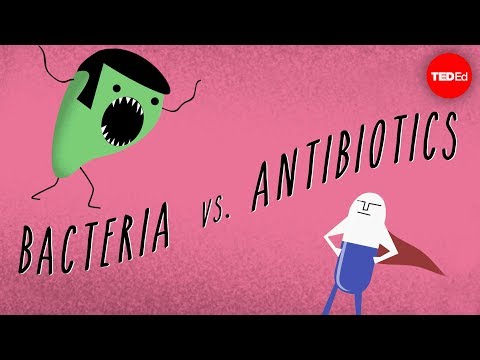 Photo: N43 and Hermes
Antibiotic resistance is a lesson in evolution, networks, incentives and shared vulnerability—and a test of whether institutions can act across borders.
Source video: What causes antibiotic resistance? - Kevin Wu · TED-Ed · 4:35.
Editorial note: approximately 4.27M views were observed in YouTube player metadata on 2026-08-07; counts change over time. Adjacent search results included a 6:23 TED-Ed explainer and a separate 17M-view Short, but this long-form 4:35 explainer was selected for direct mechanism framing.
01 Lesson one: evolution is happening now
Antibiotic resistance makes evolution visible on a human timescale. Bacteria vary, reproduce quickly and exchange genetic material. A drug changes the environment, and the variants that tolerate it gain an advantage. The process is ordinary biology with extraordinary consequences because the environment is global and the stakes are clinical.
This perspective is more useful than blaming a single patient or prescriber. Individual choices matter, but the evolutionary outcome is shaped by prescribing systems, diagnostics, infection control, agriculture, sanitation and access.
02 Lesson two: networks beat silos
A hospital is connected to households by discharged patients, to farms through food and workers, and to waterways through waste. Genes can cross species and borders even when policies are organized by agency. Resistance surveillance therefore needs compatible laboratory methods, shared definitions and data that can travel faster than the problem.
One Health is a practical operating model: coordinate human health, animal health, food production and environmental monitoring. It does not require every setting to use the same intervention. It requires each setting to understand the connections.
Illustrative population index · composition changes under selection
03 Lesson three: prevention has compounding returns
Preventing one infection can avert a prescription, a side effect, a transmission event and a future resistant lineage. Vaccination and infection control therefore have benefits that compound. So do failures: an outbreak increases treatment, crowding and opportunities for spread at the same time.
Clean water and sanitation are not separate from “high-tech” medicine. They are infrastructure that changes the number of times people and microbes meet. In low-resource settings, reliable access to diagnostics and effective first-line drugs is part of resistance prevention too.
04 Lesson four: markets do not automatically protect commons
Effective antibiotics are a shared resource. Each dose can help one patient while adding selection pressure to a wider microbial population. Yet the commercial incentive often rewards volume, whereas stewardship asks for restraint and reserve drugs may be used sparingly.
That mismatch is why public policy matters: research grants, procurement guarantees, reimbursement reform, manufacturing capacity and equitable access can align private development with public value. A new drug that exists only on paper is not resilience.
Conceptual mechanism map · several defenses can coexist
05 Lesson five: measurement changes behavior
What is not measured is easy to misread. Resistance data need denominators, sampling context and time: a rise may reflect real spread, better testing, a changed patient mix or a new reporting site. Antibiotic-use data need the same care.
WHO’s 2026 fact sheet reports that one in six laboratory-confirmed bacterial infections associated with common infections was resistant in 2023, and that resistance rose in more than 40% of monitored pathogen–antibiotic combinations between 2018 and 2023. Those numbers are signals from a surveillance system, not a universal probability for every patient.
06 Lesson six: access and stewardship are complements
People need timely access to appropriate antibiotics when bacterial infection is dangerous. Delayed care, counterfeit medicines, incomplete courses caused by cost, and weak laboratories can all worsen outcomes. Stewardship that ignores access can become rationing; access without stewardship can accelerate selection.
The durable design pairs the two: quality-assured medicines, diagnostics, trained clinicians, prevention and accountability. Equity is not only a moral goal; it is a condition for coordinated control of a transmissible problem.
07 Lesson seven: institutions must learn across time
Resistance is a test of institutional memory. Fleming’s early warning, the rapid appearance of resistant strains, today’s sparse development pipeline and the global spread of genes are parts of one story. Each generation inherits tools whose usefulness depends on decisions made before and after the bedside.
The world lesson is modest but demanding: act before certainty is perfect, share data, preserve options, fund replacements and build systems that make the healthy choice the easy choice. Bacteria will keep evolving. Our institutions can evolve too.
References
- World Health Organization, Antimicrobial resistance — fact sheet updated 16 July 2026; global burden, mechanisms, One Health and 2023 surveillance facts.
- Centers for Disease Control and Prevention, About Antimicrobial Resistance — mechanisms, clinical impacts, prevention and terminology; content reviewed 31 January 2025.
- Wikipedia, Antimicrobial resistance — overview of mutation, horizontal gene transfer, history and terminology; consulted 7 August 2026.
- Murray et al., Global burden of bacterial antimicrobial resistance in 2019, The Lancet (2022) — global burden estimates.
- Davies and Davies, Origins and evolution of antibiotic resistance, Microbiology and Molecular Biology Reviews (2010) — evolutionary and historical context.
- Source video: What causes antibiotic resistance? - Kevin Wu (TED-Ed, 4:35, approximately 4.27M views observed in YouTube player metadata on 7 August 2026; oEmbed title/channel and thumbnail verified).
By N43 and Hermes for Sailor Bob News.