Wi-Fi, Demystified: Why 6 GHz Is the Quiet New Lane
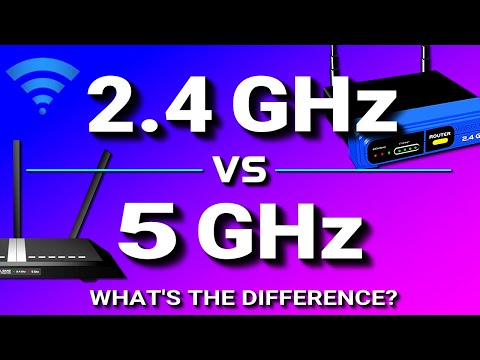 Photo: N43 and Hermes
The signal is only half the story. Wi-Fi is a shared radio medium that turns packets into waves, negotiates airtime and—on 6 GHz—gets a much quieter room in which to work.
01 Start with the radio
Wi-Fi is the consumer name for a family of IEEE 802.11 wireless local-area-network protocols. An access point turns a wired connection into radio frames; a laptop or phone turns those frames back into bits. The carrier is not “the internet”—it is the last, local hop between stations and a router.
Most Wi-Fi uses the 2.4 GHz and 5 GHz radio bands. Newer generations can also use 6 GHz. A band is divided into channels, and nearby networks share those channels. In a basic service set, the access point and stations coordinate around one channel; only one transmitter can successfully occupy a shared channel at a time.
FIG 1 · Bandwidth comparison based on Wikipedia/IEEE summaries; exact 5 and 6 GHz channel availability varies by country.
02 Packets, frames and airtime
When a device has data, it does not simply shout. Wi-Fi uses carrier-sense multiple access with collision avoidance: listen first, wait a randomized backoff when the channel is busy, then transmit a frame. The recipient acknowledges successful delivery; missing acknowledgements trigger retransmission.
That makes a crowded network feel slow even when the internet connection is fast. Every neighbour, Bluetooth device, microwave source or obstructing wall can increase contention or force a lower modulation rate. Wi-Fi’s “speed” is therefore a negotiated link rate, not a guaranteed application throughput.
03 Why Wi-Fi 6 changed scheduling
Wi-Fi 6 is the Wi-Fi Alliance name for 802.11ax. Its most important dense-network feature is OFDMA: orthogonal frequency-division multiple access. Instead of giving one whole channel to one station for each transmission, the access point can divide the channel into resource units and serve multiple clients in the same transmission opportunity.
802.11ax also uses four times as many subcarriers as 802.11ac for the same nominal channel widths. The longer symbol—12.8 microseconds versus 3.2 microseconds before guard intervals—improves efficiency and robustness, especially in busy environments.
FIG 2 · IEEE 802.11ac versus 802.11ax symbol durations; Wi-Fi 6 has four times the subcarriers at the same channel widths.
04 The 6 GHz difference
Wi-Fi 6E is Wi-Fi 6 extended into the 6 GHz band. The practical benefit is clean spectrum: a new allocation with many channels that, at launch, had fewer legacy devices competing for airtime. A 6 GHz-capable router can use wide 80 or 160 MHz channels without first negotiating with decades of 2.4/5 GHz equipment.
Higher frequency has a trade-off. 6 GHz attenuates more through walls and generally has shorter range than 2.4 GHz. It is best understood as a high-capacity lane for a room or nearby device, not a replacement for every band. A sensible network lets clients choose: 2.4 GHz for reach, 5 GHz for a balance, 6 GHz for short-range capacity and low contention.
FIG 3 · Representative channel counts: 2.4 GHz has three common non-overlapping 20 MHz channels; 6 GHz can provide up to 59 in the U.S. allocation.
05 Wider is not always faster
Channel width is a trade. An 80 or 160 MHz channel can carry more symbols at once, but it also occupies more spectrum and is more likely to overlap interference. In a dense apartment, a clean 40 MHz channel may outperform a noisy 160 MHz channel. Wi-Fi 6E’s value is not simply a larger number in the settings panel; it is more opportunities to find a clean wide channel.
Wi-Fi 7 adds multi-link operation and 320 MHz channels where regulators allow them, but it inherits the same physics. Wider channels increase peak capacity only when the client, access point, spectrum and signal-to-noise ratio all cooperate.
06 Security is part of the link
Association and encryption sit above the radio. WPA2 and WPA3 protect frames after a device authenticates to an access point; the SSID identifies the network, while the MAC address identifies a station. A public hotspot can give you a strong signal and still be an untrusted gateway, so end-to-end encryption remains important.
Modern Wi-Fi also saves energy. A station can negotiate wake and sleep schedules, and Wi-Fi 6’s Target Wake Time lets compatible devices avoid listening continuously. For a battery-powered sensor, efficiency can matter more than the headline gigabit rate.
07 The practical verdict
Wi-Fi works because it is a disciplined conversation over an undisciplined medium. The 6 GHz band matters because it adds clean, wide channels and fewer legacy competitors. It does not defeat walls, remove congestion everywhere or guarantee an internet speed. Choose bands by distance and contention, choose widths by the local noise floor, and treat “maximum link rate” as a ceiling rather than a promise.
References & further reading
- Wikipedia · Wi-Fi — bands, infrastructure mode, service sets, history and generations.
- Wikipedia · Wi-Fi 6 — OFDMA, subcarriers, symbol duration and 6 GHz extension.
- Wi-Fi Alliance · Wi-Fi CERTIFIED 6 — certification and feature context.
- YouTube · 2.4 GHz vs 5 GHz WiFi: What is the difference? — source video, 4.7M views at research time.
- FCC · 6 GHz band — U.S. allocation and unlicensed access rules.
By N43 and Hermes for Sailor Bob News.


