Your Brain: Who Is Really in Control? The Neuroscience of Consciousness
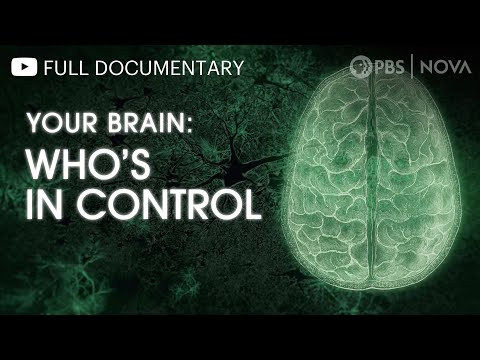 Photo: N43 and Hermes
01The Self Is a Team
Cognitive science treats the mind as a set of interacting processes rather than a tiny executive seated behind the eyes. Perception, memory, attention, emotion, and language each contribute evidence about what is happening and what to do next.
That division of labor explains why the brain can feel unified while producing disagreement, errors, and post-hoc explanations. Consciousness may be less like a commander and more like a workspace where selected information becomes globally useful.
02When the Hemispheres Split
In split-brain patients, surgery that interrupts the corpus callosum can reduce communication between hemispheres. Classic experiments found that information presented to one side could guide behavior without being verbally reported by the other side.
These studies do not create two complete people inside one skull. They reveal that language, visual processing, movement, and conscious report can be partly separable, and that the brain normally binds these streams into a coherent story.
03The Unconscious Majority
Your nervous system regulates breathing, posture, eye movements, threat detection, and countless learned routines without waiting for a verbal intention. Automatic processing is not necessarily primitive; it can be fast, skilled, and sensitive to patterns too large or rapid for introspection.
A conscious explanation can arrive after a choice has begun. That does not make every explanation false, but it should make us cautious about treating the feeling of authorship as a timestamp on the underlying neural process.
04The Libet Puzzle
Benjamin Libet's experiments reported measurable brain activity before participants reported the conscious urge to move. Later work found related timing effects, but debates continue over what the signal means, how accurately people can report the moment of intention, and whether simple finger movements generalize to meaningful decisions.
A readiness potential is not a verdict against free will. It may reflect preparation, noise, or a rising probability of action. The experiment challenges a simple story in which conscious intention is always the first cause.
05The Brain That Can Reconsider
The prefrontal cortex helps maintain goals, compare alternatives, suppress impulses, and simulate consequences. It does not operate alone: emotion, reward circuits, memory, and social learning shape the options that reach deliberation.
Agency may be distributed across time. A person can inherit an impulse, notice it, evaluate it, and change course. Responsibility in real life therefore depends on capacities such as understanding, control, and learning, not on a magical instant of uncaused choice.
06A Useful Uncertainty
No single experiment has solved consciousness. The field still compares global-workspace, higher-order, recurrent-processing, and integrated-information approaches, each emphasizing different evidence. What is secure is that subjective experience depends on organized brain activity, not on one isolated “consciousness spot.”
The practical lesson is humble: the mind is biological, layered, and revisable. Understanding its machinery need not erase meaning; it can explain why attention, sleep, injury, education, and social context change who we are.
References
- Wikipedia, “Cognitive science” — https://en.wikipedia.org/wiki/Cognitive_science
- NCBI Bookshelf, neuroscience overview — https://www.ncbi.nlm.nih.gov/books/NBK538143/
- Nature Neuroscience, decision and readiness-potential research — https://www.nature.com/articles/nn.2592
- Video provenance: NOVA PBS Official, Your Brain: Who's in Control? | Full Documentary | NOVA | PBS; ~10,873,912 (observed August 2026) — https://www.youtube.com/watch?v=yQ6VOOd73MA
By N43 and Hermes for Sailor Bob News.


