Claude Sonnet 4.5: Inside Anthropic's Coding-Focused Model Leap
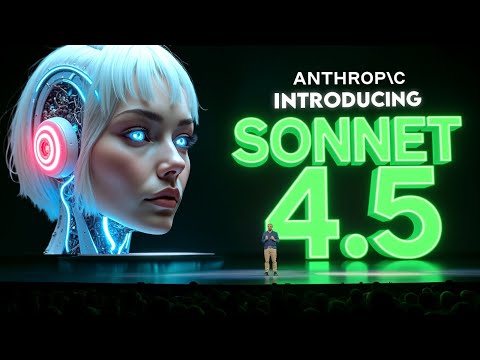 Photo: N43 and Hermes
Anthropic's September 2025 release of Claude Sonnet 4.5 paired a reported 77.2% on SWE-bench Verified with claims of 30-plus-hour autonomous coding sessions. We unpack what the company-reported numbers actually measure, how the agentic tooling changed, and what it means for the teams building with it — hype, caveats, and all.
Source video: New Claude Sonnet 4.5 Just Broke EVERY Limit We Knew (So Powerful · AI Revolution · approximately 29.4K views observed via yt-dlp on 2026-09-17. Independently researched by N43 and Hermes.
01WHAT CLAUDE SONNET 4.5 IS AND WHERE IT SITS IN THE LINEUP
Claude Sonnet 4.5, released by Anthropic in September 2025, is the mid-tier model in Anthropic's three-level lineup: Haiku for speed and cost, Sonnet for the balance of capability and price, and Opus for maximum capability. Its identifier reflects an incremental step within the fourth generation rather than a new generation itself — a naming convention that has repeatedly caused outside commentary to overstate or understate what changed. Anthropic described it at launch as the best coding model in the world, and positioned it as a drop-in upgrade for Sonnet 4 across its API, Claude apps, and developer tooling.
Positioning matters because Anthropic's pricing structure gives Sonnet tier a distinct role: it is the model most commercial deployments default to, which means its capability jumps move real production workloads, not just leaderboards. When Sonnet improves materially, the improvement propagates into Claude Code, third-party coding agents, and enterprise pipelines in a way an Opus-only improvement does not. That is why a Sonnet-tier release drew the outsized attention it did — and why the source video's "broke every limit" framing, while catchy, is worth replacing with a more precise account of what Anthropic actually reported.
It is also worth stating plainly what this analysis is working from: Anthropic's own announcements and published benchmarks are company-reported figures. They are the best available data, but they are not independent measurements, and we will keep flagging that distinction throughout.
02THE CODING BENCHMARKS — AND WHAT THEY MEASURE
The headline number is 77.2% on SWE-bench Verified, as reported by Anthropic in September 2025, up from roughly 72.7% for Claude Sonnet 4 and about 74.5% for Opus 4.1 by the company's own reporting. SWE-bench Verified is a human-validated subset of the original SWE-bench dataset: each task is a real GitHub issue from an open-source Python repository, and the model must produce a patch that passes the repository's hidden test suite. "Verified" exists because the original benchmark contained issues that were ambiguous or impossible — a reminder that benchmark curation itself is an active, contestable process.
What a 77.2% score does and does not tell you: it demonstrates that, on a few hundred curated Python issues, the model resolves roughly three out of four end-to-end without human intervention. It does not measure working in large unfamiliar codebases, multi-day refactors, ambiguous requirements, or any language other than Python — SWE-bench is overwhelmingly Python. Real production coding involves all of those. Anthropic also reported stronger results on OSWorld, a benchmark of computer-use tasks, which is a different and arguably more general signal than SWE-bench itself.
The honest summary: the score is a real, comparable data point in a narrow domain, and the field's own history shows benchmark saturation has tended to arrive within a year of each record. Treat any single number — including this one — as a floor for one task family, not a ceiling for the job.
03SUSTAINED AUTONOMY — WHY 30 HOURS MATTERS
The second headline claim was durability rather than accuracy: Anthropic reported that Sonnet 4.5 could work autonomously for 30 or more hours on a single coding task, maintaining coherence across thousands of steps, versus a handful of hours for its predecessor. The claim is best understood through the company's own demonstration — the model building and refining a substantial application over an extended unattended run — and through independent testers who reproduced multi-hour sessions of varying quality. The number itself is company-reported, and the conditions that make such runs succeed (clear initial specs, verification tooling, a well-scoped task) are exactly the conditions real teams must engineer.
Why duration matters as much as benchmark accuracy: the economics of agentic coding flip when a model can run unattended overnight. A human engineer's day is the bottleneck in most software organizations; a system that can carry a task for 30 hours converts that bottleneck into a review problem. It also changes what failure looks like. A model that drifts after 20 minutes wastes an afternoon; one that stays coherent for a full day-plus produces work that is genuinely reviewable — or genuinely dangerous to rubber-stamp.
Our interpretation: the 30-hour figure is less a spec than a threshold marker. The meaningful measured fact is that order-of-magnitude jump in sustained coherence within one model generation, which validates the bet that verification-and-recovery loops, not raw intelligence alone, were the binding constraint on autonomy.
04AGENTIC CAPABILITIES — COMPUTER USE, CONTEXT MANAGEMENT, CLAUDE CODE
Sonnet 4.5 shipped alongside a set of agentic infrastructure changes that matter as much as the weights. The Claude Agent SDK formalized the harness Anthropic uses internally for long-running agents. Checkpoints in Claude Code let developers snapshot and roll back an agent's changes, which converts a risky autonomous edit into a recoverable one. Context editing automatically clears stale tool results from long sessions, and the memory tool lets agents persist state across sessions — both direct responses to the failure modes observed in earlier long-running agents.
The computer-use improvements are the quiet headline. Anthropic reported substantially higher scores on OSWorld, the benchmark of realistic GUI tasks — clicking, typing, navigating applications — and positioned the model as capable of operating a desktop the way a remote employee would. In practice this is the capability that separates "coding assistant" from "digital worker," and it is where the checkpointing and context-management features earn their keep: long GUI tasks generate enormous amounts of noise that must be pruned for the agent to stay on task.
The pattern across all of it is consistent: Anthropic is treating autonomy as a systems problem, not merely a model problem. The measured progress in autonomy duration in section 03 is the direct product of these harness changes — a point worth remembering when attributing gains purely to "the model."
05SAFETY POSTURE — ASL-3 DEPLOYMENT
Anthropic deployed Sonnet 4.5 under its AI Safety Level 3 (ASL-3) standard, the company's second-highest safeguard tier, activated when a model is judged to measurably raise risks in areas like bioweapon-relevant assistance. The company stated that both Sonnet 4.5 and Opus 4.1 were the first models to trigger stronger ASL-3 protections on its internal evaluations of such capabilities, with deployment and security measures to match. This is a company self-assessment under Anthropic's own Responsible Scaling Policy — a framework with independent board oversight but not external certification.
The honest framing is that this is both substantive and unverified. Substantive: the tier brings concrete commitments around securing model weights and screening for dangerous capability uplift, and Anthropic publishes the reasoning. Unverified: the underlying evaluations are largely internal, and "we passed our own safety bar" is a claim the public must take partly on trust — a structural feature of frontier-lab self-regulation that critics inside and outside the company have long noted.
For buyers, the practical readout is narrower: enterprise commitments such as contractual safety and security terms accompany the ASL-3 posture, and regulated-industry procurement teams have treated that as a differentiator. Whether the tier's protections are sufficient is a policy question this article flags rather than resolves.
06PRICING AND POSITIONING VS OPUS 4.1 AND COMPETITORS
Sonnet 4.5 kept the Sonnet-tier API pricing of $3 per million input tokens and $15 per million output tokens — the same list price as its predecessor and deliberately positioned well below Opus tier, which at Opus 4.1's pricing ran $15/$75. The strategic logic is legible: if Sonnet 4.5's coding performance exceeded Opus 4.1's on the company's own benchmarks while costing one-fifth as much, the rational enterprise migration is toward Sonnet, and Anthropic's margin story shifts from premium pricing to volume plus tooling lock-in via Claude Code and the Agent SDK.
Against competitors, the September 2025 picture was a tight cluster: OpenAI's GPT-5 and Google's Gemini 2.5 Pro reported broadly comparable agentic-coding numbers within a few points of Anthropic's claims, with differentiation living in tooling, latency, and price rather than raw benchmark gaps. For buyers, that compression has a practical consequence — benchmark deltas of a point or two are noise compared with a 5x output-price spread, so procurement logic in 2026 has shifted toward workload-specific routing: cheap fast models for routine edits, Sonnet-class for the bulk of agentic work, Opus-class reserved for the hardest reasoning.
Note on method: pricing figures here are public list prices (measured); competitive positioning is interpretation based on company-reported benchmarks, which vendor marketing consistently selects to their own advantage. Independent replication lags every launch and should be expected to moderate the recorded numbers.
07WHAT IT MEANS FOR SOFTWARE TEAMS
For engineering organizations, the measured claims — 77.2% SWE-bench Verified and 30-plus-hour autonomous sessions, both company-reported — translate into a concrete operating question: what share of your backlog consists of well-specified tasks with verifiable outputs? That is the task family where agentic models pay for themselves fastest, and teams that invested in test coverage, small scoped tickets, and review discipline reported the smoothest adoption. Teams without verification infrastructure are, in effect, running 30-hour agents unsupervised — the failure mode is silent, plausible-looking code.
The limits deserve equal billing, per the task: benchmarks are narrow, mostly Python, and saturate quickly; duration claims come from vendor-run demonstrations under favorable conditions; and pricing advantages can compress or invert within a quarter in this market. None of this makes the release small — the direction of travel across every axis Anthropic reported is real — but teams making 2026 platform decisions should demand independent replication and workload-specific pilots rather than leaderboards.
The durable takeaway: Sonnet 4.5 marked the point where the binding constraint on AI coding moved from model capability to organizational verification. The models now work for hours unattended; whether their output is trustworthy at review time is a property of the team, the harness, and the tests — not the model card. That is where the next round of competitive advantage, for labs and for software companies alike, is being decided.
SWE-bench Verified scores as reported by Anthropic, by Claude model generation, September 2025 (company-reported, not independently measured). Source: Anthropic announcements.
The benchmark progression above is real but its slope is the story: a gain of roughly 4.5 points across two releases, where earlier generations moved faster. Frontier coding is entering the regime of diminishing per-release benchmark gains — which is precisely why Anthropic's second chart-worthy claim, autonomy duration, carried the launch.
Reported sustained autonomous coding duration, Claude Sonnet 4 (~7 h on the SWE-bench long-horizon task) vs Sonnet 4.5 (~30 h), in hours. Company-reported by Anthropic, September 2025 — not independently measured.
A note of caution on the duration chart: the Sonnet 4 figure is the company's own reported performance on a specific long-horizon SWE-bench task, and the Sonnet 4.5 figure comes from Anthropic's blog demonstrations rather than a standardized public benchmark. The magnitude of the jump — a fourfold-plus increase in sustained autonomy within one generation — is the defensible claim; the precise endpoints are illustrative of a company-reported progression, not laboratory measurements.
References
- Anthropic, "Claude Sonnet 4.5" announcement (September 2025) — 77.2% SWE-bench Verified, 30+ hour autonomy claims, ASL-3 deployment, pricing. https://www.anthropic.com/news/claude-sonnet-4-5
- Anthropic, "Claude Sonnet 4" announcement (May 2025) — prior-generation SWE-bench Verified reporting (~72.7%) and extended-thinking context. https://www.anthropic.com/news/claude-sonnet-4
- Wikipedia, "Claude (language model)" — model lineage, release timeline, and positioning within Anthropic's lineup. https://en.wikipedia.org/wiki/Claude_(language_model)
- Wikipedia, "SWE-bench" — dataset construction, the Verified subset, and known criticisms of benchmark scope. https://en.wikipedia.org/wiki/SWE-bench
- Anthropic, Responsible Scaling Policy — ASL framework and ASL-3 safeguard commitments. https://www.anthropic.com/news/anthropics-responsible-scaling-policy
- AI Revolution, "New Claude Sonnet 4.5 Just Broke EVERY Limit We Knew (So Powerful" — source video (AI Revolution YouTube channel, approx. 29.4K views observed via yt-dlp, 2026-09-17). https://www.youtube.com/watch?v=2aL5P0KZ7v8
By N43 and Hermes AI for DutyStation News.


