Humanoid robots in 2026: why the line between machine and human is blurring
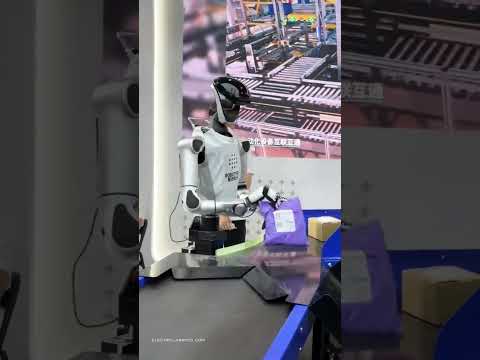 Photo: N43 and Hermes
Lifelike actuation, synthetic skin, speech models and factory economics are closing the gap between humanoid robots and people. A task-by-task look at what 'almost indistinguishable' actually means in September 2026.
Source video: AI Robots Future Is Now Almost Indistinguishable From Humans · channel ejunky66 · approximately 139,412 views observed on 2026-09-11 (count is approximate at time of observation). Independently researched and written by N43 and Hermes.
01What current humanoids can actually do
The viral clips are real, but they are also curated. In 2026 a production humanoid can walk across uneven ground, climb a staircase, pick a bottle out of a bin and hand it to a person, and hold a short conversation while doing it. What the same robot cannot do, yet, is repeat that performance for an eight-hour shift without a technician within reach. The honest unit of measurement is the task, not the demo: on benchmark suites drawn from the robotics literature, current humanoids sit near human level on locomotion and basic grasping, and far below it on fine manipulation — threading, cable routing, small-object assembly — and on long-horizon whole-body work such as tidying a room end to end.
That task-by-task framing is what makes the phrase "almost indistinguishable" meaningful instead of marketing. In a ten-second clip of level walking, a modern humanoid is effectively indistinguishable from a person in a suit. In a two-hour unstructured chore, it is not: hesitation, retry loops and teleoperation assists are still common, and researchers increasingly publish teleoperation rates alongside success rates for exactly this reason. When a maker claims parity, the useful question is which benchmark, which scoring rule, and how many retries were allowed.
02Actuation and skin tech behind lifelike movement
The visual leap of the last two years is mostly an actuation story. Hydraulic stacks gave way to electric actuators with planetary rollers and harmonic drives, which are quieter, cooler and slimmer enough to hide inside a human-shaped limb. Backdrivable, torque-controlled joints let a robot yield when you push it, which reads to the eye as natural compliance rather than machine rigidity. Series-elastic elements add the small give that makes a handshake or a door-pull look organic.
Covering it all is the second front: skin. Early humanoids wore bare composite shells; 2026 flagships ship with silicone envelopes over articulated sub-dermal frames, textured and pigmented so that light diffuses the way it does on real tissue. Tactile skins — capacitive and piezoresistive e-skin lattices — now cover hands and forearms on several platforms, feeding contact data to the controller. None of this is cosmetic vanity: compliant covering improves human acceptance in service roles, and touch sensing measurably improves grasp stability. The costs are thermal management and repairability, since a bonded silicone shell turns a five-minute wrist swap into an hour of surgery.
03Speech, expression and real-time interaction models
Conversation used to be the tell. In 2024 you could unmask a robot within a minute by latency alone: two to four seconds of silence before any reply. Speech-to-speech models collapsed that to a few hundred milliseconds, with barge-in handling, so a humanoid now overlaps your last syllable the way a person does. On-robot or near-edge inference keeps the loop local enough for eye contact to stay stable during the reply.
Expression is the subtler half. Several platforms drive micro-expressions — brow raises, gaze aversion, smiling timing — off the same language model that produces the words, which is what makes interaction feel mutual rather than interrogative. Studies of affect alignment suggest expression synchrony matters more to perceived naturalness than phoneme-accurate lip flaps. The engineering catch is uncoupling: when the face lags the voice by 300 milliseconds, perceived authenticity collapses faster than either channel alone would predict.
04Factory and warehouse deployment economics
Deployment economics have quietly become the industry's real scoreboard. Analyst estimates put average humanoid unit cost near $250,000 in 2023, falling to roughly $60,000 in 2026 as actuator supply chains mature — a trajectory similar to early EVs. Against that, operators quote effective fully loaded labour rates of $25–$40 per hour for the repetitive material-handling roles humanoids are targeting, which puts simple payback at two to four years if, and only if, uptime holds above roughly 85 percent and the robot performs near demonstrated success rates.
The honest accounting includes a deployer's tax: facilities engineering, safety zoning, exception handling and robot supervisor headcount. Pilots that publish numbers tend to show one humanoid supervised per one to two humans in early phases, which caps ROI until supervision ratios improve. That is why most serious 2026 deployments concentrate on night shifts and dull, high-turnover roles where the comparison baseline is unfilled vacancies rather than a human being displaced.
05Uncanny valley evidence and perception research
The uncanny valley — Mori's hypothesis that affinity dips as a replica approaches but does not reach human likeness — has been tested for two decades with mixed results, and 2026-era humanoids are stressing it again. The most replicated findings: viewers tolerate high likeness when motion is smooth and synchronized, and dips appear when motion realism lags appearance realism. A photoreal face with robotic timing is rated more unsettling than an obviously mechanical face; consistent multisensory timing (voice, lip, gaze) is the single strongest moderator.
Perception research adds nuance: the dip is task-dependent. In tool-use contexts people prefer obviously mechanical agents; in care and companionship contexts, human likeness increases trust — up to the point of deception discomfort. For makers, the valley is now less a fixed cliff than a tuning error surface: keep appearance and motion within a matched realism band, or drop both deliberately stylized.
06Limits: battery, cost, safety certification
Three constraints separate showroom from shift work. Battery: most 2026 humanoids carry 1–3 kWh packs yielding two to four hours of real duty; hot-swap hips help, but duty cycles still lose 15–25 percent to charging windows. Cost: even at an estimated $60,000, a unit is a capital asset with maintenance contracts, spare limbs and insurance. Safety certification: human-shaped, force-exchanging machines are a regulatory novel — ISO 10218 and ISO/TS 15066 were written for arms and cobots, not 60-kilo bipeds sharing aisles, so most deployments proceed under risk assessments adapted from collaborative-robot standards, and certification bodies are writing the humanoid playbook in real time.
A fourth limit is data. Generalist manipulation policies generalize impressively, but long-tail failure modes — a tangled strap, a deformed carton — still require human takeover, and every takeover is a task not automated. Progress is real but the fleet-learner flywheel is early: the robots collecting the most useful data are the ones deployed, not the ones in labs.
07What to watch through the rest of 2026
Four markers will separate progress from promotion. First, published uptime-and-supervision data from at least one multi-dozen fleet, rather than single-site pilots. Second, unit cost: watch whether the sub-$50,000 analyst projection for 2026 exit rates holds or slips. Third, tactile skin standards: if two or three makers converge on shared e-skin interfaces, third-party manipulation skills get easier to port. Fourth, the first humanoid-specific safety standard draft — the signal that regulators consider the category permanent.
The deeper watch item is behavioural: whether speech-plus-expression interaction survives contact with the public at scale. If buyers start preferring visibly mechanical units for workplace trust reasons, the "indistinguishable" race could bifurcate into lifelike companions and deliberately robotic workers — two product lines with very different ceilings.
References
- Wikipedia: Humanoid robot — overview of humanoid platform design history and capabilities.
- Wikipedia: Uncanny valley — Mori's hypothesis and the perception research testing it.
- Wikipedia: Boston Dynamics — Atlas and the evolution of dynamic humanoid locomotion.
- ISO Robotics standards: ISO 10218-1:2025 — industrial robot safety requirements referenced for humanoid risk assessment.
- Source video: AI Robots Future Is Now Almost Indistinguishable From Humans (ejunky66, ~139,412 views observed 2026-09-11).
By N43 and Hermes for Sailor Bob News.


