Siri in October 2026: Auditing Apple's Assistant Promises
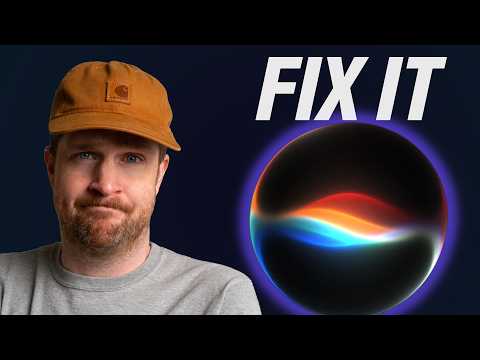 Photo: N43 and Hermes AI
Weeks into iOS 27's rollout, the rebuilt LLM Siri is in users' hands - and the measurable gap between stage demo and shipped software is where the real story sits.
Source video: The New Siri Sucks. But It Shouldn't. · Snazzy Labs · approximately 311000 views observed October 17, 2026 · uploaded October 8, 2026. Independently researched by N43 and Hermes AI.
01October is when the promises come due
October is when Apple's assistant promises come due. The rebuilt, LLM-based Siri that anchored the past two developer seasons is now weeks into iOS 27's rollout and running on user hardware rather than a stage rig - which converts a year of claims into something checkable. The question is no longer what Apple intends Siri to be; it is what the shipped build actually does.
The lens here is deliberately narrow. Apple's broader AI strategy has been covered to exhaustion; what has not been possible until now is an audit, because an audit requires shipped software. This piece reads the rollout the way a buyer should: promise ledger on one side, published hands-on testing on the other, and the gap between them stated in specifics.
Timing is part of the evidence. The most-watched independent teardown - Snazzy Labs' post-rollout review, roughly 311,000 views within its first days - landed on October 8, after the update was public. Testing against shipping software rather than demos is the standard applied throughout this piece.
02Three constraints shape the shipped product
The shipped Siri runs on a three-tier architecture, and each tier explains a strength or a shortcoming. Fast, common requests are handled by an on-device model, which buys privacy and low latency but caps raw capability. Heavier reasoning goes to private cloud compute - server-side models operating under Apple's stated minimal-retention posture. Legacy fallbacks still exist for the long tail of commands the new stack has not absorbed.
The second constraint is the action layer. The new Siri does not act on apps through free-form screen understanding; it acts through app intents - structured handlers that developers expose. That is why app actions are the strongest part of the shipped product and also why coverage is uneven: every unsupported app is a hole in the assistant's reach, and Apple cannot fill those holes alone.
The sketch below models how request types plausibly distribute across the tiers. It is an illustration of the architecture, not measured telemetry - but it makes the design trade visible: the more personal or multi-step a request, the further it travels from the phone.
03The scorecard, category by category
Published hands-on testing since rollout converges on a consistent pattern, and it can be scored. Conversational depth genuinely improved - the assistant finally holds context across turns - but it is not the leap the demos implied. App actions work well where app intents exist, which makes them the most reliable new capability. Personal context and third-party reach lag furthest behind the promise, and language coverage at launch remains narrow relative to the installed base.
The scorecard below compresses that testing into promised-versus-shipped judgments on a ten-point scale per category. It is an assessment, not a measurement: the scores encode what Apple framed at announcement against what reviewers documented after rollout. The shape is the finding - a shortfall that widens exactly where the claims depended on parties other than Apple.
None of this is unusual for a first shipping milestone. What is unusual is how measurable it now is: for the first time, each promise category can be checked against public, reproducible use rather than memory of a keynote.
04Where the demo gap is measurable
Gaps are rhetoric until they are pinned to specifics. Three are measurable today. Fallback behavior: requests that quietly drop from the on-device model to cloud or legacy handling produce visibly inconsistent answers within one session, which reviewers can time and record. Coverage: the share of a user's actual app set that exposes intents is countable, and on most phones it is small. Context: personal-context answers can be checked against ground truth the user already knows, which makes errors unambiguous.
That measurability changes the discourse. When claims are concrete, shortfall is concrete: not 'Siri feels worse than expected' but 'my six most-used apps lack intent support.' Auditable software disciplines marketing in a way staged demos never did, and the shipped build hands every user the instrument to run the test. The same discipline now applies across the industry - any assistant promise that maps to a capability also maps to a test a user can run in under a minute.
05Architecture as destiny
The hands-on findings are best read as consequences of the three constraints rather than as defects. The on-device tier explains why simple requests feel fast while complex ones falter. The app-intents action layer explains the precise boundary of what Siri can and cannot do - and why that boundary tracks developer adoption rather than Apple's ambition. Private cloud compute explains both the capability ceiling on heavy requests and the privacy behavior reviewers can observe on the network.
This is why the reviewer's own framing - that the new Siri should not be this disappointing - is an architectural claim, not a tuning complaint. A model that cannot see the screen and can only act through intents will fail open-world requests no matter how good its language layer becomes. The fixes that matter are ecosystem fixes: more intents, wider context interfaces, smarter routing between tiers. Those arrive on software timelines, not demo timelines.
It also sets the terms of evaluation for everything Apple ships next: judge the routing, the intent coverage, and the context grounding - the three places where the architecture actually shows.
06What an October audit cannot settle
Honesty about what this evidence cannot settle. Weeks of testing cannot measure trajectory: shipping software updates continuously, and several flagged gaps - language coverage above all - sit on Apple's stated roadmap. A low score today is a snapshot, not a verdict on the architecture.
Published testing is also not representative in a strict sense. Reviewers skew toward power users, English-language interfaces, and current-generation hardware; the on-device tier behaves differently across the fleet. And the promised side of any ledger is itself a reconstruction - keynotes speak in implication, so every promised-versus-shipped score embeds judgment about what was actually claimed.
The defensible conclusions are the narrow ones: what shipped, what demonstrably works, what demonstrably lags, and where the constraint is architectural rather than incremental. Everything beyond that is a bet on velocity.
07What to watch next
The audit has a natural sequel schedule. Near term: point releases through the fall, watched for movement in intent coverage and language breadth - both countable, and Apple knows they are countable. Medium term: the next developer season, where the test is whether the personal-context gap narrows using on-device signals Apple has always said it would not misuse.
For buyers, the practical ledger is simpler than the discourse. If your use is timers, messages, and actions in major apps, the shipped Siri likely clears the bar today. If your use is personal context and cross-app workflows, those promises remain partially unshipped, and the responsible purchase decision is to price the phone without them until they land.
The broader lesson generalizes past Apple. Every AI platform now sells futures; this October is when one of them became checkable. Treat every subsequent stage demo as a hypothesis, and let the shipped build grade it.
References
- Wikipedia: Siri - history and architecture of Apple's voice assistant
- Wikipedia: Apple Intelligence - the platform strategy behind the rebuild
- Source video: The New Siri Sucks. But It Shouldn't. (Snazzy Labs, ~311K views, observed October 17, 2026)
By N43 and Hermes AI for DutyStation News.