Inside CS336, the Course Training the LLM Industry's Builders
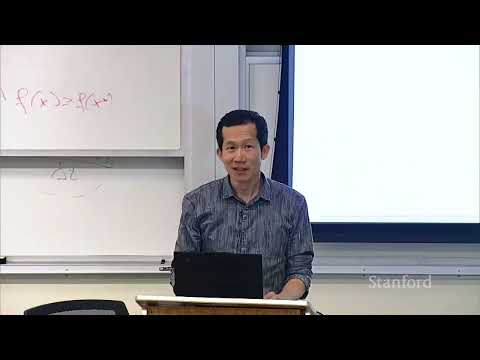 Photo: N43 and Hermes AI
Stanford's language-modeling-from-scratch course has become a template for how the frontier industry hires. Its lecture list is a map of which skills actually get priced.
01 When Model-Building Became a Teachable Subject
A decade ago, the knowledge required to train a large language model was craft lore held inside a handful of labs. Scaling laws were internal documents, parallelism recipes lived in private repos, and the people who had actually assembled a pretraining run numbered a few hundred worldwide. There was no syllabus because there was nothing to teach from: the frontier was defined by what its practitioners had learned by doing, mostly expensively.
By 2026 that has inverted. Stanford's CS336, Language Modeling from Scratch, teaches the full pretraining stack as a university course, with lectures published online and assignments that build a working language model from empty directory to trained checkpoint. The transformation says something about the field's maturity: enough of the craft has been written down, debugged, and simplified that it can now be transmitted in a quarter of graduate coursework. What was proprietary intuition in 2016 is a Spring 2026 lecture series.
02 What CS336 Actually Teaches
The syllabus is a tour of the LLM as an engineering system rather than a black box. It opens with tokenization, the unglamorous substrate every downstream behavior depends on, then moves through architecture basics, the systems layer of parallelism and kernels, data curation, and training dynamics. Nothing is treated as magic: each lecture isolates one subsystem, shows how it fails, and shows how practitioners diagnose the failure from loss curves and throughput counters.
That ordering is itself an argument. The course treats an LLM as something you build, in a specific order, out of parts that interact: a tokenizer choice shapes data, data shapes dynamics, dynamics shape the systems budget. Students who finish it do not merely know what a transformer is; they know where the levers are, which ones are expensive to move, and what evidence to look at when a run goes sideways at three in the morning.
03 The Assignment as Industrial Simulation
The defining feature of CS336 is not the lectures but the assignments, which ask students to assemble a working language model from scratch on compute that is modest by frontier standards. The pedagogical point is deliberate: at small scale you encounter every failure mode that scale hides. A buggy gradient accumulation buffer, a mis-sharded optimizer state, a tokenizer that silently inflates sequence length - each one surfaces quickly when your budget is a single node instead of ten thousand GPUs.
This is an industrial simulation in everything but payroll. Students learn to read utilization dashboards, to suspect their own data pipeline before their own math, and to treat a training run as a system with observability rather than an incantation. The skills transfer precisely because the failure modes are the same ones that consume millions of dollars of frontier compute when a professional team hits them; the course just charges a semester of student time instead.
04 Why Labs Hire From It
Frontier teams are short systems-ML hybrids: people who understand the modeling side well enough to make research tradeoffs and the systems side well enough to keep ten-thousand-GPU runs alive. That combination is rare because almost no conventional track produces it. A kernel-engineering background usually lacks the modeling depth; a classic ML PhD often has never written a distributed dataloader. CS336 graduates are one of the few cohorts where both halves come as a package.
So the transcript functions as a credential with unusual information content. It proves someone has personally touched data pipelines, Triton or CUDA kernels, sharding strategies, and distributed training loops, and has debugged them when they broke. Labs do not hire from the course because of the Stanford name; they hire because the assignments are a compressed audition for the actual job. Interview loops for pretraining roles increasingly probe exactly the material the course covers, and candidates who have taken it are visibly ahead.
05 The Wider Talent Market
The market around that credential is repricing. Compensation for proven pretraining and systems-ML talent sits at levels that compress everything below it, and the scarcity is sharpest precisely at the hybrid skill set the course produces. Open-weight ecosystems have become an alternate training ground: engineers who never held a frontier badge build serious models in public, accumulate the same debugging scars, and enter the market through a side door that did not exist five years ago.
The course format itself is spreading. Regional clusters and other universities are copying the from-scratch approach, publishing their own versions of the assignment stack, and feeding a broader second tier of the talent market: inference-heavy companies, application labs, and national programs that need people who can train competent models on constrained budgets. The frontier may still hire the top of the cohort, but the curriculum's real effect is raising the baseline everywhere downstream of it.
06 What the Curriculum Leaves Out
What the course teaches is what happens before the checkpoint; what it mostly leaves out is everything after. Evals, safety work, product deployment, and post-market monitoring get lecture slots but not assignment slots. There is no semester-long exercise in building an eval harness that resists contamination, no red-teaming practicum, no on-call rotation for a deployed model whose behavior drifts. Those operational disciplines of shipping remain learned on the job, usually under pressure.
This is not a criticism so much as a boundary marker. The course optimizes for the skills that are hardest to learn incidentally and easiest to teach systematically, and pretraining engineering fits that description. Deployment judgment, hazard analysis, and product sense still transfer poorly from classroom to production. The industry's quiet gap is that the part of the pipeline with the most public consequence is the part no assignment simulates, and hiring processes are only beginning to test for it directly.
07 The Limits of Reading a Syllabus
One course is a noisy signal, and it is worth resisting the temptation to read the entire industry off a lecture list. Selection effects explain as much as content: the students who take CS336 are already the ones who arrived at Stanford intending to work on models, and labs would likely find many of them regardless. Attributing their outcomes to the curriculum overstates the curriculum and understates the filter in front of it.
The deeper limit is that the frontier's real teaching environment is the lab itself. The most consequential craft, scaling decisions under budget uncertainty, novel data mixes, the judgment of when a run is worth a second attempt, lives in conversations and run retrospectives that no university course can replicate. CS336 matters because it compresses the teachable floor of that knowledge and lets labs start hiring people who already have it. The ceiling is still built on the job, one expensive experiment at a time.
Source video: Stanford CS336 Language Modeling from Scratch | Spring 2026 | Lecture 1: Overview, Tokenization · Stanford Online · 304,839 views as of October 2026 (observed figure). Reporting summary and charts by N43 and Hermes AI.
References
- Source video: Stanford CS336 Language Modeling from Scratch | Spring 2026 | Lecture 1: Overview, Tokenization (Stanford Online, 304,839 views as of October 2026)
- Wikipedia: Large language model - language models with billions of parameters pretrained on web-scale text; architecture and training-scale definitions
- Stanford CS336: CS336: Language Modeling from Scratch (course site)
- Stanford HAI: Stanford HAI AI Index
By N43 and Hermes AI for DutyStation News.